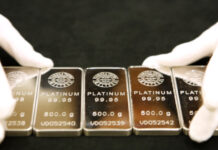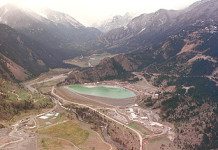




FISCAL terms with the Zimbabwe government were set to be unveiled in the new year which would pave the way for the commissioning of the $380m, 400,000 ounce a year Karo Platinum project in 2027, said Tharisa CEO Phoevos Pouroulis.
“There are a few outstanding matters that need to go through various government approval processes, but we’re confident,” said Pouroulis in an interview on Monday.
“We were hoping by the end of this calendar year, but failing [that] … early in the new year, we’ll be able to come out officially with the position and the provisions.” Pouroulis said discussions turned on incorporating tax benefits into the project’s special mining lease after the Zimbabwe government revoked previously agreed terms on special economic zones.
Once announced Tharisa will conclude financing of the $325m project balance. “We’re well advanced. It will follow shortly thereafter [the agreement with government].”
Stabilisation agreements on tax and royalties will be a crucial part of securing the Karo Platinum project especially as in its 2026 National Budget, Zimbabwe announced measures to double the royalty on gold to 10% if bullion exceeded $2,501 per ounce. It is currently $4,247/oz.
Zimbabwean gold miner Caledonia Mining, which recently unveiled the $484m Bilboes project, said today it was “assessing the implications” of the proposed royalty change “… including in particular the potential effects on the recently announced economics of the Bilboes Gold Project”.
Karo Platinum is an important revenue catalyst for Tharisa which reported solid full year earnings for the year ended September, thanks to a $67.3m tax credit following a successful review with the South African Revenue Service over royalties.
Without the tax fillip, which was credited to cost of sales as it had been previously provisioned over a 10-year period, Tharisa’s gross profit would have been just under a third lower year-on-year. Full year basic earnings were 26.7 US cents per share (2024: 27.7 USc/share). Cash flow fell precipitously to $94m ($204.5m).
Nonetheless, Tharisa declared a full dividend of 1.5 US cents/share taking the total payout to three cents/share. The group also completed a second tranche of buy-backs. Pouroulis said the programme would be suspended for a later reconsideration. Prior to the dividend, net cash fell to $69.8m compared to $117.5m as of end-September in 2024.
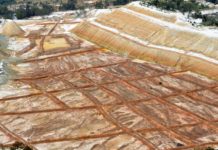
Heavy rains in the first half of Tharisa’s financial year led to lower chrome output of 1.56 million tons (Mt), well below original guidance of up to 1.8Mt. “We had obviously a lot of water challenges in the pit. We mined out of sequence so the blend was not optimal in the processing plant. So it’s a function of throughput and grade of the chrome, which is something that’s resolving as we speak,” said Pouroulis.
As previously announced in its fourth quarter and full year production update, Tharisa has guided to 1.5 to 1.65Mt in chrome output for the current financial year.
Platinum group metal production has been guided to 145,000 to 165,000 ounces and comes against a background of rising prices for the metals. Spot basket price is $2,200/oz against an average of $1,600/oz for the year, said Pouroulis.
Chrome tax
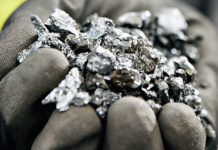
The larger sensitivity in the business, however, is the chrome price. Pouroulis warned in comments to the full-year results that 900% energy inflation since 2008 was putting ferrochrome producers out of business – a development that would have consequences for chrome supply.
“With the current and pending closure of smelting capacity in South Africa, there has been and will be increased volumes of chrome concentrate needing to be exported which may place further pressure on the logistics chain and possibly pricing,” he said.
“Restarting smelters requires the sustainable provision of electricity at globally competitive tariffs and in the longer term the installation of renewable energy to support competitive tariffs,” he added.
The South African government’s response has been to consider imposing an export quota on chrome that may be combined with a chrome levy in order to incentivise downstream processing of ferrochrome.
The Minerals Council South Africa, of which Tharisa is a member, has described the proposed measures as potentially destructive to the chrome supply chain from South Africa. Pouroulis said discussions articulating this outlook were starting to gain momentum. “We’re starting to get more resonance and more understanding of the challenges,” he said.