





RAINBOW Rare Earths said its share price had been negatively affected by the deterioration in relations between South Africa and the US.
“I think the spat with President Cyril Ramaphosa over the G20 hasn’t helped us,” said the UK-listed firm’s CEO George Bennett in an interview on Tuesday.
Shares in Rainbow Rare Earths are 5.7% lower in the last 30 days.
Relations between the two countries have been strained since the administration of former US president Joe Biden when his ambassador to South Africa accused the country of secretly supplying arms to Russia.
But they have worsened since the election of President Donald Trump who lambasted his South African counterpart Cyril Ramaphosa in a White House meeting in May, beamed live around the world. Trump then declined to attend the G20 meeting in Johannesburg last month.
Ramaphosa has pushed back against US refusal to acknowledge commitments at the meeting which has been met with reprisals. The US has banned South Africa from the next G20 meeting over which Trump will preside.
Bennett also acknowledged a delay in Rainbow Rare Earth’s Phalaborwa project in Limpopo had negatively influenced investors.
Earlier this month, Rainbow Rare Earths announced a change in its mineral separation process for the Phalaborwa project to solvent extraction technology, a development that will result in a delay to the definitive feasibility study to 2026. But this setback was compounded by the political fallout.
“The spat with Trump and Ramaphosa at the G20, and Trump not inviting South Africa and taking a hard stance on South Africa … that doesn’t help Rainbow [with it] having a big project in South Africa and all our investors offshore,” said Bennett.
A $50m commitment by the US government’s International Development Finance Corporation to the Phalaborwa project, via a 11.7% stake in Brian Menell’s TechMet, was not in danger, however. “They’re (DFC) still very much on board. But the person in the street doesn’t see that. They just see this public spat,” said Bennett.
“I don’t think that’s been helpful for our share price, even though we know that the commitment by the US government is very much intact – more so than ever.”
Despite the study delay, first production from Phalaborwa remains set for 2028 while forecast capital expenditure of $270m to $300m is also unchanged, said Bennett. That is in part because Phalaborwa is a brownfields project focusing on processing phosphogypsum stacks from previous phosphate mining.
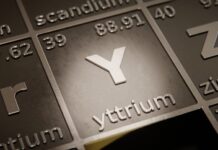
In addition to neodymium and praseodymium (NdPr), the Phalaborwa project will also yield other rare earth minerals such as terbium and yttrium. The latter has increased 3,000% in price since April when China imposed export restrictions. Rainbow Rare Earths said recently yttrium price escalation would add $20m to Phalaborwa’s ebitda assuming the lower range of the European prices (as of November 24).
In addition, a US initiative to establish a floor price for Nd/Pr produced by US-based miner MP Materials at about $110/t was beginning to push the trading price of the minerals upwards. They were last trading at about $90/t.
The adoption of solvent extraction technology would enable Phalaborwa to earn additional revenue from so-called heavy rare earth minerals in which China is, by its standards, deficient, and which it is likely to restrict in time.
Revenue of $70m annually would now be closer to $160m, assuming the current basket price for heavy rare earth metals such as samarium, europium, gadolinium, dysprosium, terbium as well as yttrium (assuming at a 70% payability). “That’s a significant flow-through to the bottom line,” said Bennett.