
SIBANYE-Stillwater is hoping to discuss support mechanisms for lithium that will underpin its plans to refine the metal from Keliber, a €783m (R14.9bn) project in Finland.
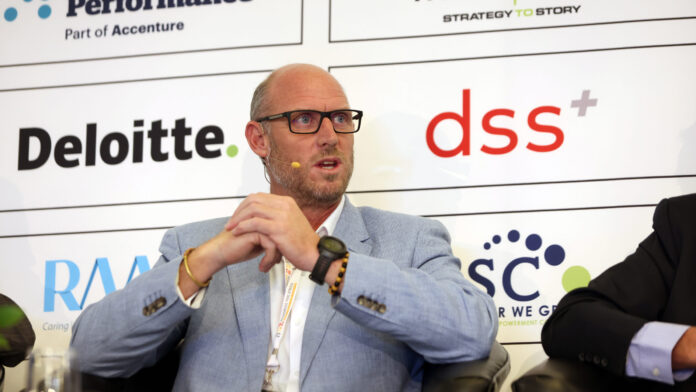
“We would like to start a conversation with the European Union and the Finnish Government about support such as a floor price, or guarantee for lithium,” said Richard Stewart, CEO of Sibanye-Stillwater in an interview at the Mining Indaba conference in Cape Town.
“What we don’t want is to be exposed to market risk such as the Chinese dumping material into the market and depressing the price in a year’s time with no risk shared by the EU, which will benefit from local production from our project,” he added.
Sibanye-Stillwater is open to options on how production from the Keliber lithium project could be protected by the EU ranging from a floor price as the US government has provided for rare earth miners. Procurement, labour incentives and minimum content legislation for use of locally produced metals in supply chains could also be discussed.
Sibanye-Stillwater expects to commission its concentrator producing spodumene by the third quarter of 2026 and, conditionally, a refinery by the fourth quarter. However, a decision on ramp-up to full battery grade production of lithium hydroxide from the refinery may not be taken until 2027, unless certain conditions are met, it said.
Mika Seitovirta, executive director of Keliber Oy, had been appointed chief European advisor to take Sibanye-Stillwater’s business case to the EU and the Finnish government.
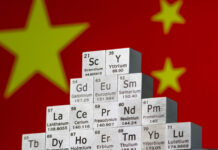
China controls about 70% of rare earth concentrate production, but about 91% of all refined output, 90% of which is in-country giving China outsized bargaining power.
The Trump administration has been seeking ways to make US rare earths production competitive. As part of a supply agreement with US-based MP Minerals, the US department of war in 2025 guaranteed a floor price for neodymium and praseodymium of $110/kg, compared to the then spot price of $60-$63 per kilo.
Bloomberg reported in January that Australia is also examining a price floor mechanism for specific critical minerals to counter Chinese market dominance as well as attract foreign investment to mining and processing projects.
Australia is also developing a A$1.2bn stockpile, initially targeting rare earth elements, antimony and gallium. The initiative complements a 2025 pact with Washington to enhance American access to Australian minerals and follows Trump’s Project Vault, a $12bn strategic stockpile programme.
However, there has been kick-back against price setting for minerals in the US as critics say the agreement with MP Minerals did not have congressional support.
In a January 29 article, Reuters cited Audrey Robertson, assistant secretary of the US Department of Energy and head of its Office of Critical Minerals and Energy Innovation, as telling mining executives that goverment was not there “to prop up” the industry.
The Energy Department subsequently said the Reuters story was false, as reported by the newswire which added that the US government did not elaborate.