


HARMONY Gold is hoping that mediation will bring what it has sought for nearly 18 years: the development of Wafi-Golpu, a gold and copper deposit in Papua New Guinea (PNG) that comprises nearly half of its mineral resources.
Mining projects can sit on the shelf for a very long time. Anglo American had Quellaveco in Peru on its books for 26 years before it became a successful copper mine in 2022. While market conditions and technical advances helped in its development, a key event was a “dialogue table” in 2011 that enabled its permitting.
A similar process appears to be under way in PNG, a politically volatile nation in the southwest Pacific about 150km north of Australia.
PNG Prime Minister James Marape, who has been in that position since 2019, convened a project review team (PRT), supposedly an independent body of the government aimed at understanding why Wafi-Golpu hasn’t advanced.
On paper, there’s no reason it shouldn’t have. In 2023 a memorandum of understanding was signed between the joint venture partners Harmony Gold and US gold miner Newmont ahead of a special mining lease (SML), which is the key to restarting the project. However, the lease has been long in gestation.
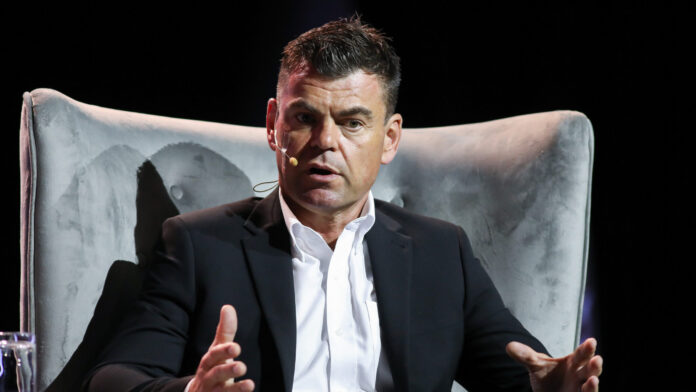
“We’ve been continuously talking, but we’re not getting to a favourable outcome,” Harmony CEO Beyers Nel said in an interview. “I’m not sure if ‘mediator’ is the right word for it, but it is a third party — almost like, if you and your spouse are not seeing eye to eye, you bring in a third party to try to find common ground.”
It’s worth pausing, however, to consider the situation, because the role of the PRT is to report back to the state negotiating team (SNT), which Nel said has the mandate to negotiate mining leases with mining companies in PNG. The contorted, top-heavy structure of a government body working through a quango seems like a recipe for more delay.
Said Nel: “We’ve been engaging them along the same lines, on the same terms, as we’ve been engaging with the SNT. We believe the PRT; there are some individuals who are slightly more business-minded than those at the SNT, so we’ll see where it gets us.”
Nel declined to say whether the outcome is likely to be a renegotiation of fiscal terms set down in the memorandum of understanding, which ratified a previous agreement providing PNG with an option to buy up to 30% of the project from the joint venture partners (PNG: 30%, Newmont 35%, Harmony 35%).
Lead time
Were the project to be awarded an SML this year, Harmony would not see production from Wafi-Golpu until 2031 at the earliest. An update of the 2016 feasibility study in 2018 would be needed with a final investment decision required within 30 months. The project carries an estimated five-year construction period.
“We are long on copper, and we think copper is going to be positive in the longer term. So once Wafi-Golpu comes on — whenever it comes on — we hope we will have timed it perfectly,” said Nel.
Once in production, Wafi-Golpu is scoped to produce copper for 26 years. The benefits are potentially huge. Based on the 2018 technical update, total production is 250,000 ounces of gold and 180,000 tons of copper (90,000 oz and 60,000 tons a year on an attributable basis). That copper production more than doubles Harmony’s current medium-term copper ambitions, which were thrown into the spotlight this month after its interim report.
Eva Copper, a greenfields project in Australia acquired in 2022 for $220m, is slated to produce 60,000t, while another newly acquired asset, the CSA mine, also in Australia, has historically produced 46,000t a year. The two are causing a stir in the market because they cost $1.3bn in mergers & acquisitions for Harmony — CSA was bought through the acquisition of MAC Copper for $1.01bn — on top of at least another $1.55bn in development costs, predominantly for Eva.
As an operating mine, CSA is already producing cash, but it is insufficiently developed for Harmony’s purposes. The cost of improving ventilation and hoisting as well as rehabilitating existing infrastructure is part of a two-year programme that will be defined at Harmony’s year-end presentation in August, said Nel.
Capex vs payout
The capital rollout, however, has weighed on Harmony, as the market has penalised the company for focusing on projects rather than on dividends. That was remedied somewhat this month after the miner unveiled a new dividend policy, introducing a base dividend calculated on 30% of free cash flow (after total capex, including growth) from a previous policy of 20%-30% of cash flow.
The board will pay another 20% of free cash flow provided the group’s net debt to ebitda is below one. As of December 31, net debt to ebitda was a financially untroubled 0.18.
It all translated into a record interim payout of R3.38bn, equal to R5.30 a share or 43% of free cash. The market knocked Harmony shares nearly 12% on the day, when other gold firms were also marked down. Nonetheless, analysts liked the improved payout — though with reservations.
“We view this as a positive sign of confidence,” said analysts at RMB Morgan Stanley. They warned, however, future payouts could be crimped as the full capital burden of Eva Copper fell due.
“Its balance sheet moved to modest net debt (R5.5bn) after the MAC Copper funding, but leverage remains low and liquidity remains strong; management expects to return to net cash by year-end,” said Nedbank Securities analyst Arnold van Graan.
“We are just happy that we can share some of the upside of the current tailwinds we have in gold,” said Boipelo Lekubo, Harmony’s financial director.
“We are equally excited about building our copper portfolio and making sure that we create a portfolio that will reward shareholders and stakeholders, not only now but even through the cycle, with the copper portfolio coming into its own.”
A version of this article first appeared in the Financial Mail.