



IT’S a curious fact of mining that companies talking about projects are often better rated than those actually building them. The unpalatable truth is that the industry has a poor track record of living up to its promises. A 2024 study by McKinsey found that 80% of mining projects are late and over budget by as much as 43%.
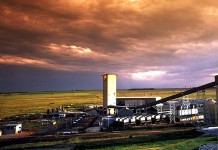
Project risk is why Harmony Gold has underperformed its peer group in the past 12 months. The company has been following a commodity and geographic diversification strategy, culminating in two acquisitions in Australia: Eva Copper, a $1.55bn greenfield project, and CSA, an operating but aged underground copper and gold mine.
The $1.04bn acquisition of CSA was completed in October. Harmony is set to become a 100,000 tons a year copper producer in the next three to five years thanks to Eva and CSA, but both pose risks of capex overrun.
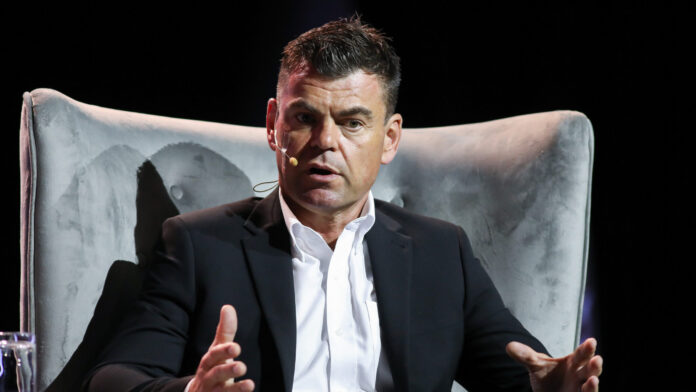
Harmony shareholders were reminded of this in February when CEO Beyers Nel told Reuters that rehabilitating CSA could take longer. “It could be up to two years, or even more potentially, to derisk and de-bottleneck the mine,” he said. The challenge for Harmony is that investors in gold equities consider the current high gold price a time of plenty. After years of lean pickings, investors are sticking with companies that provide big rewards, and provide them now.
Barrick Mining, Newmont, AngloGold Ashanti and Gold Fields generated $9.7bn in fourth-quarter cash flow from operations after total capex, according to Metals Focus, a UK precious metals consultancy. That was 34% higher than the previous quarter and, startlingly, nearly double the last cash generation peak of $5bn in the third quarter of 2020.
Harmony also generated outsized cash, but slid into net debt of R5.54bn owing to its Eva and CSA dealmaking. By the first quarter of the calendar year (its third for its financial year ended June), it had roared back into R1.3bn in net cash. That’s astonishing, and it heartened analysts. “Net cash restored, supporting confidence in financial 2026 delivery,” said UBS analyst Steve Friedman. Yet analysts worry that Harmony is liable to have its cash flow generation blunted.
RMB Morgan Stanley analyst Christopher Nicholson credited Harmony with returning to net cash, but observed that “it is difficult to assess whether this was ahead of or behind expectations as quarterly Eva Copper project capex has not been provided with the release”.
Harmony’s share price performance has been disappointing. Shares are 8% higher in 12 months, compared with a 41% and 78% improvement in Gold Fields and AngloGold Ashanti respectively.
Harmony feels it’s being unfairly penalised. “The first quarter was the 11th consecutive year we’ve met production guidance. In terms of guidance, costs are in line, grades are in line, production is in line,” said investor relations head Jared Coetzer. “The only thing giving the market a preference to other gold companies is the free cash yield.
“We’ve got assets and jurisdictions we know well. The only thing that has changed is a copper mine in Australia and a greenfield copper build. And that seems to be what has given the market, from a risk aversion perspective, [reason] to move into names which they’re more comfortable with,” said Coetzer. “That’s the gist of the matter. If you look at Harmony in isolation, we’ve got a phenomenal story.
“What investors are getting is a large gold company with significant geared exposure to the gold price, a strong balance sheet, substantial shareholder returns and a good growth story with two copper assets that you’re probably going to get for free at this multiple,” said Coetzer.
It’s worth pointing out that even average copper assets are trading at five to six times ebitda, which compares with Harmony’s 2.7 to 2.8 times on a forward basis. “You’re effectively getting this whole gold story plus two excellent copper assets,” Coetzer said.
In March, Harmony responded to shareholder demands by announcing it would pay up to 50% of net free cash, depending on its gross debt. Yet there’s a sting in the tail: it also lost R4.5bn on its hedge book, the only major gold company to sell forward a major part of output (about 20%).
It comes with the territory of its reinvestment and growth strategy, Coetzer acknowledged. “While we’re in this high capex period, it’s just to manage that risk.” Eventually, copper production will become a more natural hedge against gold.
Hedging risk
Yet a hedge book in this environment seems anathema, especially when set next to the enormous sums of money AngloGold is doling out. More than half of its recent R1.17bn in cash flow was paid out in the last quarter, which it followed up with a $2bn share buyback. It, too, is building projects.
Coetzer says Harmony’s capital intensity isn’t over the top. That’s true: it spends about a fifth of its revenue on total capex, but still rates highly among the big spenders. Gold industry capex hit a 12-year high in the third quarter of last year, about $600/oz, Metals Focus said. Harmony is spending $760/oz, above average.
Where does this leave Harmony? It’s worth acknowledging that the firm was predicated on dealmaking — a company that bought marginal assets and then stripped out costs. Even now, about 36% of production is from this “optimised portfolio”, marginal assets that turn unprofitable when prices sink.
What’s happening now is a strategically sound but expensive transformation. Value investors will benefit, especially if copper and gold prices are sustained. In fact, on this basis Harmony is a cheap entry to a buoyant sector. Investors could choose to be patient, but many are not. In an unstable world, cash stands for a lot.
This article first appeared in the Financial Mail.