



SIBANYE-Stillwater today outlined R20bn in projects aimed at maintaining a million ounces of platinum group metals production from its underground South African mines until 2050.
In the short-term Sibanye-Stillwater aims to sustain 1.5 million oz in annual production by 2035 from board-approved projects.
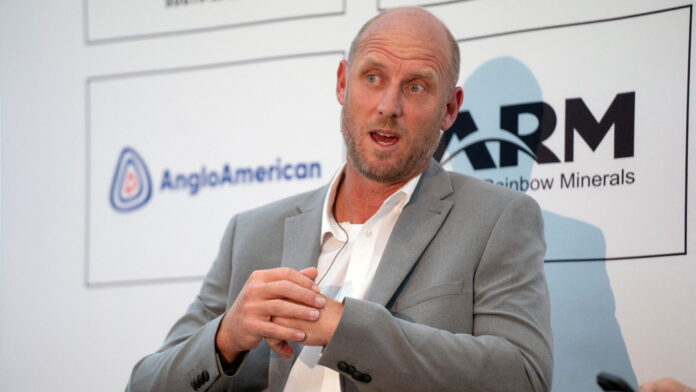
“I wouldn’t swap our portfolio of platinum group metals with any other anywhere,” said Richard Stewart, CEO of Sibanye-Stillwater.
“We can also go up to 1.8 million oz/year if the markets support it. That is the optionality we have and why I say what I do about our portfolio,” he said. Sibanye-Stillwater produced about 1.7 million oz in PGMs last year.
Stewart’s comments provide further evidence of Sibanye-Stillwater’s strategic shift from mergers and acquisitions to extension of existing resources. “The best return we can make is investing within our own boundaries,” said Stewart in a capital markets presentation.
Sibanye-Stillwater recently opened Keliber, a lithium mine in Finland in which it has invested about R15bn, with potentially more capex to come. The project was the brainchild of former CEO Neal Froneman. Stewart took over from Froneman in October.
Some of the projects, which exclude surface and concentrate processing expansion plans, are still in concept (Saffy as part of Marikana) while others are due for near-term approval (Kopaneng extension).
Sibanye-Stillwater expects to add 300,000 oz/year from some of these projects to keep production level at 1.5 million oz to 2035. Over that time, it expects to spend R3bn in a combination of project and stay-in-business capital over that period.
The group is also hoping to grow its chrome business with a plan to become a top five producer. “It is a strategic value drive and enhancing our basket (prices),” said Richard Cox, chief regional officer for Sibanye-Stillwater’s South African operations.
Gold production would also be maintained at Sibanye-Stillwater for at least another decade. This is despite the group running its Kloof gold mine, west of Johannesburg, from “year to year”. But in terms of Sibanye-Stillwater’s plans, its Driefontein mine will operate for up to 11 years while Beatrix, in the Free State, would mine for another six years, he said.
“These are very tough mines but they employ 25,000 people and support a quarter of a million people indirectly,” he said. Stewart added Sibanye-Stillwater would not “flip” the mines. “We will close them,” he said.
As part of its capital markets presentation, Sibanye-Stillwater is due to comment on the status of its Burnstone gold project. Located in Mpumalanga, Burnstone is estimated to cost R1bn to complete (R5bn in total). When it was suspended in 2021, the project was scoped to produce 120,000 oz/year in gold.