



ANGLO American’s auction of its storied diamond division De Beers has turned out to be a bit of a dog show, with many of the potential bidders apparently dropping out amid continuously declining rough diamond prices.
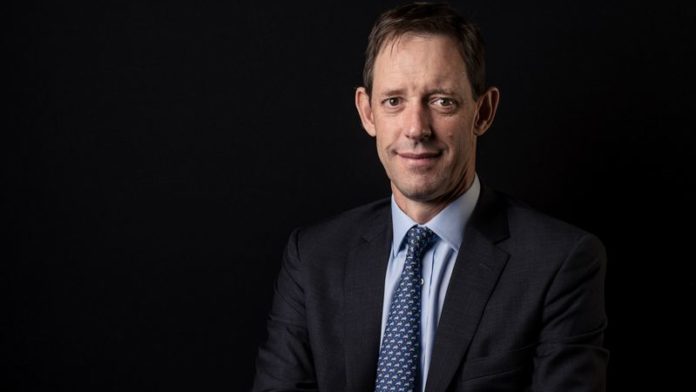
This now includes former De Beers CEO Bruce Cleaver, who had been leading one of the bidding consortiums. He tells Currency he has reluctantly decided to withdraw because neither he nor his financial backers could justify the economics in the current market.
“I think that with the state of the business and the state of the diamond market it felt like it was difficult to see an appropriate return on investment over the short term,” says Cleaver. “I do believe in the diamond industry, and I do believe in the long-term future of De Beers, but it felt for me and my funders at the time that this was not an appropriate time to continue.”
Uh-oh.
Cleaver’s departure from the race appears to reflect a broader pattern. Unconfirmed industry reports suggest that prospective bidders linked to the governments of Namibia and Angola have also stepped away from the process, leaving only former De Beers executive Gareth Penny and his consortium as the last significant bidder still standing.
Uncomfortable optics
Whether those withdrawals reflect cold financial discipline or a recognition that they were unlikely to prevail is impossible to know. Either way, the optics are uncomfortable for Anglo. A sale process that was intended to demonstrate the value of one of the world’s most famous mining brands increasingly risks highlighting the exact opposite.
That is unfortunate, and perhaps avoidable.
When Anglo first announced its intention to sell De Beers as part of its sweeping post-BHP restructuring, management hoped the business’s unmatched heritage, globally recognised brand and unique marketing position would attract strong competition.
Instead, the auction has coincided with one of the worst downturns the diamond industry has experienced in decades.
Rough diamond prices have continued to weaken, Chinese luxury demand remains subdued, synthetic diamonds have permanently altered parts of the jewellery market, and the financing environment has become markedly more cautious. Buyers contemplating a multibillion-dollar acquisition are effectively being asked to underwrite not only a cyclical recovery but also an industry attempting to redefine itself.
The shrinking field inevitably raises questions about whether Anglo’s timing has been as unfortunate as the diamond market itself.
Large mining disposals are always difficult, but they become especially awkward when the seller has already publicly committed to an exit. Once an asset has been declared “non-core”, buyers know the vendor faces pressure to complete the transaction. That rarely strengthens the seller’s negotiating position.
Dramatic value destruction
The challenge is compounded by De Beers’ increasingly unusual structure. The company is now largely centred on two major joint ventures with the governments of Botswana and Namibia. Those governments are simultaneously shareholders, partners, regulators and tax collectors – a combination that inevitably complicates any valuation. In hard numbers, it means Anglo has been forced to repeatedly slash De Beers’ carrying value – from $9.2bn in early 2023 to just $2.3bn earlier this year.
At the same time, the economics of diamond marketing have changed dramatically. De Beers once enjoyed near-monopoly influence over global diamond advertising, but today’s luxury market is crowded with far larger competitors. Brands such as LVMH, Tiffany & Co and Richemont spend vast sums promoting their products, raising the cost of shifting consumer demand for natural diamonds.
Cleaver suggests that this changing competitive landscape deserves greater attention.
“I’d say on the luxury market, it’s not helped by global uncertainty and the oil price spiking, and it’s not helped by the spectre of interest rates rising,” he tells Currency.
“Chinese luxury demand, and particularly Chinese diamond demand, is still poor. And it’s important that those markets come back because they’re very important to the diamond world.”
While the American market seems to be in “reasonable” state, says Cleaver, “we’re in a very tricky period for any discretionary product, given the uncertainty about tariffs last year and the wars this year and so on”.
Yet he remains notably optimistic about the industry’s longer-term future.
An uneasy co-existence
“I think there will always be a space for natural diamonds, and I think consumers will come back to natural diamonds,” he says, though concedes that “the question that needs to be answered is what, if any, structural long-term damage has been done to the natural industry as a result of lab-grown [diamonds] that can’t be repaired”.
The second question is “how do these two industries coexist together? I don’t think it’s plausible for them not to coexist in the future,” Cleaver says.
For Anglo American, however, those are questions for the future. The immediate problem is much simpler.
Even if Penny ultimately succeeds, Anglo will struggle to avoid the impression that the process has unfolded against it. Companies sometimes choose the worst possible moment to sell a business. After almost 140 years as the defining name in diamonds, De Beers may simply have been put on the block at precisely one of those times.
This article was first published in Currency. Currency and Miningmx are part of the Financial Mail Group.