

MENAR Group, an unlisted coal producer, says it can double mineral exports from its South African mines and projects and create 800 jobs through new ferromanganese production. But its plans turn on government succeeding where it so often fails: providing competitive energy and a reliable rail network.
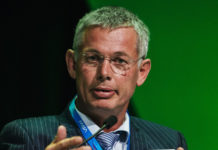
Few companies are more exposed to the pitfalls of the country’s industrial policy than the unlisted coal miner. Its MD Vuslat Bayoğlu says his company is speaking to government on both legs of its business.
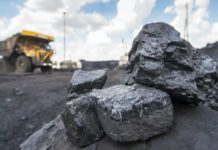
Menar produces 3.6 million tons a year of thermal coal from two collieries which is sold on export markets. A third mine, Gugulethu, was put on care and maintenance owing to limited rail capacity. The rising cost of diesel has ruled out trucking to the ports, says Bayoğlu.
It has, however, been selected as one of 11 private train operating companies (ToCs) in terms of state-owned rail and ports firm Transnet’s new partnership model. The ToCs will work with TRIM (the Transnet Rail Infrastructure Manager), which has been created to manage private-sector entrants to the Transnet Freight Rail (TFR) network.
Transnet reckons the TRIM initiative can add 28 million tons in new freight custom a year to its network, largely by converting existing minerals and container business from road to rail. The initiative will also ease the pressure on Transnet’s balance sheet. But Bayoğlu — while acknowledging Transnet’s vision — says its model is far from perfect.
One potential drawback is the ability of ToCs to competitively source mineral cargoes. Many of them are not integrated miners like Menar, he says. He also questions whether outsourced delivery deals will beat existing take-or-pay agreements between TFR and miners.
“Are they going to be more competitive than TFR or more expensive?” Bayoğlu asks. “If they’re more expensive, companies aren’t going to use them. Another important question is whether ToCs can be more reliable. This might present as a low bar test but it’s worth asking the question.”
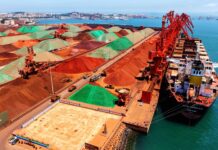
These concerns aside, the stage is set for Menar Ports & Rail, as Menar Group’s ToC is named. “If we can do it with our own rolling stock (purchased new) without relying on Transnet, we will be utilising more than 8.5Mt,” says Bayoğlu. Some of that export tonnage would be in ferromanganese from Khwelamet, a processing complex near Meyerton in Gauteng province acquired by Menar with Ntiso Investment Holdings from Samancor (South32 and Anglo American) in 2025.
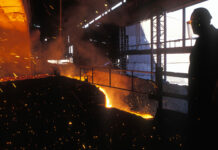
Menar has promised to invest up to $100m to reopen two of Khwelamet’s four furnaces, producing 250,000t/year for export. First, though, Menar needs a new deal on electricity.
The 62 South African cents per kilowatt hour agreed conditionally between Eskom and SA’s ferrochrome producers, Samancor and Glencore, is an ideal model. But can Menar get the same terms given the power is being supplied by Eskom far below the standard 172c/kWh tariff?
The Minerals Council SA says the Eskom deal is specific to the beleaguered ferrochrome industry, described by the council’s president Paul Dunne as a “burning platform”. Without it, SA all but disappears from the ranks of the world’s ferrochrome producers.
“We have applied [to Eskom] and they asked more questions to motivate why we think we need an incentivised price. By the fourth quarter of this year we’ll have feedback from them.”
It is hard to understate how transformative a reduced energy price is for SA’s energy-intensive users. If the final terms are agreed, revived ferrochrome will incentivise the production of anthracite, a reductant.
“If Glencore and Samancor start producing ferrochrome again, the market will need anthracite. That gives us enough to turn ZAC [Zulu Anthracite Colliery] and Springlake back on,” Bayoğlu says of two other coal mines currently mothballed by Menar.
The Eskom deal also helps restore SA’s somewhat underestimated position in downstream minerals production. Japie Fullard, head of Glencore’s ferroalloys in SA, has often remarked that the Lion smelter complex, owned jointly by his company and Merafe Resources, has the best ferrochrome smelting technology in the world.
Bayoğlu has a similar view on Khwelamet. “China doesn’t have anything as big as Khwelamet,” he says. “The largest smelter they have is 37 megawatts installed capacity in one furnace. Our furnaces are each 50MW. This is the largest ferromanganese plant in the world.”
He adds: “If we can bring two of them back, I think it’s going to be a really good thing for South Africa — its reindustrialisation.”
This is a version of an article in The Mining Yearbook 2026 which will be published digitally on Miningmx this week.