


QUESTION: What would you call a company valued at $18bn in 2001, $12.75bn in 2011, that is now finding no buyers at $1bn? Something to ponder. Allow me to take a step back.
Around the turn of the century, I was invited by Ravi Naidoo, founder of the annual Cape Town Design Indaba, to be a guest speaker. The subject: the increasing importance and value of brands from a financial and emotional perspective.
At that time in South Africa, brand valuation was a fairly new concept, though in the late 1980s Australian media mogul Rupert Murdoch had illustrated the financial potential of his titles (brands) by mortgaging them before moving to the UK, repeating the exercise and going on to the US.
However, I had already worked with my London colleagues and SAB’s Graham Mackay and Norman Adami, valuing their beer brands as they developed their “breakout” strategy from South Africa in the dawn of the post-apartheid era.
Wanting my presentation to blend local with global examples was a challenge. However, as with many major groups, considerable financial engineering goes on, shuffling subsidiary companies and divisions around. As groups evolve and meet new demands in their respective fields, operations will be sold off, acquired or merged. With this comes the realisation that brands are assets that can be bought and sold. In other words, the main financial assets of a company may well be its brands.
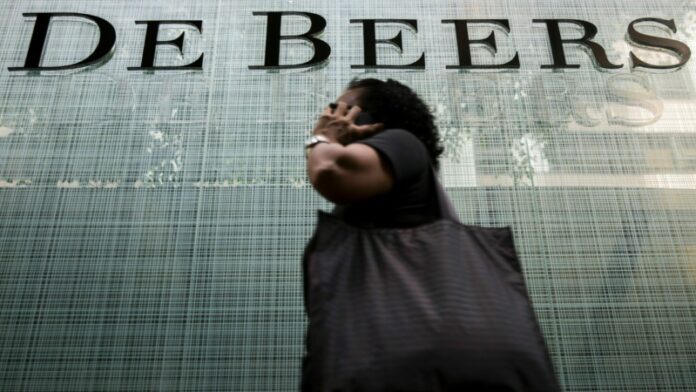
Yet, as part of this exercise, Anglo stated that De Beers as a brand was rated at zero value.
Given that the slogan created in 1947, “A Diamond is Forever”, was one of the best known in the world, and that De Beers largely controlled the global sales and prices of diamonds and was to the industry what Cadbury was to chocolate, this came as a shock to many.
Certainly, on that morning in Cape Town, when I told about 1,500 people that De Beers was worth zero, it resulted in a collective gasp of astonishment.
Culture matters
Over the years, there has been much comment about the power and influence wielded by Anglo over life in general in South Africa and specifically by the Oppenheimer family who, in the early 2000s, were moving increasingly into the background.
Arguably, the move to London came as a considerable jolt to some of the executives who were used to having their way, able to swat away unwelcome questions with ease. But as many other South African companies discovered when going international, the financial world and media can be hostile environments.
In 2011, the Oppenheimers sold off their remaining 40% De Beers stake to Anglo American. A deal was struck at $5.1bn, putting an enterprise value on the total company of $12.75bn. Given the power exerted by De Beers on the global industry at that time, and its supposed brand value of zero, it would be interesting to know how that figure was arrived at.
The family’s timing, however, was exquisite. Not so much for Anglo as various headwinds began to blow: legal issues challenging De Beers’ alleged cartel behaviour, greater competition within the industry, declining value and demand, and, latterly, the development of lab diamonds into a high-quality, affordable alternative.
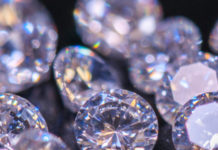
Today it is virtually impossible to distinguish a polished lab diamond from the real thing, posing an existential threat to the miners of traditional stones and to retailers of high-end diamond jewellery.
Commodity, or luxury brand?
Compare this to Johann Rupert’s luxury goods Richemont group, where the alchemy of brand maintenance and building is practised to a stellar degree. Just two of its jewellery maisons, Cartier and Van Cleef & Arpels, are worth billions of dollars as luxury brands. According to the Brand Finance 2026 ranking of luxury & premium brands, Cartier alone is valued at around $12bn.
De Beers would have us believe it is in mining and exploration (both true) and retail. Yet, the latter is hardly true if you don’t have a brand.
Diamonds may be a commodity, but De Beers once had the opportunity to own something much more valuable: the emotional relationship between the consumer and its product.
That is what brands do.
The last time De Beers announced a major advertising budget was in 2017, when it set out to spend up to $140m on advertising and marketing. In 2025, it launched its “Desert Diamonds” campaign, though marketing costs have not been revealed. The thing is, marketing cannot be turned on and off like a tap, and certainly not for the better part of a decade.
If the objective is to build a luxury brand, where is the sustained investment in the brand? Where is the emotional connection? Where is the differentiation from the commodity itself? The history, the slogan, and the global recognition were already there. The question is what was done with them.
As I write this, Anglo has still not announced a final buyer. Many of us remember the days when Shoprite’s Whitey Basson bought OK Bazaars for R1. Is history about to repeat itself?
This article first appeared in the Financial Mail.