




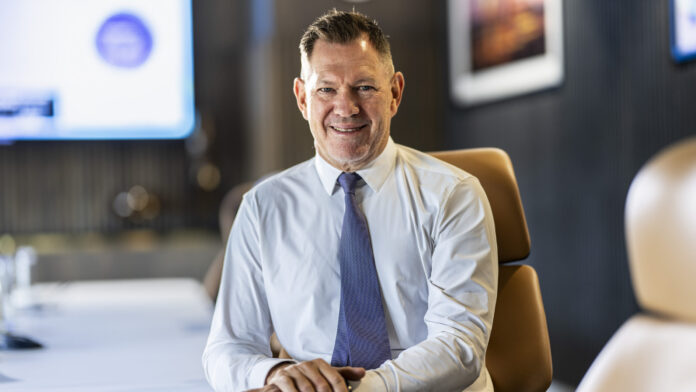
GOLD Fields CEO Mike Fraser admits to some frustration in the wake of his company’s capital markets day last year when it outlined production growth plans for the next five years and detailed a new dividend policy.
“My takeaway after that day, and after some feedback about discretionary investment, is that the market is very short term-focused at the moment,” he said in an interview.
Gold Fields upgraded its dividend policy from a portion of net earnings to 35% of free cash flow before discretionary capex, while setting a minimum of 50 US cents a share annual dividend. It’s an approach to capital returns that’s popular in North America, along with share buybacks, which Gold Fields has also promised to consider.
But analysts fretted that the approach, which translated to a 10%-11% free cash flow yield at the time of the presentation, was undercooked, given the upbeat outlook on the gold price, which gained about 68% last year. At the moment, bullion is hovering just below its previous record high of $4,532/oz set on December 26.
While Fraser is optimistic that the gold price will remain strong this year — and elevated for the rest of the decade — he is cautious about capital allocation, preferring to lock in the firm’s growth options rather than implementing an unsustainable payout policy.
“I’m saying to the shareholders that as long as we’re competing in the top quartile against our peer group on shareholder returns and a dividend yield basis, you should be happy. Why do you want more than that return from us?
“Without investing, you’re not going to get the capital return through the share price.”
Gold Fields is targeting production of 2.5 million to 2.7 million ounces in the medium term and more than three million ounces annually from the 2030s. The company will spend $1.7bn to $1.9bn building the Windfall project in Quebec and has set $2bn aside in discretionary brownfields investment, allocated only if the company meets its shareholder return promises.
“As management, we want to reward our shareholders,” said Fraser. “But equally, we need to have one foot in the future and think about how we set the business for the next generation.”
Another South African gold executive tells Miningmx he thinks the market has become greedy. Investors want top dollar now, but would be highly reluctant to support the company on the downside, hypothetically through a rights offer — a typical symptom of the downcycle.
Focus on exploration
After paying for Windfall’s project capital and the discretionary spend, Fraser said Gold Fields will consider mergers & acquisitions, even though it is the most expensive form of growth. But the focus is firmly on the exploration companies. Gold Fields recently took a 12% stake, worth $36m, in Founders Metals, a Canadian firm exploring the Antino prospect in Suriname.
“That’s the kind of stuff that really interests me at the junior end of town,” said Fraser. “We don’t need producing assets per se right now … We’ll continue to look at really good properties in that junior sector, which is not flush with cash,” he said.
The world’s gold sector has continued to see dealmaking notwithstanding high valuations. Last year Canadian company Robex fought off a A$2.1bn takeover attempt for its joint venture partner Predictive Discovery. Robex and Predictive Discovery are neighbours on undeveloped projects in Guinea. Competition is fierce.
Fraser said the deals will continue to flow this year, partly because the gold sector is relatively unconsolidated, but also because gold is set fair given global economic circumstances.
“As gold prices stay higher for longer, there is going to be significant cash generation, in which case companies are going to be a lot more bullish about doing deals,” he said. “They’re not going to be risking the company on doing those transactions.”
A version of this article first appeared in the Financial Mail.