
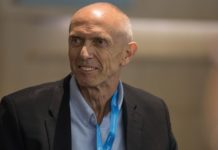

NEAL Froneman led the company he founded, Sibanye-Stillwater, for 13 years before abruptly announcing he would step down last year, aged 65. Those years were a punchy, all-action time of dealmaking all dealt with in Froneman’s swashbuckling, no-nonsense style.
He once quipped he was looking forward to travelling in retirement, having seen the inside of many of the world’s best hotels but rarely the cities in which they were built. Vain hope. Froneman was never going to sit in a gondola while there were more deals to be made.
You describe yourself in your email signature as a ‘retired rainmaker’. What’s that about?
I’m still a rainmaker, and, you know, retirement, to me was never about stopping work. It was about a new chapter. I decided I wanted to get back to what I think I’m probably best at, which is being more entrepreneurial. You know, building and running big companies becomes very, very process-orientated as they get to a certain size. You end up with shareholders that are less flexible, you end up with a board that is more focused on governance and process.
I’m probably as busy if not busier, but what changed is freedom of choice. So I’ve got a lot of varied interests, which I’m sure you want to get into. I’m into a recycling business that Justin [Froneman], my son started. I’m chairing Podium Minerals, a PGM startup in Australia. I’m on the board of Neo Energy, another uranium startup. I’m on the board – and the chair – of a company called Supercritical Metals, which is going to list on Nasdaq and is extracting uranium from seawater. So, really focused on critical minerals, but in startup companies.
Did I hear right, uranium from seawater?
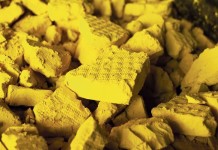
The biggest resource of uranium, because uranium’s not scarce (it’s scarce in the right grades) – is in the seawater. So, what Canon [Bryan, founder of Terrestrial Energy and former colleague at Uranium One] did is he acquired patents from the US government, who had already established how to extract uranium from seawater. We are busy commercialising it now. We’ve acquired access to an oil rig in the Gulf of America (formerly Gulf of Mexico), and the intention is to list this company and commercialise the process. And I’m chairing that company.
I’m still stuck on the seawater part?
Yeah, essentially, what you use is fibres that absorb certain minerals. And of course, the technology is in the fibres that absorb these minerals. Now, they don’t only absorb uranium. In fact, one of the biggest metals from an absorption point of view is cobalt. But uranium is very high on the list. So if you put these fibres and expose them in the right way to a uranium-rich environment, they’ll absorb uranium, and then you can extract the uranium off these fibres.
Now, you’ve got to do it on a scale that makes sense, and that’s what we’ve got to commercialise. So that, again, is off-the-wall stuff. You can’t do that in, as an example, Sibanye, because you lose analysts, you lose investors – they see it as speculating. I can see the opportunity, and in an entity that is focused on doing that, I can play a role. And I am playing a role, and that will soon be listed on Nasdaq.
Will you need to raise big money with the IPO?
We are funded for what we need now. But of course, having a listing gives us access to capital markets. I’ve invested in the company, but there are a number of other private funders, including Canon as well.
You mentioned a recycling business. That’s something you got Sibanye-Stillwater into as well. Why take it on again?
Justin and I have a recycling company based in Oklahoma. It’s a small company, which was marginal to loss-making at best, but we’ve managed to turn it around, and that recycles catalytic converters. The competitive edge is its ability to operate these plasma arc furnaces. We’ve conducted trials on titanium. One of the other companies I’m advising is a company with an antimony project in North Macedonia. And we’ve signed an LOI [letter of intent] for the antimony to come through our processing plant in the US.
Then there’s Podium Minerals, a PGM company that’s got the Parks Reef project. The mining is simple, but the processing is a bit challenging. Again, in terms of funding, PGMs are critical metals, and looking towards the US is certainly of interest to us.
That’s a lot, even for a rainmaker?
You can see how this combination of companies where I have made investments – I sit on the boards – could ultimately become a group of critical metals companies that are real, tangible, sustainable companies in their own right. It could become a group of companies that form a critical metals base.
A masterplan for another Sibanye-Stillwater?
There’s easy money for funding critical minerals projects, especially in the rare earths space, but there’s going to be a lot of mistakes made. I think if you can develop each one of these standalone companies and then eventually, in a smart way, combine them into a diversified critical metals producer – once they are all sustainable – I think that’s the best way to create value and deliver into the requirements of a market that is friendly, is supportive, will finance it, and will give good valuations. So that’s the new chapter.
Whatever happened to the idea for bringing Formula One back to South Africa?
It’s going well. We have secured land near Cape Town. We’ve been very focused on completing a detailed financial model. We’ve appointed Rothschilds as our advisers, and they have completed auditing and are checking the models. We will shortly be embarking on raising the funding and approaching Formula One. So it’s been hard work.
It has to be more than just a racetrack. This is a high-end real estate development: hotels, restaurants, condos, track-side. It’s sort of modelled on Silverstone. So there’s a combination of debt, equity, and founder funding, which is what we are funding now.
Interestingly, the board I’ve put together consists of colleagues from the industry, like Venkat [Srinivasan Venkatakrishnan, former CEO of AngloGold Ashanti and chair of Endeavour Mining]. Venkat is on the board – he’s a financial expert. Robert Appelbaum from Webber Wentzel, who works with me on crime and corruption [Froneman is chair of Business Against Crime], and Bobby Hartslief, who ran the last Grand Prix in South Africa. He is the CEO. So we’re the four directors, or founders, on the board.
That would be a boost for SA, especially given the challenges. It’s something you’ve been outspoken about: the poor levels of governance, the high crime rate, the years of poor policymaking, and a lack of public sector accountability. Do you see any hope?
Just look at the Fraser Institute survey [which ranks mining jurisdictions by investor attractiveness]. We constantly go backwards, and why? Because we implement bad policy. And what is bad policy? Bad policy is anything that is racially based. Now, I say that in full knowledge that we have an apartheid era to catch up on. But I would argue that a lot of that has happened. So we have bad commercial policy. Whether it’s BEE [black economic empowerment], whether it’s affirmative action, whether it’s expropriation without compensation, it’s bad policy.
Then we have bad foreign policy as well, where we align with countries that are not fundamental to the way we work. We are a Western-facing business sector, because our capital comes from Western capital markets, not Eastern. And you might say, well, China can give you debt. That’s about all they can give you. Russia can give you nothing. Iran can give you nothing. So it’s misguided foreign policy.
This article was published in The Mining Yearbook 2026.