





Eighteen mining companies went public in the past 12 months with one aim in common: an ambition to supply the US government’s defence industry. Assisted by US President Donald Trump’s aggressive imperialism, the metals required to wage war – rare earths, antimony and uranium – are becoming a meaningful part of critical minerals supply.
US forces fired 168 Tomahawk subsonic cruise missiles, each loaded with a 100lb warhead, during the first 100 hours of its attack on Iran in February, according to the Center for Strategic and International Studies. For an idea of the scale of the attack, and how it represents a step change, the barrage compares to ‘only’ 124 missiles deployed by the US against Houthi militants in Yemen and Iran’s nuclear facilities in 2024 and 2025.
Each deployment contains tens of thousands of kilograms of metals such as tungsten – metals the US wants to secure in greater quantities. In its own words, the Trump administration wants to put its defence industry back on “a wartime footing”. But the effort is not going smoothly. The five largest so-called US ‘defence primes’ have a combined backlog of undelivered orders of $1.36tn to the end of 2025, up 24% on the year before, according to a report by auditing firm PwC.
In response, Trump is reported to have excoriated his nation’s dwindling number of defence companies for putting money into dividends and share buybacks rather than expanding production. “They can’t do that anymore,” the Financial Times quoted Trump as saying last month.
While the president’s comments about dividends may not sit well with investors in the newly listed defence minerals companies, there’s no denying their enormous opportunity. “Our goal is to cover direct defence demand for tungsten,” Oliver Friesen, CEO of Guardian Metal Resources told Reuters in May. Military annual demand is 2,000 to 3,000 tons, he estimated. Since listing, shares in Guardian Metal Resources have recorded a fourfold increase.
Some IPOs are modest in scale, raising $11m to $68m. Others, however, have secured government funding through Pentagon-linked programmes. In perhaps the clearest signal the US wants to connect metal supply with aggression, the US Army has struck preliminary deals with miners to build critical minerals processing plants on military bases around the country. Bloomberg News described it as a first-of-its-kind initiative by the Trump administration to boost domestic production of key materials.
REalloys Inc., Titan Mining Corporation, ioneer, and EnergyX have reached agreements with the Pentagon to build facilities for processing rare earth minerals, graphite, lithium and boron, the newswire said. REalloys will construct a rare-earth separation facility at the Tooele Army Depot in Utah, and production will be stockpiled on-site for military use, according to a US Army statement. Titan Mining will build and operate a graphite purification facility at either Pine Bluff Arsenal in Arkansas or Anniston Army Depot in Alabama. EnergyX and Sydney-based ioneer – the latter the only non-US company of the four involved and one-time joint venture partner of Sibanye-Stillwater – will develop a lithium facility and a boron plant, respectively.
“Modern defence systems are highly metals intensive, requiring copper for electronics, tungsten for munitions, nickel for aerospace applications and rare earth magnets for advanced guidance systems,” says Baker Steel, a UK-based fund manager in resources. “The replenishment of munitions is also increasingly expensive.” The US government spent $11.3bn in the first week of the Iran conflict alone. The Pentagon has consequently asked Congress for an additional $50bn in spending to replenish its military resources, fearing it will be ill-prepared for a conflict in the Indo-Pacific. The application remains stalled at the time of writing.
Recognising the demand for bullets and bombs, venture capital dealmaking in defence-related tech startups has doubled in 2026, equal to $12bn in investment (see graph). Most of that capital is in the US – Europe has not quite joined the defence charge on the same scale – and predominantly in applications such as drones, surveillance, and autonomous maritime defence tech, driven partly by hostilities in the Gulf region. The drone sector consumed between 3,000 and 8,000t of rare-earth permanent magnets in 2025, about 3% of total rare-earth demand, according to a report by S&P Global.
Weaponised trade
But the US’s push for metals required for modern warfare is part of a broader strategy which has its origins in the Biden-era Inflation Reduction Act in 2022. This Act sought to secure metals primarily for electric mobility and renewable power where the concern was with Chinese protectionism.
Beijing, for instance, imposed gallium and germanium export controls months after the US launched support for battery metals supply in 2023. Then in 2024, China imposed export controls on graphite shortly after the EU and the US expanded financial support for the Lobito Corridor, supporting freight of minerals between Zambia, the Democratic Republic of Congo (DRC) and Angola. With Trump’s second term came ‘Project Vault’ – the US government’s minerals stockpiling initiative. It was countered by a Chinese ban on sulphuric acid and antimony as well as expanded export bans on germanium, gallium and graphite.
The US is unlikely to ever ‘catch up’ to China, which has had at least a quarter of a century’s head start developing primary critical metals supply as well as securing the energy and downstream refining processes. But it can make incremental inroads. A mining CEO tells Miningmx this is all too plain to see. “There’s no transaction happening that they are not across, not part of, or talking to people about,” he says of the US on condition of anonymity as his company also supplies metals to China. “The US government is very, very visible.”
It has invested directly into projects, taking a stake in Ambler Metals, for instance, a junior miner exploring for copper, zinc and silver in northwestern Alaska. This makes for some incongruent alliances as Australian miner South32 – invested in Ambler through Trilogy Metals – is now a joint venture partner of the US Department of War (formerly Defence).
Elsewhere, the US government has saddled up with private equity.
In October last year, Orion Resource Partners announced a joint $1.8bn critical minerals fund – Orion CMC – with the International Development Finance Corporation, a public/private development agency created by the US in 2018, and Abu Dhabi’s sovereign fund, ADQ, as co-investors. The fund’s first major investment is a proposed 40% stake in Glencore’s Congolese copper-cobalt assets Mutanda Mining and Kamoto Copper Company. Glencore CEO Gary Nagle says the plan is to expand the partnership aggressively. Potential investors across the African continent are being examined, though he cautions the foundation agreement has not been inked yet.
In total, Orion CMC’s aim is to increase the fund through additional investors to $5bn. According to reports, it is now evaluating a buyout of a 37% stake in French mining operator Eramet to broaden its rare earth and lithium supply lines as well as Eramet’s investment in Gabon’s manganese sector.
‘At least we’ve opened those doors and can now have those conversations as they think about it. But I think we’ve still got a bit of a way to go before we get anything hard coming out of the EU’ – Richard Stewart, Sibanye-Stillwater CEO
As well as long-term efforts to loosen China’s grip over supply, the US is also attempting a shorter-term strategy to lessen Beijing’s current market influence. One tactic in this regard is for the US to guarantee a price floor for its homegrown rare earths processing company, MP Materials. The aim is to protect the firm against China’s ability to deliberately flood the market with rare earths production.
Providing a safety net to companies like MP Materials has its critics, however, who say mechanisms of this ilk encourage cross-subsidisation and inefficient output. The EU in particular has shown a lower appetite to secure critical minerals by any means. Its members in the G7 resisted a proposal forwarded by US Vice-President JD Vance to form a Western trading bloc that would agree on price supports to protect domestic production. The approach uses AI for its outlook. The EU demurred, preferring to form a view on market prices using “real deals”.
As a variation to the trading bloc, the US has also suggested concluding bilateral deals with Japan and the EU. Its initial scope covers five to 10 minerals, including heavy rare earths, antimony, graphite and tungsten – all subject to Chinese export restrictions.
Despite the EU’s reticence, Sibanye-Stillwater CEO Richard Stewart detects signs of change. “What the EU is doing, or thinking about, is to drive supply from ‘local content’, which is, to some extent, setting a form of floor price,” he says. “It is saying there’s going to be a threshold point where you will have protection.”
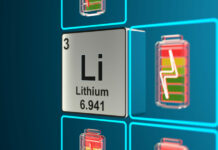
Sibanye-Stillwater has special reasons for wanting the EU to become more aggressive in encouraging critical minerals production. In May, the Johannesburg miner cut the ribbon on its Keliber lithium mine, an R18bn project in Finland. A year ago, the project was in trouble amid a meltdown in the lithium price to about $8,000/t against Keliber’s $13,000/t breakeven. Stewart says China manipulated the price down. The metal is trading back at $20,000/t, but the concern is China could strike again at any moment. “They control 70% of the world’s supply. They’ve weaponised it,” says Stewart.
Far from being an economically unsustainable mechanism, price floors – which come in many different stripes – help minimise the risk of building a new industry. Stewart complains of a decoupling between “the time taken for technology and demand of these metals to develop, versus the time taken for supply to come online to actually deliver it”.
There are doubts Sibanye-Stillwater will have success in persuading the EU to mimic all of the Trump administration’s approach to critical minerals supply. “We have little conviction the company will be able to secure any floor pricing or other incentives from the EU,” say RMB Morgan Stanley analysts Brian Morgan and Christopher Nicholson. Says Stewart: “At least we’ve opened those doors and can now have those conversations as they think about it. But I think we’ve still got a bit of a way to go before we get anything hard coming out of the EU.”
‘That’s the third-order effects that will bite us longer term – when we’re wondering what happened to the market, why isn’t demand there, or how it has changed in terms of the various regions’ – Peter Schmitz, Wood Mackenzie
Whatever the outcome, the EU will inevitably need more metals in order to rearm. By 2030, defence spend by Nato European countries could account for 2% of aluminium, 4% of steel, and 8% of copper demand, according to McKinsey & Co, which based its conclusions on 2025 budgets. In turn, this could create high-margin niche growth opportunities in steel and aluminium – for example, in specialised military steel grades for projectile bodies, tool steel for ammunition manufacturing, and ultrathin electrical steel for drones, the consultancy said.
Waves of disruption
There is preparedness for war and then there is actual war. The consequences of the bombing campaign waged on Iran by the US and Israel, and Iran’s retaliatory hits on neighbours and its politically effective blockade on sea traffic through the Strait of Hormuz, have provided a real-time demonstration of how geopolitical distress affects the minerals industry.
Aluminium smelters in the UAE and Bahrain were directly hit by missile strikes, while Qatar idled its facilities after gas supplies were struck, all by Iranian missiles. Emirates Global Aluminium doesn’t expect to be back to full output for a year.
According to Wood Mackenzie, the crisis threatened to temporarily remove 3.5 million tons of output this year. Consequently, LME aluminium inventories fell 60% in the aftermath and futures prices in the metal surged.
Secondary dislocations caused by the conflict are being felt at the time of writing. There’s been input inflation as raw materials become even scarcer and slower to deliver. “These effects are a little bit softer but still take effort to resolve,” says Peter Schmitz, research director, head of metals and mining at Wood Mackenzie. For copper and nickel production, there’s been reduced access to acid, particularly in the DRC. Higher fuel costs are another obvious factor.
“That’s going to wash its way through. That’s inflationary, but it also means demand growth is probably not going to look as great as we would have wanted,” says Schmitz. “Those are the third-order effects that will bite us longer term – when we’re wondering what happened to the market, why isn’t demand there, or how it has changed in terms of the various regions.”
Project planning is trickier to scope, says James Smith, CEO of DRA, a project engineering company: “You’ve got to allow much longer lead times than you normally would; maybe double the time.” Whether this will extend to fundamental market change is conjectural, however. “I don’t think it’s going to stop a whole bunch of projects,” says Smith. “It will make executing anything in the Middle East region a lot more difficult from a practicality perspective. Does it change the fundamentals? Doubtful.”
‘Regional and national efforts to reduce reliance on specific countries or supply chains are likely to lead to increased mine development but, in a stable environment, lower prices’ – Andrew van Zyl, SRK
Wars of the ilk waged by the Trump administration do, however, add another confusing vector to mining. Competing demands for resources from AI-driven data centres predated the Middle East conflict. “These are likely to constrain mine development, while also increasing power costs and limiting supply options,” says Andrew van Zyl, MD of consulting engineering firm SRK. “Power plant demand has already led to extended lead times for equipment such as turbines.”
A further impact on the mining sector is expected through evolving critical minerals policies, says Van Zyl. “Regional and national efforts to reduce reliance on specific countries or supply chains are likely to lead to increased mine development but, in a stable environment, lower prices.”
Nations developing their own oil and gas resources improve security of supply, but if the Strait of Hormuz fully reopens, increased global supply could result in lower prices. The net result may be increased project activity and equipment demand, but lower overall returns in the absence of government support.
Political winds
Later this year, the US midterm elections take place, an event that will provide insight into how Trump may run the remainder of his office amid rumours that age is fast catching him up, making him less cogent, ever more mercurial. It raises the question of what happens to the US government’s approach to minerals acquisition should the political winds blow.
“I’m not sure meaningfully,” says Darryll Castle, head of operations at TechMet, a Dublin-headquartered company invested with the US in a number of critical minerals projects. “You need to remember the US turned its attention to securing critical minerals supply chains in the Biden government through the IRA [Inflation Reduction Act]. I don’t think that’s likely to change.”
In fact, US belligerence may manifest in unexpected ways. Dealmaking may, counterintuitively, become harder to do. Antitrust approvals for big M&A could see China and the US fighting for the best concessions. One potential deal in these crosshairs is Anglo American’s proposed merger with Teck Resources, the Canadian firm. “Chinese approval is needed but the US will then try to out-compete them,” says one rival company CEO.
“But I think generally the understanding that minerals matter – that you can’t build a data centre without copper, you can’t build a Tesla without lithium – is here to stay,” he says. The Trump administration has crystallised that.
“I think the one thing that doesn’t go away is the understanding that resources are critical, that you can’t develop economies without them, and that the Chinese are 25 to 30 years ahead,” he says.