





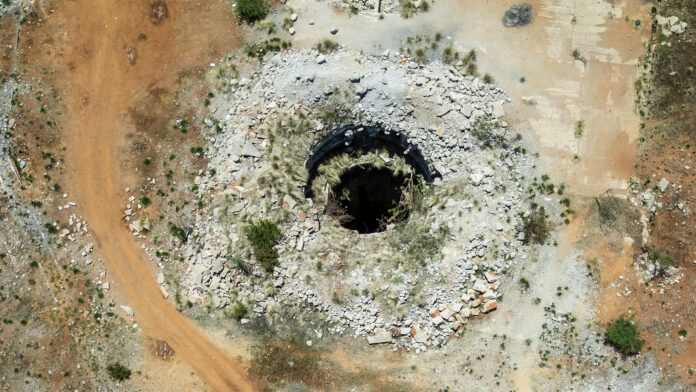
WHEN 87 illegal miners died underground at Stilfontein in 2024 – and 1,826 surfaced from abandoned shafts – the event was a symptom, not an aberration. The uncomfortable truth for South Africa is that illegal mining has become endemic, feeding on poverty, unemployment, and decades of regulatory neglect.
Sibanye-Stillwater, a gold and platinum miner, has been among the most transparent about the problem. It reported a major spike in incidents since 2018. All in all, it has arrested 6925 illegal miners in the past eight years of which 4,164 have been in the past three years – about two-thirds of the total.
In South Africa broadly, gold and chrome are currently the commodities most affected by illegal miners. According to news network Al Jazeera, 30,000 people are mining illegally in South Africa’s abandoned gold mines. The annual economic cost is R60bn-R70bn in lost revenue, according to Minerals Council South Africa data.
In February 2026, Mineral Resources and Petroleum Minister Gwede Mantashe told the South African Human Rights Commission’s (SAHRC) national inquiry into artisanal mining that illegal mining remained one of the sector’s most pressing challenges. The SAHRC launched that inquiry in direct response to the Stilfontein incident.
“Government has failed,” the Minerals Council wrote bluntly, “by allowing this situation to escalate to a point where these illegal operations are now endemic in mining societies.”
The reflex response – policing and prosecution – has a poor track record. In 2017, Ghana launched a major crackdown on illegal mining. Driven by an interministerial taskforce, it deployed around 400 police and military personnel, arrested miners, and destroyed equipment, says Vidette Bester who works for SLR Consulting, a UK advisory firm. Yet the West African country’s illegal mining problem remains enormous.
“One of the biggest challenges is that artisanal mining is often reduced to a single story, focused on crime and illegality, when in reality it is far more complex,” says Bester. “That kind of narrative makes it difficult to respond to the issue in a meaningful way.”
“There are a lot of social ills that need to be addressed that have contributed to this. Some people feel they have no choice but to engage in illegal mining,” says Fred Arendse, president of the Junior Mining Council (JMC), which was founded in 2023 and represents 146 members.
Introducing legislation without building capacity, I don’t think it has a good chance of success – Fred Arendse, SSC Group
Abandoned or poorly rehabilitated mine sites, combined with poverty and joblessness, are the principal drivers. About 6,000 mines in South Africa are under care and maintenance or have been abandoned, creating what the JMC describes as a “free-for-all” environment. “No one wants to go down a hole in the ground,” says Bester. “It is extremely dangerous. [But] people get desperate, and then they go into it.”
The Minerals Council research underlines the perverse incentive structure: it is easier to operate an illegal small-scale mining operation than to comply with all legal requirements, and there are few or no consequences for doing so.
Formalisation: necessary but not sufficient
The draft Mineral Resources Development Bill, published in May 2025, marked the first legislative attempt to regulate artisanal and small-scale mining (ASM). The JMC and the Minerals Council broadly welcome the move. “The ASM provisions are a positive development,” says Mzila Mthenjane, CEO of the Minerals Council. “They recognise that ASM can be a legitimate business activity, but it currently lacks a legislative framework.”
The JMC has, however, raised substantive concerns about the Bill’s definitions. The use of terms such as “traditional”, “rudimentary” and “customary” to define ASM introduces, in the JMC’s words, “significant legal and regulatory uncertainty”. Left undefined, these terms are open to administrative discretion, creating risks of inconsistent permit eligibility, overlapping claims, and compliance disputes.
The JMC recommends replacing these terms with clear, objective criteria: artisanal miners defined by a revenue threshold of up to R5m per year; small-scale miners by a threshold of R5m-R50m.
Not all agree that the Bill hits the spot; far from it.
Christopher Rutledge, executive director of Mining Affected Communities United in Action, a social watchdog, says the draft Bill is fundamentally misconceived. Demanding costly compliance – including complex reports such as an environmental impact assessment – effectively excludes 99% of artisanal miners. They cannot afford the process, and in addition the Bill’s narrow definition of artisanal mining excludes cooperatives and group-based community operations.
“The state has failed to police and to regulate the sector even though they were given warnings,” he says.
However, formalisation without administrative capacity is a recipe for “legalised anarchy”, says AfriForum, an Afrikaner civil rights organisation. It points to destructive illegal gold mining along the Blyde River in Mpumalanga as evidence that the regulatory infrastructure does not yet exist to manage an expanded ASM sector.
“To attempt to legitimise such practices now, without a robust administrative backbone, sufficient safeguards and the necessary capacity to regulate it, is not only reckless but a direct threat to the country’s water security, agriculture and biodiversity,” the organisation says.
Capacity, not just legislation
There is broad consensus among those closest to the sector on what is actually required: streamlined permitting, proportionate compliance standards, and, above all, the administrative capacity to implement whatever framework emerges. The point is made repeatedly, from different directions, by lawyers, industry bodies, and community representatives alike. Legislation without the machinery to support it is worse than useless; it simply adds another layer of bureaucracy that pushes marginal operators back into illegality.
“Introducing legislation without building capacity, I don’t think it has a good chance of success,” says Arendse. He also warns against the tendency to focus enforcement on illegal artisanal miners, or zama zamas, while the organised networks behind them go largely unprosecuted – the kingpins, who profit from illegal mining’s mafia culture while foot soldiers take the risk.
Formalising South Africa’s artisanal mining sector is not a quick fix. The country’s mining landscape – spanning abandoned shafts, criminal networks, bureaucratic dysfunction and genuine poverty – resists simple solutions.
But the cost of continued inaction is immeasurable: tens of billions of rand annually, communities trapped in dangerous illegality, and a regulatory vacuum that organised crime has been happy to fill. The draft MRD Bill is a beginning. Whether it becomes more than that depends on whether the government invests in the implementation capacity to match its legislative ambitions.
A version of this article first appeared in The Mining Yearbook 2026.