





IMPALA Platinum (Implats) has turned more positive on the long-delayed Waterberg JV project as plans for a smaller mine improve its chances of getting off the ground.
Implats owns just under 15% of the Waterberg JV, led by Toronto-listed Platinum Group Metals (PTM). The project has struggled to get off the ground despite being touted as one of the world’s lowest-cost potential large-scale PGM mines, with a projected 45-year life.
Implats CEO Nico Muller has previously been cautious about the project. The company has the right of first refusal over a concentrate offtake agreement but has been reluctant to progress one.
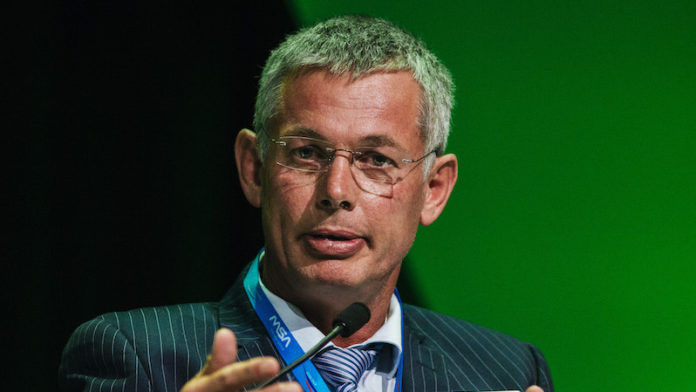
Muller previously said he doubted whether a new PGM mine would be developed in South Africa given uncertainty over future demand for the metals. But speaking after Implats’ full-year results on Thursday, Muller said the latest plans for Waterberg were more attractive.
“Waterberg has got a very likely future. I think the options that are being considered at the moment are looking far more attractive to us than the previous versions, which relied more on a large implementation,” he said.
“I think we are far more in favour of the current thinking.”
Muller said the project was now being considered as a phased development and added that Implats expected any concentrate ultimately produced at Waterberg to be processed through its refineries.
Smaller bites
Implats group executive for corporate relations Johan Theron told Miningmx that two things had changed the group’s thinking.
The first was a more positive outlook for PGMs, helped by slower electric vehicle adoption and expectations of increased industrial demand, including from artificial intelligence-related uses. “The fundamental outlook is much more positive than it was over the last five years,” he said.
The second was the way new mines were being developed.
He pointed to Ivanplats’ Platreef mine in Limpopo and Tharisa’s Karo project in Zimbabwe as examples of large PGM developments being advanced in stages rather than through a single large upfront investment. “Doing it slower, in smaller bites sizes – that certainly works for other projects and it looks like Waterberg has also adopted that strategy.”
The approach meant Waterberg was “more likely” to find support from shareholders and financial institutions, he added.
PTM is studying a smaller, phased development of Waterberg.
HCI CEO Johnny Copelyn, whose company owns about 26% of PTM, said this week PTM was considering zones containing more gold, with a feasibility study expected by November.
Styldrift options
Implats is also studying how best to develop Styldrift II, the large resource it acquired in its takeover of Royal Bafokeng Platinum in 2023.
Theron said the project remained at concept-study stage and was some way from being submitted to the board.
The Styldrift II concept study will look at the most cost-effective way of accessing the orebody through both Styldrift and the neighbouring 20 Shaft, and how best to configure the mine.
The project could eventually produce “easily the same as Styldrift existing” in terms of volumes, replacing output from some older Impala shafts as they are mined out.
Implats has separately approved life-extension projects at its 14 and 20 shafts, while a project to extend UG2 mining at Bafokeng Rasimone North is expected to go to the board shortly. Together, the projects are aimed at maintaining production from the Rustenburg complex for longer.
Canada gets a reprieve
Implats has also given its palladium-heavy Impala Canada operation more time after improved prices and better operating performance returned the business to profitability.
The company had previously shortened the mine’s expected life as weak palladium prices undermined its economics. “In the past 12 months, they’ve made quite a bit of cash,” Theron said. By controlling costs, maintaining production and benefiting from a stronger palladium price, the operation had “handed themselves the right to continue operating for another year”.
Implats’ board has approved another year of operations, provided the mine remains profitable. Theron said it could potentially continue for longer.
Much will depend on palladium prices. “If the market for palladium remains strong, and supportive, it will be easier. If there’s pullback of palladium it’s going to be more difficult,” he said.
Zimbabwe uplift
Implats also said changes to Zimbabwe’s foreign-exchange arrangements had improved its confidence in investing in the country.
Zimplats started the financial year with R962m in local currency that it had been unable to access because of restrictions. Theron said it had since secured access to R746m under a new arrangement allowing it to use the money for local purchases and offset taxes and royalties.
“We’ve been big investors in Zim and continue to do so,” Theron said. “But more confidence makes it so much easier to go to our board shareholders and motivate to continue with those investments.”
Implats is also studying Portal 10 at Zimplats as a possible future growth project.