



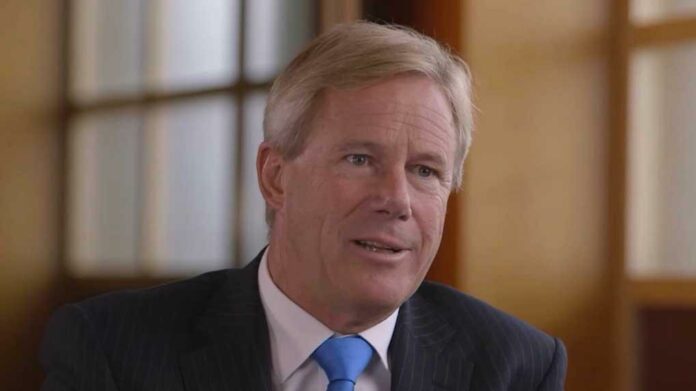
IT was goodbye. As chair Stuart Chambers opened the interim results presentation recently for Anglo American, which is due to merge with Canada’s Teck Resources, he said: “I have spent nine years as chair at Anglo, and I will be handing over that baton to the chair of Anglo Teck, Sheila Murray,” adding pointedly: “On closure of the merger, of course. Not before.”
Indeed. There is one important approval left before Anglo Teck is consummated. That is the support of China’s anti-trust authority, the State Administration for Market Regulation. Duncan Wanblad, CEO of Anglo, acknowledges regulatory clearances are more stringent than five years ago, though he also notes “nothing unusual” in discussions with China; no requests for divestments, for instance.
How nations decide on anti-trust is becoming harder to anticipate. That’s because control of resource supply chains carries a far greater political premium than ever before as competition between China and the US heats up. Anglo’s proposed $500m sale of its Brazil nickel assets to China’s MMG has been delayed many months after the European Commission cavilled at the supply risks that handing nickel production to China might pose to Europe’s steel industry.
One prominent mining CEO told Miningmx in June that concessions Anglo Teck might make to China could invite counter-demands from the US — a mischievous whisper for sure, but an intriguing notion nonetheless. Despite this, “Anglo Teck” has momentum. Analysts have warmed most to the combination of assets, especially mines in Chile, where neighbouring properties contribute to shared group synergies worth $800m.
There is also organic copper growth, an estimated 300,000t a year of new copper from “adjacencies”, as Wanblad describes it. This is most welcome. Growing production from one cost base provides offsets for all sorts of hazards that mines encounter daily. Collahuasi, Anglo’s copper mine in Chile, will share cross-boundary benefits with Teck’s Quebrada Blanca. Both mines have their challenges.
For Anglo, a fresh worry is how decisions taken in the Covid years have set the mining team on course for prolonged low grades today. Wanblad has prepared the market for uneven copper production from the mine until at least 2030, saying the group will take the pain earlier rather than suffer bigger disruptions later. That makes sense: breaking a production promise is a cardinal sin in mining.
None of this has dimmed market enthusiasm. “We believe there is potential for a significant EV/ebitda [enterprisie value divided by ebitda] multiple rerating as the merged company will have one of the largest, highest-quality portfolios of copper assets in the world,” said Christopher LaFemina, an analyst for New York bank Jefferies in a note earlier this year.
All aboard?
Bringing two sets of shareholders together has its hazards, but Wanblad is confident the merged entity will land well with Canadians as well as Brits and South Africans. “We’ve done the rounds,” he says of visits to investors. “I don’t think there’s any real mismatch of expectations from here.” Murmurs of discontent over the merger ratio, described by Wanblad as “notes of debate”, have dissipated. “Everybody’s now focused on what the future brings. There’s a high level of alignment among shareholders.”
Anglo will be heartened by a recent proposal from the Toronto Stock Exchange for a change in foreign-domicile rules that would allow Anglo Teck to retain indexation on the exchange. An outcome will be known by September. “We expect Anglo-plus-Teck to rerate as operational performance lifts and earnings benefit from self-help and growth,” says Myles Allsop, an analyst for UBS, the Swiss bank.
All eyes are on March 2027, the end date Anglo has set for the deal. But there is still much to do. Wanblad conceded the administration required to create a single business is daunting. An interesting conundrum is that Anglo and Teck can’t share operating details because they are still rivals, strictly speaking.
That ought to lead to some interesting discoveries but, hopefully, not too many surprises. Wanblad also told analysts the scale of the structural administration — controls and reports — surprised him, though he later backtracked in a discussion with Miningmx. “It’s what I do all day,” he says.
We expect Anglo-plus-Teck to rerate as operational performance lifts and earnings benefit from self-help and growth – says Myles Allsop, UBS
There is other unfinished business of equal import. Anglo’s portfolio restructure unveiled in May 2024, in the teeth of a £34bn takeover from BHP, remains a work in progress. Its platinum business has been unbundled successfully, though Anglo will be mulling over its timing once again. In 2021, a year before Wanblad became CEO, Anglo demerged its South African coal business into Thungela Resources — weeks later, there was a dramatic rise in the thermal coal price. A similar story unfolded last year, after Anglo sold the last tranche of shares in Valterra Platinum, the demerged platinum company; the share price has since risen about 33%.
No matter, progress is progress. By April, Anglo unveiled the sale of its metallurgical coal mines in Australia to Dhilmar, a UK privately held firm, which will pay up to $3.88bn, including $2.3bn cash upfront. Anglo may yet collect a tidy legal claim relating to the coal mines’ first buyer, Peabody Energy. The US energy group pulled the plug on Anglo’s mines, citing asset integrity concerns. “We are very confident of our position,” says John Heasley, Anglo’s CFO, about a damages suit.
Diamond thruths
Bar the MMG nickel deal, the only other element of Anglo’s restructuring is the divestment of its 85% stake in De Beers. Wanblad acknowledges it is by far the trickiest part of the equation, owing to the decline in rough diamond prices.
In July, Anglo took the drastic step of shuttering Venetia, its South African diamond mine, for two years. It will save $300m by doing so, but its closure may well affect valuation. According to a Bloomberg report in July, the winning consortium may pay $1bn, far below Anglo’s book value on its De Beers stake of $2.3bn.
The final value of De Beers will also have to take into account the huge marketing bill the new owners will have to shoulder. Natural diamond jewellery is long thought to have been undersold to the public.
The likeliest buyer, Global Diamond Consortium, is led by Gareth Penny, a former De Beers MD, along with producer nations and — instructively — diamantaires. Their industry nous is needed after De Beers badly misjudged consumers in 2018 when it launched Lightbox, its entry into synthetic diamond production, described at the time as a “fashion jewellery brand”. Former diamond analyst James Allan laments the move, which he calls a white flag of surrender when De Beers ought to have trusted in its heritage as master marketer.
We have to deal with whatever the market throws at us – Duncan Wanblad, Anglo American
The expectation is for a deal on De Beers before year-end. The Botswana government, whose 15% stake in De Beers gives it pre-emption rights, may yet pose delays, though Anglo will be consulting with the government during the two-phase sale and hopes this will accelerate its processes. The question is whether Botswana wants a larger slice of De Beers. It says it does, but James Campbell, a former De Beers staffer and now CEO of Botswana Minerals, questions both its ability to stump up funds and its appetite.
Winning regulatory clearance for the De Beers sale is no small matter; it could take as long as 18 months. “We won’t know exactly which jurisdictions we need to file in until we’ve got the final group of consortium buyers confirmed,” Wanblad says. “De Beers currently trades in the US, China, Europe, so we should expect it’ll require approval there too, just given market concentrations and so on. I don’t know for sure whether it’s a year — maybe it’s a year to 18 months. I think that just depends on who the final buyer is going to be.”
The upshot for Wanblad and his deputy, Jonathan Price, Teck’s current CEO, is that even when they are seated in Anglo Teck’s downtown Vancouver HQ, diamonds will stay on the group worry list. As a company big on legacy, Anglo won’t want to bid adieu to a badly listing De Beers.
In any event, the market will know exactly how things are proceeding. De Beers will turn up every six months in Anglo’s numbers as a discontinued operation. “We have to deal with whatever the market throws at us,” says Wanblad. The new owner will be consulted, of course, but Wanblad accepts that “the decisions we’re making, they are our decisions”.
Diamonds aside, it’s easy to spot why analysts like the look of Anglo Teck. About 74% of Anglo’s interim ebitda was from copper, nearly $3bn, which increased its contribution 67% year on year.
There are still some quibbles about whether investors will want Anglo’s fertiliser minerals project in the mix, or indeed manganese, some of which is in South Africa. Wanblad likes the optionality of Northern Cape manganese, but it’s the copper that matters most, followed by iron ore. “The successful closing of the merger will, in our view, create the world’s premier listed copper company,” says Liam Fitzpatrick, a Deutsche Bank analyst. As for doubters, there’s always the $4.5bn special payout Anglo has promised when the deal completes.
This article first appeared in the Financial Mail. Click here for more articles in South Africa’s best, buzziest, busiest financial publication.