





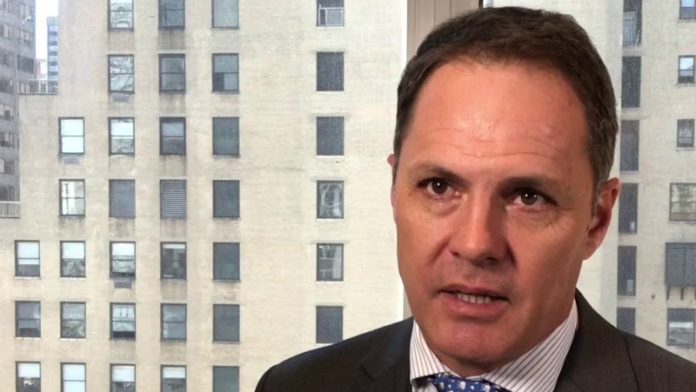
DRDGOLD CEO Niël Pretorius has spent much of the past two decades trying to show that cleaning up the legacy of South Africa’s gold mining industry does not simply have to be an expense.
The gold tailings retreatment company’s latest results, announced on Wednesday, 19 August, are a case in point.
Annual profits nearly doubled to R4.3bn in the year to end-June, it generated R2.3bn in free cash flow and finished the year debt-free with almost R2.8bn in cash.
This was despite spending R3.5bn on its biggest annual capital programme in about two decades.
It also declared a record final dividend of R1.20 a share.
True, a 40% rise in the gold price played a big part. But for Pretorius, the results also show what is possible when the cost of cleaning up old mining areas can be partly funded by the value still left in mine waste.
And that is becoming increasingly important as mining companies face higher standards – and higher costs – when it comes to closing mines and repairing their environmental footprint.
Speaking to MiningMX after the results presentation, Pretorius said the rising cost of meeting environmental commitments was changing the way mining companies had to think about old tailings.
“The standards that we insist upon in terms of environmental closure, restoration of mining footprint in terms of biodiversity and the restoration of ecosystems – those standards have changed.”
Those commitments, Pretorius says, will increasingly have to be funded even where the cost was not built into a mine’s original plans.
This is where he believes tailings retreatment can make a difference.
Instead of seeing old mine dumps only as an environmental liability that will cost money to rehabilitate, DRDGold processes the material for the gold that remains and uses that value to help pay for the clean-up.
“Tailings retreatment is that part of your business, that latent value that’s remained ignored for many years, or unrecognised, that can now kick in and that can deliver into that without eroding shareholder return, or the expectation of shareholder return.”
Beyond the financial argument
For Pretorius, there is also a strong social argument for doing it.
Many of Johannesburg’s old tailings facilities are close to where people live, he says, pointing to Riverlea, Soweto and Dobsonville.
“There was a disregard for where residential areas were situated. People were deliberately placed next to the tailings facilities.”
More recently, poor control over where residential areas develop has added to the problem.
“The only way to address their quality of life – and bring it into line with their constitutional right to clean air, clean water and a clean environment – is for this to form part of a broader national endeavour.”
DRDGold has close to 300 air-quality monitoring points across the Witwatersrand. Pretorius cites the Crown Complex as an example of what rehabilitation can achieve.
“I cannot drive past the Crown Complex without remembering that, in 2006, R16m was allocated for the first time to grass the Crown Tailings.”
The Crown Complex consists of a group of old mine dumps near Nasrec, south of central Johannesburg.
Pretorius says that of the hundreds of dust and air-quality samples taken around the facility in the past year, fewer than 1% exceeded statutory standards.
Where is the permanence?
For Pretorius, that focus on rehabilitation is also connected to a question DRDGold’s management asked itself about what gives the company lasting value.
“At one point, management asked itself where the long-term value of the company really lay.”
Pretorius said there had been little stability in DRDGold’s shareholder register, while management could not just focus on pushing up the share price.
“You cannot simply keep chasing the share price all the time,” he says.
“So, as management, we asked: Where is the permanence? It is in our employees, our communities and the environment.”
Pretorius says the aim was not only to create an “environmental dividend”, but a “multidimensional value-creation model”.
The high gold price is helping that model work.
When cleaning up pays
Pretorius highlights old tailings facilities built over dolomitic rock.
“As recently as the 1950s, it was not considered unusual to build a tailings dam or storage facility over dolomite rock because the rock drained well and made the water balance in the tailings dam easier to manage.”
Over time, however, the adverse impact on underground water resources became clear.
DRDGold is now involved in removing tailings facilities that still pose a risk to underground water. With the gold price at current levels, Pretorius said the work can be done at a profit.
“That is where the sustainable development strategy comes in. A better social environment – your environmental dividend – while also contributing to the bottom line.”
Taking the model further
It is a model Pretorius says more international companies are also adopting.
“But it was not part of the original plan. Mines now have to be closed at shareholders’ expense.”
DRDGold is talking to larger mining companies about working together on older mines. It hopes to find two or three international clients that will allow it to look at ageing assets and see whether rehabilitation can be funded from the value still contained in their tailings.
Pretorius said earlier during a media conference that DRDGold has its sights on Africa and Latin America.
“We say, let us take the infrastructure you were planning to close and repurpose it. Let’s fix this sustainably.”
DRDGold believes old tailings do not have to be only a closure cost.
“Essentially what’s happening here is a profitable sustainable restoration of a poor legacy,” Pretorius says.
“This is something that needs to take place globally on a global scale. And it’s worth doing it because it has become a compelling financial proposition as well.”