


ATOMIC Eagle has agreed terms with the Republic of Niger to re-establish its interest in the Madaouela uranium project, which hosts a mineral resource of 116.5 million pounds of uranium oxide (U₃O₈), based on a foreign estimate.
The agreement, known as a Mining Convention, sets out the new ownership arrangements, with Atomic Eagle holding a 60% interest and operational control and the Niger government holding 40%.
The State’s interest comprises a 15% free-carried interest and a 25% contributing interest.
Atomic Eagle has also agreed to pay Niger $10m for the permit, according to Bloomberg, comprising $5-million within 30 days of its allocation and a further $5-million when construction starts.
A new exploitation permit has also been granted to Madaouela Mining Company.
The Mining Convention contains legal and tax stabilisation provisions and provides clarification on the project’s uranium offtake arrangements.
Madaouela adds to Atomic Eagle’s flagship Muntanga project in Zambia, which hosts a 58.8 million-pound U₃O₈ JORC mineral resource.
The company says the two projects give it greater scale and more development and funding options.
The agreement follows a period of dispute over Madaouela.
Niger underwent a military coup in July 2023, when President Mohamed Bazoum was removed from power. A year later, in July 2024, the Niger government informed GoviEx Uranium that it no longer held rights over the Madaouela mining permit.
GoviEx disputed the decision, saying the withdrawal procedure prescribed under Niger’s mining code had not been followed.
GoviEx subsequently became part of Atomic Eagle through a 2025 transaction with ASX-listed Tombador Iron, which was renamed Atomic Eagle.
In December 2024, GoviEx started arbitration proceedings against Niger before the International Centre for Settlement of Investment Disputes (ICSID), alleging that the withdrawal breached the State’s obligations under the Mining Convention and Nigerien law.
Roadmap for negotiation
On February 18, 2025, GoviEx and Niger signed a letter of intent establishing a structured roadmap for negotiations aimed at resolving the dispute and agreed to temporarily suspend the ICSID arbitration while discussions continued.
Atomic Eagle CEO Phil Hoskins said re-establishing the company’s interest in Madaouela represented a “transformational outcome”, significantly increasing its resource base and adding a second uranium project to its portfolio.
“Madaouela is a large, high-grade uranium asset supported by an extensive body of historical work, and we see clear opportunities to further define and optimise the Project’s development potential.”
Hoskins said the agreement had been achieved through constructive engagement with the Niger government and delivered a “strong, commercially balanced outcome following a period of dispute”.
The groundwork
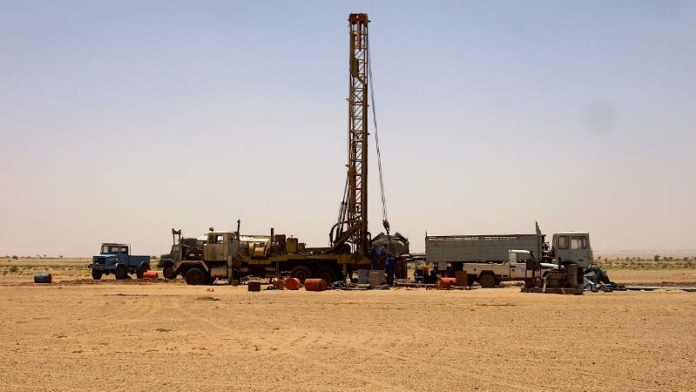
Madaouela is supported by about 600,000 metres of historical drilling, with GoviEx having invested about US$160m in the project. Atomic Eagle said this work provided a substantial technical foundation for further evaluation and optimisation.
Resource verification and technical optimisation have started, with Atomic Eagle expecting a JORC mineral resource in 2026.
Despite the addition of Madaouela, Atomic Eagle said Muntanga remains its flagship development asset and primary focus, with Madaouela providing additional scale and strategic flexibility.