




AN estimated $34bn in deals has gripped the mining sector since 2024, according to Canadian law firm Dentons. Efforts to consolidate ownership and strip back complicated structures have drawn in some of the biggest names. In January, Rio Tinto bid (unsuccessfully) for Glencore. Two months earlier, BHP contemplated a second bid for Anglo American. It stepped back.
One company that has remained outside the melee is South32, a Perth-headquartered mid-tier diversified miner. With a market capitalisation of $13bn, it would be a nibble for a larger predator. That sounds like the kind of deal that could more easily happen than the megamergers that have splintered on price, structure and, one suspects, no small element of executive ego.
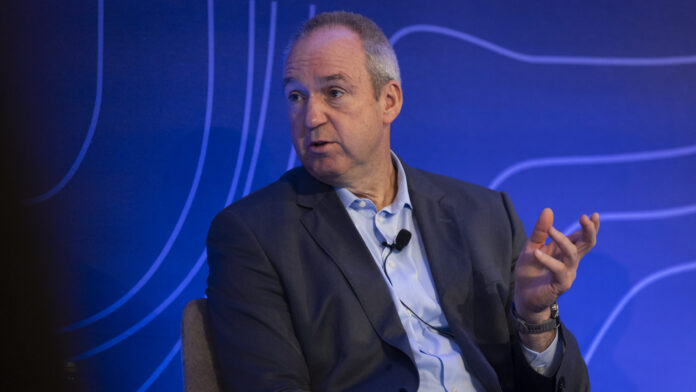
But there are other factors, says South32 CEO Graham Kerr: “I think most people are looking for pure plays.” Anglo and Glencore are building annual copper production of more than one million tons each. In contrast, South32 is a work in progress, building a portfolio of desirable base metals such as copper.
However, Kerr, who leaves South32 this year after 12 years, says this is changing fast.
As CFO of BHP from 2011, he was part of the team that presided over the demerger of its noncore assets into South32 in 2015. He took the job of leading the new company. Its name refers to the 32nd parallel of latitude that links the Australian and South African businesses, which then comprised 80% of South32’s assets.
It was quite a task. “When we were first created we had names like ‘Crapco’,” Kerr said in a previous interview. As a result, a significant part of Kerr’s 12 years, punctuated by Covid, has been about reorganising the business.
If Kerr’s strategy works out over the next 18 months, roughly 90% of South32’s production will be in base metals, with a bias to North America. South32’s centrepiece asset is the $2.2bn zinc/lead Taylor project in Arizona — one of three prospects in the larger Hermosa deposit containing copper (Peake deposit) and manganese (Clark deposit).
South32 also has some early-stage exploration prospects in copper, zinc and silver held through the Ambler Metals joint venture in northwestern Alaska. South32 recently sold shares in its partner Trilogy Metals to the US department of war.
Kerr says he would’ve loved to have seen the Taylor project through to completion, but permitting and Covid delays ultimately frustrated that aim. Another unfulfilled ambition was to have bought 100% of Sierra Gorda, a copper mine in Chile in which South32 bought a 45% stake for A$2bn in 2021. “We’ll probably have more than 50% of our value in the Americas within three years, when the projects are finished,” says Kerr.
Apart from buying assets, Kerr sold the group’s thermal and metallurgical coal businesses in South Africa and Australia as well as nickel properties in Colombia and ferroalloy interests in South Africa.
For this, the share rerate has been modest, which Kerr acknowledges. “The market likes to have good production and growth options, but then as soon as you go into execution, they don’t like it,” he says.
Investors are wary of expensive project blowouts. Teck Resources at Quebrada Blanca, a copper project in Chile, and Jansen, BHP’s potash project in Canada, are recent examples where overruns exceeded 40%. “The market gets highly sceptical,” says Kerr.
“We also have what a lot of people would consider a ‘poison pill’,” he adds. South32’s exposure to smelting through its manganese and aluminium businesses is a big risk for some investors, he says. “What’s the longevity of the smelter, and what does the electricity look like? That’s what comes up in people’s minds.”
Energy costs for intensive fixed assets, such as metal smelters, are a global problem. In October, Australia announced a $395m bailout of Glencore’s Mount Isa copper smelter and Townsville refinery. It was one of three bailouts in Australia last year. Separately, Canada’s Alcoa shut an alumina smelter, also in Australia.
Mozal disappointment
But the announcement today that Mozal, South32’s 63.7%-owned, 320,000t/year aluminium smelter in Mozambique, had been placed on care and maintenance is especially disappointing, if only because the risk to Mozal’s energy supply was hardly a surprise.
Kerr estimates he had 70 “engagements” with Mozambique and South Africa in New York, Abu Dhabi, London and Maputo. Similarly, there had been numerous meetings with Eskom. In the end, the sides couldn’t solve what appears to be a foundational miscalculation in how the power should be supplied.
The way the power deal was structured was that Eskom bought electricity from Mozambique’s Hidroeléctrica de Cahora Bassa (HCB) at its cost of production and sold the 940MW Mozal required at cost plus the producer price index. Over the past decade, however, Eskom’s costs have increased 670%.
HCB, which had been enjoying great profits throughout the contract, was reluctant to renegotiate on terms that South32 could accept. “We always thought we’d be having a discussion with the government of Mozambique, saying: ‘Look, you’re making super profits here, but you’ve got a lot of jobs [on the line]. How do you balance these two things?”
As this contract neared its end, a drought crippled HCB’s ability to continue supplying power. For a new power supply contract for Mozal, Eskom wanted a better deal — roughly double South32’s offer and far in excess of the international average.
There may even have been an element of denial about Eskom and Mozambique. On February 9, at the Mining Indaba in Cape Town, the two sides insisted they could retrieve the power deal. The reality, though, was that South32 had already pulled the plug, having decided weeks earlier not to fund Mozal’s inputs.
“It’s incredibly disappointing for us,” says Kerr. “For a country that’s trying to encourage foreign direct investment, I think Mozal could have been a great example of what can be done.” More than 20,000 direct and indirect jobs will be lost, equal to about one in three manufacturing jobs in Maputo.
South32 and its smelter partners will incur one-off costs of about $60m at Mozal. Ongoing annual care and maintenance costs are $5m, also on a 100% basis.
Eskom
The debacle also leaves Eskom with an oversupply conundrum, which has placed extra pressure on it with its South African customers. Interestingly, it seems willing to settle for a loss-making tariff to South Africa’s ferrochrome smelters. If this is approved by the National Energy Regulator of South Africa, these tariffs could create further problems for Eskom as other intensive users will seek their reduced tariff as well.
Kerr acknowledges that Eskom has made strides in its management, but he is concerned nonetheless. “Despite all the work at Eskom, I worry deeply. You can drive around and look at the power infrastructure and just see how much corrosion is occurring on the power lines that connect things. I don’t know how [Eskom] is going to remain economically viable.
“It is pricing itself out of the market for heavy industry,” Kerr says.
He’s equally dismayed by the South African government’s anti-investment agenda. “South Africa has resources, it has potential, it has great people. But if you’re not growing the size of the pie — if you shrink the pie and cut it into smaller pieces — it’s not going to feed everyone here who needs a job, or take people out of poverty.
“Look at how much industry has left the country over the past five years. Industry continues to be under pressure because the cost of electricity and logistics is too high.”
There is no exact timing yet for Kerr’s departure, but it will take place once his successor, Matt Daley — a rising star at Anglo American before he was headhunted — is up to speed.
Kerr acknowledges, somewhat tongue-in-cheek, that he may have stuck around too long. “I think seven to eight years is about right in this industry. Once you get into double digits, I think you’re getting stale.
“But I never planned to be around this long.”
A version of this article first appeared in the Financial Mail.