





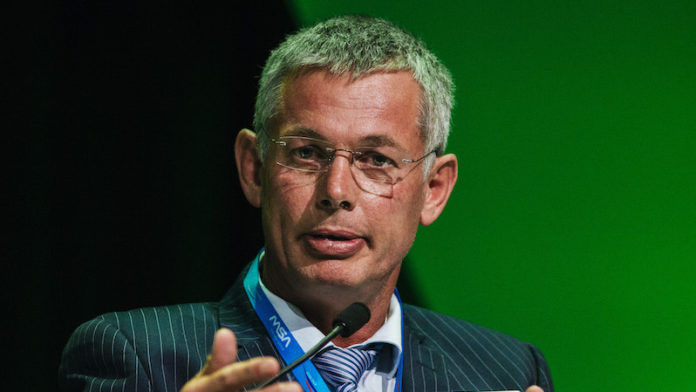
WHAT a difference a year makes. In April 2025 the atmosphere at the PGMs Industry Day conference was sombre, with PGM prices still at low levels and the industry facing a cash crunch to fund maintenance and growth.
Almost 12 months later the mood couldn’t have been more different with the industry having seen prices of platinum, palladium and other PGM metals almost double and the share prices of major producers up by at least 70% over that period.
Yet the executives in the room – representing over 80% of worldwide PGM production – remained extremely cautious about investing in longer-term growth. None of the executives mentioned new mines on the horizon, rather the talk was of life-of-mine extensions, strong balance sheets, cost control and shareholder returns.
Much of that sentiment stems from the state the industry was in until recently, facing depressed prices and rising debt levels. Impala Platinum CEO Nico Muller best summed it up in response to PGMs Industry Day Chair Bernard Swanepoel, who accused the company of having a “lazy” balance sheet. (Swanepoel is lead non-executive director at Implats).
“I want to take you back to 2019 when I sat across the table from investors who basically said the company had become ‘uninvestable’. So, I’d rather have a strong balance sheet, so we don’t get into that position again.”
He stressed that Implats was investing capital to extend the life of mine of its existing portfolio beyond the current three to five years trajectory, but at the same time maintaining strong cost discipline. It’s a message echoed by other executives in the room.
Valterra Platinum CEO Craig Miller said the company was investing in the business with a focus on value over volume, with any extra-cash going back to long-suffering shareholders, who for years have seen little return on their investment.
Paul Dunne, Northam CEO, had a similar response: “We have had severely constrained balance sheets and we have to repair them. These financial considerations limit our potential to spend more on exploration or developing new mines.”
Structural headwinds
Apart from the need to rebuild balance sheets, the industry cited a number of other constraints that prevent large scale investment in future growth. In his keynote address to the conference, Dunne stressed that continued regulatory uncertainty in South Africa will deter capital providers from long-term investment.
A lack of processing capacity in the sector was also listed by the executives as a major constraint. Muller recently called on the industry to take down the fences between adjacent property so that surface infrastructure could potentially be shared by industry players. It’s a call that found resonance among his peers who will have to invest in new processing capacity over the next few years.
“The old farm fences are fictitious and is incumbent on us to look at ways of optimising the industry and collaborating,” Miller said, while Sibanye-Stillwater’s Richard Stewart stressed that dropping mine boundaries would create a number of opportunities to optimise surface infrastructure between neighbouring mines.
The biggest issue though was uncertainty about the long-term path of PGM prices. “In the medium-term the platinum industry is in a good position, but in the longer-term there is not yet an industrial growth area underpinning for a stronger price. With innovation that may happen, but it’s not there yet,” Stewart said.
Muller said large-scale investment would require a long-term, stable platinum price of over $2,000/oz, palladium of over $1,500/oz and rhodium at around $12,000/oz. “None of us see that at the moment given the continued growth of the EV industry.”
Miller added: “Prices have improved but by our estimation we need platinum to be at a sustained $2,500/oz to give the confidence for future investment and ensure 10-20% return on our investment.” He said the industry needs to continue working together in market development and grow future PGM demand. “In the current high price environment, we should make that commitment to ensure that the market is there in future.”
Growth connundrum
Where then will growth come from. The industry executives listed their brownfields projects as the major source of future production growth, headlined by Valterra’s Mogalakwena expansion and Mototolo project and Sibanye-Stillwater’s Marikana K4 shaft. “We have plenty of known PGM projects and I estimate that they will keep this industry busy for the next 10-15 years. We have the financial resources to do that,” said Stewart.
Muller, perhaps best, summarised the message of the day: “Life-of-mine extensions, processing solutions and brownfields exploration are better options for us now rather than a R20bn investment in a new mine. Capital needs to be allocated to look at future growth, but for now we need to consolidate.”