
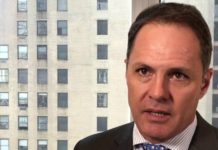



SIBANYE-Stillwater said the European Union was receptive to its proposals on a critical minerals policy but it would take time before the bloc imposed regulations on price security, said the group’s CEO Richard Stewart.
“I think we’ve had a lot of success in terms of getting people to understand the problem — or the challenge and the risk that’s faced,” he said in an interview. “I think the other place where we’ve had real movement is there’s a lot more alignment amongst mining companies in Europe,” he said.
“In terms of getting closer to having hard regulation in place — no. I think we’ve still got a bit of a way to go before we get anything hard coming out of the EU.”
That may be changing, however, after the G7 yesterday agreed to counter Chinese dominance in critical minerals. Meeting in France, it agreed to align stockpiling strategies and launch a new monitoring platform backed by the International Energy Agency. It also agreed to cut reliance on any single non-G7 supplier for rare earths and permanent magnets to below 60% by 2030, with an ultimate target of 50%.
Sibanye-Stillwater opened the R18bn Keliber lithium mine in Finland in April. The mine has capacity to supply Europe’s electric vehicle battery manufacturers with refined lithium hydroxide. Before that, however, Sibanye-Stillwater has to be confident prices will support it. Currently, the mine is producing a concentrate, known as spodumene.
The group has asked the EU to consider a price floor mechanism for lithium that is similar in nature to steps taken in the US. Stewart said if the EU wanted metals such as lithium it was important it “didn’t hang us out to dry” once its capital commitments had been made.
The EU was opposed to a proposal pushed by US vice-president JD Vance this year to set price floors for critical minerals. “The sense we get is its less about trying to be completely self-sufficient, and more about diversifying risk,” he said of the EU’s approach.
“I think what we’ve seen is that the EU is certainly waking up to what the US has done, and I think it has realised it was very exposed on critical metals,” said Stewart. “So on that front I think there’s a lot of similar thinking, and I dare say the EU is watching what the US is doing quite closely.”
Lithium prices plummeted to under $9,000/t last year after peaking at above $70,000/t in 2022. Analysts agree the price was driven down by China which controls production of the metal. The lithium price has since improved to about $20,000/t which makes Keliber – breakeven at $12,000/t – viable.
“Where prices are today, if we turned that refinery on tomorrow, we think it would make good returns based on the study we’ve done,” said Stewart. “The risk is we’re concerned about China collapsing the prices again to force people out of the market.”
“The message to the EU has been: ‘if we turn this on and it works for EU supply, which is exactly why we’re doing it, don’t hang us out to dry. You can’t expect our shareholders to take all that risk,” he said.