


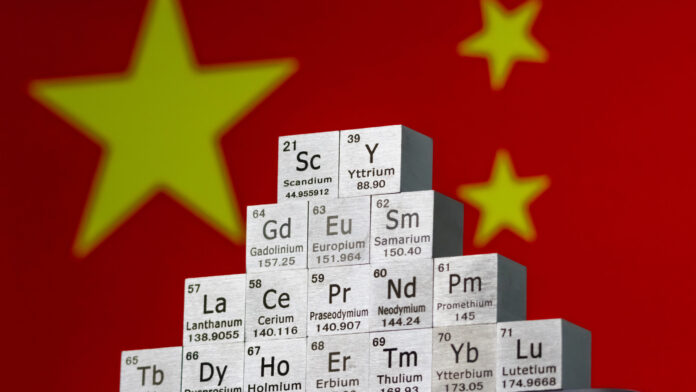
GROUP of Seven leaders have agreed to deepen co-ordination to reduce their dependence on China for critical minerals, with plans to align stockpiling strategies and launch a new monitoring platform backed by the International Energy Agency, said Reuters on Wednesday
Meeting in Evian-les Bains, France, the G7 powers said they aim to cut reliance on any single non-G7 supplier for rare earths and permanent magnets to below 60% by 2030, with an ultimate target of 50% as soon as possible.
The commitment comes after Beijing’s export restrictions on permanent magnets last year rattled global markets and exposed the vulnerability of industries dependent on a single source.
Without naming China directly, leaders said in a joint statement they were committed to establishing harmonised, interoperable mechanisms beginning with two pilot minerals — lithium and nickel — before expanding to five additional minerals annually, with a focus on rare earth elements.
The new IEA-linked platform will co-ordinate policy, data sharing and crisis response, and will provide early warnings of market distortions. G7 development finance institutions and export credit agencies are also expected to collaborate with the private sector to fund the full supply chain from mining through to end-product manufacturing, a process requiring billions of dollars in investment. Countries have so far announced 195 projects since the start of 2026, attracting $74bn in committed capital.
Leaders also said they would explore price-gap subsidies, joint procurement instruments and trade measures including quotas, price floors and plurilateral trade arrangements to further insulate supply chains.
The US is expected to propose legally binding agreements with Japan and the European Union this month.