



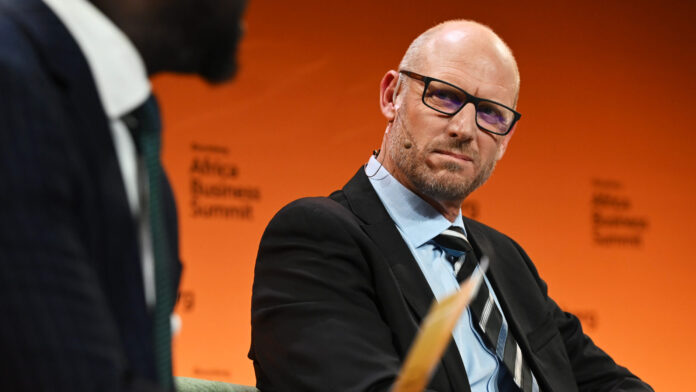
SIBANYE-Stillwater’s CEO Richard Stewart has rung in the changes in his short tenure at the group, pivoting the group’s focus firmly towards existing portfolio potential, especially its South African platinum group metal assets.
It contrasts with his predecessor’s expansionist approach. Neal Froneman, the group’s founding CEO, set in motion plans to mine lithium in Finland, and he kicked the tyres on a host of other offshore projects, including lithium and boron in the US and, less successfully, copper in Brazil.
But in one aspect, however, Stewart is a chip off the old block. Froneman was an outspoken critic of South African minerals policy. So is Stewart. That’s a good thing.
Speaking at the group’s capital markets presentation this week, Stewart laid into the Minerals and Petroleum Resources Amendment Bill, gazetted in Parliament in May last year, saying it was an example of the South African government’s anti-business outlook. Specifically, the amendments raise fresh doubts about the once-empowered, always-empowered principle.
In practice this means Sibanye-Stillwater’s plans to restart the 120,000 ounce-a-year Burnstone gold project, located in Mpumalanga could be challenged by a proposed clause in the amendment Bill which calls for re-empowerment in the event of a mining licence renewal – which Burnstone requires next year.
“When we’re asked about examples of where regulatory certainty matters, in terms of driving growth in South Africa, here’s a project that’s going to employ 3,000 people for 20 years,” said Stewart. “That kind of uncertainty doesn’t help a conversation around this kind of commitment.”
But he was most outspoken about the consequences of government minerals policy for the group’s ambitions to become a top-three chrome producer nationally in the wake of a chrome export levy proposed by the department of trade, industry and competition in its latest industrial strategy document. The aim of the levy is to encourage downstream manufacture of ferrochrome.
“That regulation makes zero sense, and I’ll quite openly say that,” said Stewart. (Froneman was equally forthright while head of Sibanye-Stillwater. He has since expressed outspoken views on criminality in South Africa, describing it as “treason”.) Stewart said chrome availability was not a constraint on ferrochrome: “There’s plenty of chrome.
Were the tax to materialise, it could meaningfully hurt the platinum group metals industry, which supplies 60% of South Africa’s chrome, according to Kleantha Pillay, executive vice-president of sales and marketing at Sibanye-Stillwater.
“If those regulations came in and did impact prices, then yes, it could be putting future jobs in the entire PGM industry at risk,” said Stewart.
Stewart also warned of the consequences for Sibanye-Stillwater’s two-part agreement with Glencore-Merafe JV – Glencore CMI – which is to accelerate chrome output from Sibanye-Stillwater’s Marikana operation and give the JV control over chrome production at the Kroondal and Rustenburg PGM mines. One long-term benefit of this deal for Sibanye-Stillwater is that new projects are ring-fenced.
“It allows us to … start them [new projects] up, because the chrome revenue removed some risk to PGM price volatility,” he said. “If that is taken away through regulation, it will put those projects at risk … that could employ anywhere between eight and 10,000 people, just within our portfolio …”.
Seen together, Government’s industrial strategy and proposed mining amendments will inflict further damage on South Africa’s status among investors.
Based on a survey by the Fraser Institute, the country recorded a new low for mining policy: it ranks among the least attractive countries for mining investment, counting Burkina Faso, Mali and Guinea among its peers.