



GLENCORE is to pay a special interim cash payment of about $1bn and announced a $500m share buy-back following a strong half-year showing driven largely by its marketing business, which benefited from energy price volatility.
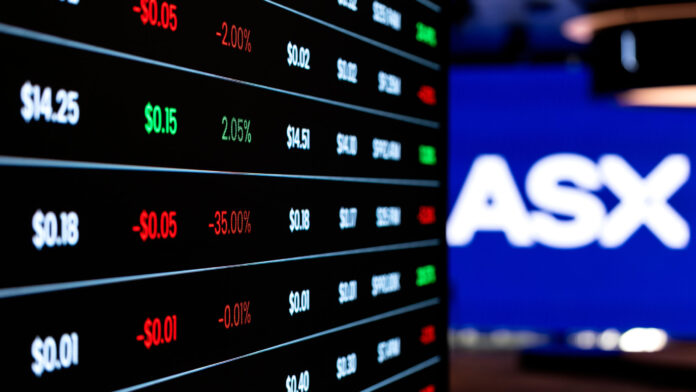
The Swiss-headquartered miner also announced its intention to take a secondary listing on the Australian Securities Exchange this October in order to capitalise on pension asset growth, estimated to reach about A$12.4 trillion by 2045. The listing also comes at a time when investment choice has diminished due to mergers and acquisitions, Glencore said.
“For Australian investors, it would provide increased access to diversified copper exposure at a time when local investment opportunities have diminished following industry consolidation and M&A activity in recent years,” said Gary Nagle, CEO of Glencore, in commentary to the group’s interim results announcement today.
Commenting in today’s presentation on the group’s intention to debut on the ASX, Nagle said it was largely motivated by “reverse inquiry”, meaning demand from Australian investors who wanted more exposure to Glencore.
The other motivation was belief Glencore could get ASX200 index inclusion, triggered when A$1.5bn worth of shares are held by Australian investors, in short order. Once indexed, Glencore shares will attract tracker funds which could increase demand and lead to a possible share re-rating.
“There seems to be growing demand for our stock and we chose Australia rather than other exchanges because of the ability to get index inclusion on a mathematical basis,” said Nagle. In August last year, Glencore scrapped plans to move its primary listing away from London. It had been studying a listing on the New York Stock Exchange.
As for the interim numbers, the marketing business more than doubled EBITDA to $3.3bn for the six months ended June, comprising a third of Glencore’s $10.1bn in EBITDA, itself an 86% year-on-year increase. The industrial assets produced EBITDA of $6.5bn, a 75% lift — a function of higher metal prices and “solid” operational performance, Glencore said.
The overall distribution to shareholders is therefore $3.5bn and comes as net debt was cut by $1bn to $10.2bn close to the group’s $10bn cap. The top-up payment works out to 8.5 US cents per share.
The conflict in the Middle East led to major disruptions to shipping through the Strait of Hormuz, which knocked 10 million barrels per day of oil out of the market at peak. Brent jumped 15% in the opening days of the escalation and then surged to $120/bbl.
“What began the year as a relatively well-supplied energy complex quickly shifted towards a focus on security of supply and access to physical commodities,” said Gary Nagle, CEO of Glencore, in commentary to the results.
“Constraints across oil, refined products, LNG and freight capacity drove heightened volatility across global energy and other markets,” he said.
Aussie subplots
Commenting on the secondary listing, Nagle said the target was for an ASX 100 inclusion which he considered achievable given interest in the share in South Africa.
Austalia and South Africa had similar markets insofar as there was an understanding of mining. “We certainly believe we can get to ASX 100, which is A$5.5bn on the ASX line,” he told analysts today. What gives us comfort on that is that on the South African line, we have 8% of our register in South Africa, which is close to A$10bn.
“So there’s no reason to believe the Australian market … can’t get close to, or even beat, the South African line in terms of the value sitting on the Australian line,” he said.
Citing a report by Jefferies, a bank, Reuters said the proposed secondary listing “could also make it easier for Glencore to pursue large M&A with Australian-listed companies”. The implication is that Glencore may seek to resuscitate talks with Rio Tinto on a merger once it has an Australian following.
Nagle disagreed with this interpretation:”I don’t think it makes any difference,” he told media when asked about the possibility.
Glencore and Rio Tinto called off the merger on February 5. Glencore said at the time it would have expected a control premium for its shares because a key element of Rio’s offer was to nominate a board chair and CEO, presumably its CEO Simon Trott.