



HOSKEN Consolidated Investments (HCI) is grasping for a golden thread of hope in finally advancing its platinum group mining endeavours.
The investment group – better known for its gaming and oil and gas interests – holds a 25.9% stake in Platinum Group Metals (PTM), the Toronto-listed mining company, which is developing the Waterberg Joint Venture, a palladium, platinum, gold and rhodium project.
The venture has been mooted as one of the lowest-cost large scale platinum group metals projects in the world with a 45-year projected life. But it has taken an inordinate amount of time to get rolling, mainly due to ongoing smelting headwinds.
HCI’s latest annual report said PTM was investigating smelting and base metal refining options, engaging South African integrated producers for formal concentrate offtake agreements. But the report indicated that no terms have been finalised.
Alternative strategies for smelting have included establishing smelter and refinery facilities in Saudi Arabia or South Africa, as well as partnering with smaller local operators to modify and expand their operations for processing Waterberg PGM and base metals concentrate.
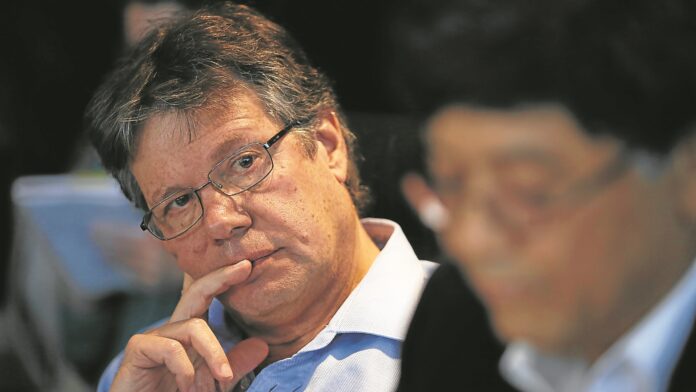
But speaking at HCI’s AGM this week, CEO Johnny Copelyn could not hide his exasperation at PTM’s position. Forces had “succeeded in blocking us at the mountain pass … the mountain pass being smelting,” he said.
Copelyn said PTM remained hamstrung by combination of Government’s refusal to support smelting concentrate outside South Africa. Local refining operators, most likely a reference to Impala Platinum which has a 14.6% stake in the JV lacked enthusiasm in providing smelting services at palatable prices.
Copelyn said the current thinking at PGM was to build the mine in stages. “We will take smaller developments that are within our means financially and probably focus on mining zones that have more gold in it.”
He said gold represented 19% of the mineral elements in the Waterberg JV, adding “you could run it as a gold mine, never mind a PGM mine”.
Copelyn said PGM was undertaking a feasibility study which should be completed by November. “At that point in time we will take a decision whether they should switch emphasis for developing the whole mine or do a more limited project.”
“This time next year if we haven’t found a way of progressing this mine, we will be very disappointed. It is one of the best ore bodies we have seen around the world … not to be able to develop it would be shameful.”
At the AGM, well known investor Allan Groll, a director at JSE listed Trematon Capital, asked how Ivanhoe Mining, which has a platinum project neighbouring PGM’s Waterberg JV, was faring. Copelyn said Ivanhoe was doing exactly what PGM was envisaging for the Waterberg project.
“They have also abandoned doing the whole of their mine in one shot and rather rolling it out steadily. They are ahead of us … but with the same limitations.” (IvanPlats, a subsidiary of Ivanhoe Mining, signed a 10-year processing deal with Northam Platinum for roughly half of its first phase production).
HCI’s annual report showed that a definitive feasibility study update estimated peak funding for Waterberg Mine development at $776m, which could be financed through a combination of metal streaming, equity, and senior debt. HCI noted that, to date, around $93m has already been invested in exploration and engineering.
PTM is, however, in the fortunate position of being ungeared with around $45m in cash.
The group has not caught the upswell in sentiment for platinum majors over the last year with its share price down around 15% on the Toronto Stock Exchange (TSX). At current prices HCI’s stake in PGM is worth roughly R615m.