



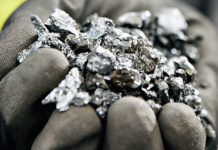

IMPALA Platinum (Implats) earlier this month declared R13.1bn in final dividends, a sum that outshone its rivals. It also revised its payout policy in such a way that the door is open to similar largesse. While that’s sweet news for shareholders — they will receive R14.99 a share including a special payout for the second half of the 2026 financial year — it throws the spotlight on the platinum miner’s R60bn capital spending plans.
“Given the strong balance sheet, investors will be monitoring this balancing act between capital reinvestment and paying dividends from excess capital,” said Ashburton Investments equity analyst Garth Barry in a statement distributed to media.
According to Implats COO Patrick Morutlwa, that R60bn in capex will be over the next five years, equal to between R10bn and R12bn annually, about 40%–50% more than the average of the previous two financial years. Significant as that outlay is, it’s to sustain production whereas previous high spending periods were for growth. In fact, in this new capital programme, only a sliver is set aside for growth, though Morutlwa says some capital will be used for increased refining capacity, which creates optionality for future growth.
“Implats is not chasing growth but replacing ounces,” confirms Arnold van Graan, an analyst for Nedbank Securities. And Implats is by no means alone in this maximum effort to stand still. The entire platinum group metals (PGM) industry in South Africa hasn’t the balance sheet or market certainty required for major growth. Another example is PGM and gold miner Sibanye-Stillwater. It outlined R20bn in spending, again just to maintain output.
Set against this constrained supply, the PGM market is developing new sources of demand and is – in the meantime – finding that sources of established demand is robust. A report by the industry-sponsored World Platinum Investment Council in August said platinum traded in almost perfect correlation (0.95) to gold last year. That’s important because it shows the extent to which investment demand is helping to support price.
Geopolitical factors, the so-called multipolarity, are driving investors to hedge their bets, while an expanding fiscal deficit in the US is further weakening the dollar case. In a similar vein, nations are adding PGMs to their critical metals lists, especially the minor metals used in AI applications, providing new industrial supply support.
Implats has growth levers
The prospect therefore of sustained supply deficits creates a major opportunity for the miner that can expand into them. Unfortunately for Implats, it is rival Northam Platinum that seems to be responding the best. The two fought over control of Royal Bafokeng Platinum (RBPlat) in the corporate fisticuffs of 2022/2023. So it’s interesting that Northam is the subject of a new corporate brouhaha in PGMs after it said in August it was chatting to a large rival about a joint venture or buyout. The market assumes the counterparty can only be Valterra Platinum, given the synergies between their neighbouring assets.
Even if no transaction materialises between Northam and its mystery partner, Northam has growth in the works. CEO Paul Dunne plans to add 500,000 ounces per year in output by 2032. Though it’s off a lower base than Implats, production growth of this scale from a rival poses strategic questions about Implats’ market share. It’s worth bearing in mind that Implats spent just north of R40bn for control over RBPlat, whose assets bordered its own in Rustenburg.
Responding to questions, CEO Nico Muller said Implats has “myriad” internal options, some of which relate to former RBPlat assets. One is the development of Styldrift’s second phase, which has previously been put at a doubling to 600,000 oz/year in PGMs. “Important”, says Muller of the project, but “nowhere near”, estimating a five-year lead time including studies.
Closer in development is an expansion of Zimplats, the Zimbabwean mine in which Implats has an 85% stake. Another is the Waterberg joint venture, a project heavy in palladium, a metal not expected to run the same supply deficits as platinum.
Waterberg
As a result, the project hasn’t featured strongly in Implats’s plans — until now. In fact, the extent to which Waterberg has recently become part of Implats’s project pipeline says a lot about the paucity of simple growth in South Africa’s PGM production.
Says Muller: “Waterberg has a very likely future. The options being considered at the moment are far more attractive to us than the previous versions.” What’s being planned now is a dinkier, cheaper project with significant gold byproduct credits. Perhaps that’s the important part in Implats’s approach to growth, a smaller cup of ambition having tangled on RBPlat big time the last time.
Johnny Copelyn, CEO of Hosken Consolidated Investments, the empowerment partner of Waterberg’s controlling shareholder, Platinum Group Metals Ltd, said recently he’d be disappointed if the project wasn’t in process over the next year.
Implats head of corporate affairs Johan Theron agrees: “It’s just a question of timing. It’s certainly one of the more promising projects.”
A version of this article first appeared in the FM.