





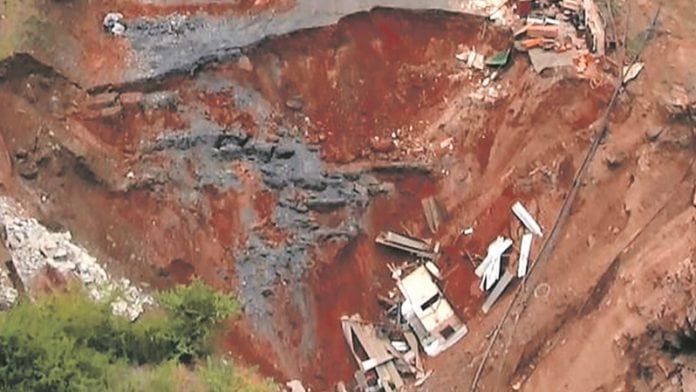
WHEN the Lily Mine collapsed in February 2016, burying three workers underground, it set in motion two parallel tragedies: a humanitarian crisis that has never been resolved, and a business rescue process that has now consumed a decade without delivering its most basic objectives.
The tenth anniversary of both events is an appropriate moment to examine what the Lily Mine experience reveals about the structural limitations of business rescue as a corporate recovery mechanism in South Africa.
Business rescue, as codified in the Companies Act, was designed to provide a structured pathway for distressed companies: stabilise operations, preserve jobs, settle creditors equitably, and restore viability. The Lily Mine case has tested each of these objectives and, by any measure, has failed to achieve them. The mine remains closed. The bodies of Solomon Nyirenda, Pretty Nkambule, and Yvonne Mnisi remain unrecovered. Creditors remain unsettled. Workers remain unpaid.
What the Lily Mine experience exposes is the vulnerability of the business rescue framework to indefinite extension. There is no hard sunset provision compelling resolution.
When a High Court adjournment granted in October 2025 to allow funding to be secured expired on 8 January 2026 without apparent progress, the process simply continued — as it has continued, year after year, without meaningful accountability.
The creditor dynamics in this case also merit scrutiny. Secondary market acquisition of distressed claims is a legitimate commercial activity, but the Lily Mine process illustrates the tension that arises when acquired claims — reportedly running to hundreds of millions of rand — become the decisive variable in whether a rescue plan can proceed. When the economic interests of dominant creditors and the operational goals of business rescue diverge, the legislation provides limited mechanisms to resolve that divergence.
The governance dimension is equally concerning. SSC, as a creditor, reports that amended rescue plans were adopted in June 2025 without independently verified proof of funding — a standard that courts have previously identified as fundamental to a credible rescue plan.
That this could occur after a decade of process raises questions about oversight adequacy.
The families of the three deceased workers attended this year’s commemoration under difficult circumstances, and the absence of key process participants sent its own message about accountability.
South Africa’s business rescue framework has produced genuine recoveries in less complex cases. But Lily Mine represents a category of failure that warrants serious legislative and regulatory attention: processes where the mechanism itself becomes the outcome, and where no stakeholder — least of all the most vulnerable — is adequately protected against perpetual delay.
This article is authored by SSC.