





THE use of gold in trade, as a monetary anchor or as a store of value, spans many centuries. Gold coins circulated freely, and banknotes could be exchanged for gold. As the world left the gold standard, these practices also ceased.
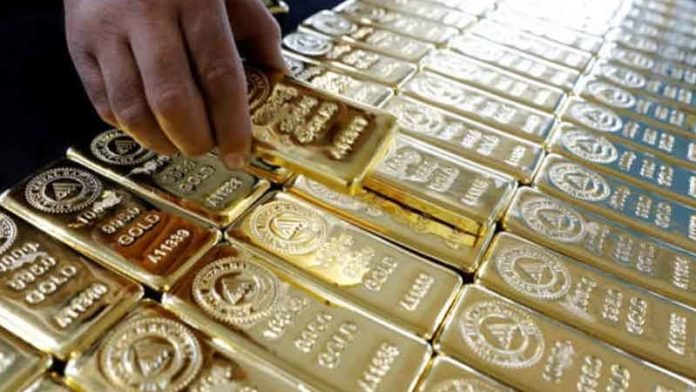
Physical gold is still hoarded and traded in many forms: standard bars of 400 troy ounces (about 12.4kg), mini bars of various weights, and coins. Irrespective of the form the holding of gold takes, it remains an asset that requires storage. This adds to the cost and risk of gold ownership.
Tampering with gold coins is the oldest form of currency debasing. Shaving and clipping the edges of gold coins were common practices. Debased coins were passed on in trade as if they still had full value. A ridged edge for gold coins was therefore introduced to protect their full value.
In 1717 Sir Isaac Newton, as Master of the Royal Mint in England, set the price of an ounce of gold at £3/17/10 (three pounds, 17 shillings and 10 pence). For many years a fixed price for gold formed the basis of the gold standard and of currency convertibility.
This price determination set the value of an ounce of gold as equal to 15.5oz of silver. This ratio changed over time and is now about 1:80 in favour of gold. Over the long period since 1717, hoarding gold, rather than silver, was a better investment.
Following Newton’s price determination in 1717, the official price was equal to $19.75 per ounce in 1792. Subsequently, the official price per ounce of gold was equal to $20,67 in 1834 and $35 in 1934. It was finally set at $38 in 1972. However, by that time the official price had lost its relevance, as the value of currencies was no longer fixed against gold.
Once the fixed price was abolished, gold lost its anchor role for the monetary system. The abolition ushered in international inflation. It also resulted in a sharp acceleration in the gold price, to a (then) record level of $850 an ounce on January 21 1980.
In 1980, the price of gold in rand was lower than the price in dollars, as the exchange rate was about $1.20/R1. This is not a misprint. Compare that to the ratio last week: $1/R17.20.
On January 21 1980, the rand price of gold was therefore about R650 an ounce. The value of the rand dropped below $1 in 1982. Since then it has continued a declining trend, driven by political uncertainty, South Africa’s 1980s foreign debt crisis, inappropriate economic policy and domestic inflation at higher levels than in South Africa’s major trading partners. Achieving an inflation target of 3% a year would therefore contribute to a more stable exchange rate.
During October 2025, the highest-yet intraday dollar price for gold was reached: $4,381 an ounce. At the prevailing exchange rate of $1/R17.38 on that date, the gold price was R76,144 an ounce.
The record level of the gold price can be ascribed to a combination of factors: central banks diversifying reserve holdings, growing investor interest, gold as a safe-haven asset and uncertainty about future international inflation.
Since the beginning of this year, the gold price has risen sharply. On January 2 2025, the price was $2,623 an ounce, while the corresponding price in rand was R49,843. Year to date, gold investors have had a fantastic return on investment.
This stellar price performance follows many years of a weak gold price. For instance, the peak in January 1980 was surpassed only in January 2008. It was a long wait to see a positive nominal return on investment.
The price of $850 in January 1980 is now about $3,350 when adjusted for US inflation. The implication is that the previous peak was surpassed in real terms only in September 2025.
At the time of writing, the gold price is $4,073 and R69,689 an ounce. In rand terms, the price is therefore about 91.5% of the record level in October 2025.
The history of the gold price after January 1980 shows that it is only the brave who would guess whether this is a sustainable new plateau, the basis for a next stellar run or the dawn of the next bear cycle. I am not one of those brave ones.
Rossouw is an honorary professor at Wits Business School and economist at Altitude Wealth.
This column was first published in the Financial Mail.