

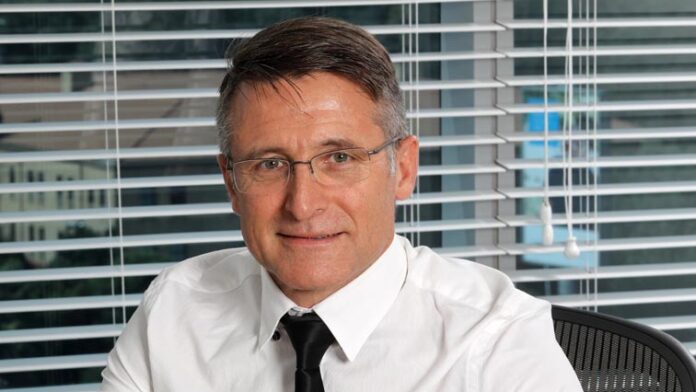
THE endgame for South Africa’s ferroalloys industry ought to be attracting foreign investment in downstream mineral processing that is supplied with competitively priced power, said Japie Fullard, head of Glencore’s ferroalloys in South Africa.
“The one thing South Africa has is we hold 70% of the world’s chrome ore reserves. That is our leverage. And that’s where the conversation needs to shift,” said Fullard.
“The conversation should be: ‘China, bring your money here. Come and invest in South Africa, and process here – with our power solution’. That’s the pitch when we talk to third parties,” he said.
In the short term, however, South Africa’s ferroalloys sector is chasing the clock.
An interim agreement between Eskom and the ferroalloy industry, led by Glencore and Samancor, is to supply electricity at 62 South African cents per kilowatt hour. That deal expires on February 28 by which time a new ‘permanent’ tariff needs to be in place.
At stake is up to 1.8 million tons a year in Glencore’s ferrochrome output which has been put into mothballs over the last two years. Glencore produced about 500,000 tons in ferrochrome last year against 1.5 to 1.8 million tons it could produce with a feasibile power contract (2.2mt is the total installed capacity of Glencore’s ferroalloys). This production supports more than 20,000 direct and indirect jobs while ferroalloys across South Africa has an economic value of roughly R110bn a year, Fullard calculates.
“I have less than 10 days to save that production and those jobs,” said Fullard in an interview at the Mining Indaba conference in Cape Town this week referring to negotiations over Eskom’s power. He is hopeful: “I can say that from government’s side, I can sense the urgency, and I can see that they genuinely want to find solutions.”
Ahead of Glencore putting its ferrochrome production on hold last year, it was paying Eskom 87cKWh, a subsidised rate called the negotiated pricing agreement (NPA). Both it, and the interim 62c/kWh supply are provided within Eskom’s tariff structure.
That is problematic because Eskom could potentially claw back the losses by increasing rates for others – a risk related to the notion of ‘public burden’ that the government discourages. Fullard agrees having someone else pay for a cheap rate for ferroalloys is unsustainable. On the same basis, he rejects taxes on chrome ore as a means of encouraging beneficiation. Instead, a new ‘permanent’ power solution has to be strucured outside the NPA, essentially off Eskom’s balance sheet, he said.
Even were Eskom to supply electricity at a new lower rate at 62c/kWh it, too, is not a long-term solution. “Is that enough for the next year? Maybe – but beyond that we need to be clever. We need to find other solutions. This is just the interim. We need to get to a point where we can really say beneficiation means something.”