
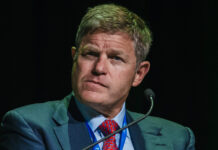


EXXARO Resources confirmed it is reviewing its dividend policy, an outlook CEO Ben Magara first made clear last year after agreeing to buy the manganese assets of Ntsimbintle Holdings in a deal worth about R12bn.
Exxaro’s capital allocation priorities to that point were built around a cash pile – totalling R18bn at one point – for diversification into critical metals. With the manganese deal now unconditional, Magara is relooking at how best to use cash, starting with the payout.
“We need a cash buffer to manage the business through the commodity cycles but we don’t need the same cash pile as before,” said Magara of the potential shareholder return changes. Details will be published on March 19 which is when Exxaro is scheduled to report its full-year results ended December.
But another aspect of this new capital lens are Exxaro’s approach to renewable energy. Magara said in an interview that Exxaro was no longer chasing down a target of 1,600MW in renewable energy, instead focusing on annual spend of up to R2bn.
“We are aspiring to 1,600MW. But I think in a capital allocation model that is properly disciplined, a R2bn spend on new projects in Cennergi – because it gives us the growth that we’ve seen in the last year – is more the right focus,” he said.
Cennergi, a 100% owned subsididary of Exxaro, is targeting a net operating capacity of about 497MW this year. Cennergi recently commissioned a 68MW solar plant supplying Grootegeluk, Exxaro’s Limpopo province coal mine, and last year bought control of two renewable energy facilities nearly doubling its net operating capacity.
“I think the aggressive delivery of renewable energy projects we did last year is commendable,” said Magara. “We’ve also reduced our scope 2 emissions by 25% and our costs by R100m a year, because we’re not buying as much from Eskom,” he said.
Exxaro is spending its own equity financing about 25% of the total cost of Cennergi’s projects with the rest comprised of debt funding, equal to equity spend of about R2bn. “If I look at the capital allocation model, it is what we need to do. I’m more fixated on that number than the delivery of 1,600MW by 2030,” he said.
Another aspect of Exxaro’s capital allocation under Magara is it no longer thinks in terms of critical minerals forming a definite percentage of Ebitda contribution. “We used to talk about manganese, or transition metals, bringing 30% of Ebitda. We are quiet on that because commodity prices do what commodity prices do – sometimes they are up, sometimes they are down. Connecting yourself to a number is fictitious; it’s philosophical.”
Asked for his view of how the prospect of Eskom reaching an oversupply would affect Exxaro’s coal production, Magara said the risk to the company was minimal. Grootegeluk supplies about 22 million tons annually to Eskom’s Matimba and Medupi power stations with stringent take-or-pay clauses.
Similarly, Matla in Mpumalanga province, supplies the Eskom power station of the same name. A R5bn to R6.5bn expansion project taking it to eight million tons a year from six million tons/year previously has been completed, but Magara says that mine is cost plus, Exxaro’s only one on this basis, and has profitability locked in. The expansion will also reduce costs.
The risk of Eskom potentially idling recently reopened power stations was increased last week when it emerged South32 had definitely shut Mozal aluminium smelter in Mozambique accounting for about 900MW of Eskom supply.