



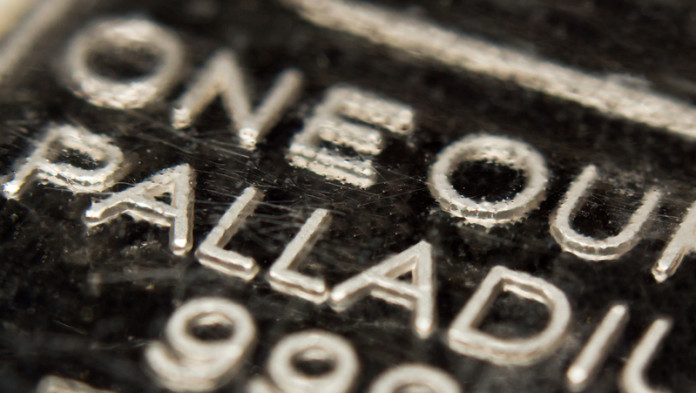
NORILSK Nickel is deploying artificial intelligence as part of a $100m push to develop new applications for palladium, as electric vehicles threaten to erode the metal’s dominant source of demand, said Bloomberg News on Tuesday.
The Russian miner, the world’s biggest palladium producer, aims to create 1.7 million ounces of new annual consumption — equivalent to roughly a fifth of existing demand — through its Palladium Center, established in 2023 with a $100m first-phase budget, said Bloomberg News.
Around 80% of palladium currently ends up in autocatalysts used to curb emissions from petrol and diesel vehicles. EVs do not use the metal, though hybrids do, and a prolonged shift toward electrification poses a structural threat to demand, the newswire said.
The center is working across 30 projects, including collaborating with universities to develop an AI model capable of predicting the characteristics of palladium composites, potentially identifying applications not yet conceived, Dmitry Izotov, director of the Palladium Center, told Bloomberg News.
Among the more advanced initiatives are projects to substitute palladium for gold in microelectronics — where it is cheaper — and to use the metal to improve the efficiency and reduce the thickness of solar cells.
The most ambitious project involves using palladium to extend the life cycles of next-generation lithium-sulphur batteries. “If this technology enters the transport market, it’ll be millions of ounces,” Izotov said.
Nornickel produces around 40% of the world’s primary palladium from polymetallic ore deposits in Siberia. The palladium market is nonetheless expected to move into surplus as long-term automotive demand softens, Bloomberg Intelligence analysts said in December.