



MARKET volatility caused by the US-Iran war hindered Gold Fields from buying back shares in terms of a $100m capital return programme unveiled in February, the company said on Thursday.
But the conflict could have a much more influential bearing on the miner’s ability to deliver into its cost guidance for the year, though it has maintained guidance for now.
Gold production is forecast to be between 2.4 to 2.6 million ounces. All-in sustaining costs and all-in costs are expected to be between $1,800/oz and $2,000/oz, and $2,075/oz and $2,300/oz respectively.
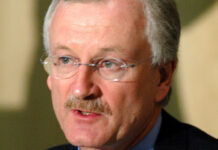
Commenting in its first quarter operational report, Gold Fields CEO Mike Fraser said share repurchases had “been limited mainly due to the high volatility in global markets since the beginning of the US-Iran war in February.
“This volatility adversely affected gold and gold equity prices,” he said. He added the company would seek opportunities to execute the programme which could well have presented themselves post the March quarter.
Shares in Gold Fields gained 30% in January alone, but after hitting a high of R936/share on January 29 they sank 15% two trading days later. The share was back at R928 a month later but then fell 28% by mid-March, near quarter-end.
The Van Eck Gold Miners ETF (GDX), comprising 54 gold shares, gained 36% between January and February before shedding those gains just as the US launched airstrikes on Iran alongside Israel. That 38% retreat in March was the GDX’s worst performance since October 2008, the month after the Lehman collapse. Gold itself fell 17%, its worst monthly performance since 1983.
The geopolitical uncertainty, specifically the embargo on shipping through the Strait of Hormuz, boosted energy prices as well as reducing expectations for interest-rate cuts which weakened gold. The Middle East crisis has translated into significant cost inflation.
Gold Fields reported a 10% increase in first quarter all-in costs year-on-year and a 13% increase in all-in sustaining costs during the quarter.
“These costs were in line with planned additional discretionary activity but negatively impacted by higher royalties, stronger producer currencies and recent global inflationary price impacts,” said Gold Fields.
Fraser said he was “confident” the group could remain within its cost guidance but warned that if prices move higher “this will place significant pressure on our ability to deliver cost within the guidance range.” Cost mitigations had been put in place, he said.
“In this volatile context, we maintain a cautious outlook, while taking practical steps to protect delivery,” he said.
Since February diesel costs had increased between 30% and 70% while explosive and cyanide cost 10% more in the quarter. Freight costs increased 40% while LNG was 30% higher.
Gold Fields is not alone. Sibanye-Stillwater reported a 15% increase in operating costs in the first quarter which was also partly linked to gold price related higher royalty taxes.
The increase in costs raises questions as to investor exposure to gold shares should the metal experience a significant weakening.
“What happens after the party,” said Arnold van Graan, an analyst for Nedbank Securities. “If gold stays flat or goes down it’s going to be a very different kettle of fish for investors,” he said.