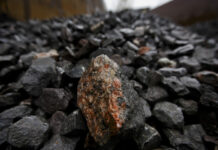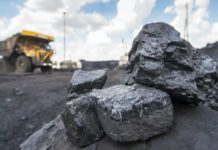



COAL mining group Salungano, which was long in limbo, is finally making money again – it’s just that it owes R2.2bn in mine closure costs it has no way to fund, and not many analysts are paying attention.
Nobody complains about the coal. When the lights go out, people complain about Eskom, the government, the engineers, the management, the ANC … and anyone else who comes to mind. The company that actually digs the fuel out of the ground in Mpumalanga and trucks it to the power station gets no credit when the grid holds and no blame when it doesn’t. This might be a reasonable description of how the JSE treats Salungano.
The stock — which was suspended from August 2023 to mid-May this year by the JSE for not publishing financial statements timeously — now trades roughly R48,000 worth of shares a session, barely enough for a modest spit-braai. It pays no dividend, carries a retained earnings deficit of R458m, and its latest results are unreviewed, meaning they have not been subjected to an independent audit or even a review engagement. Since being readmitted to trading on the JSE, the share has not breached the 100c mark.
And yet the numbers tell a seductive story. Revenue for the six months came in at just over R3bn, with operating profit registering at R328m. Cash from operations was R354m and profit after tax reached almost R158m. Annualise that against a market cap of R319m and you get an earnings yield approaching 100%. A free cash flow machine, apparently, available for the price of a modest flat in Sandton.
The market, though, remains unimpressed. The share has doubled off its pre-suspension close to about 97c — but that is still far below the 205c seen in 2017, when Salungano, in its former corporate guise Wescoal, still had a growth story. The share price suggests the market has read the footnotes.
Let’s start with a breakdown of the business. In the interim period there were coal sales of R2bn to Eskom, plus R715m in transport under Eskom service contracts. So that’s almost 95% of total revenue from one customer. No exports, no second customer worth naming.
Then came the debt. In financial 2020 the group borrowed R1.1bn, net debt surged 175% in a year, and both facilities expired in June 2023 with the repayment missed. After 26 months in continuous default a standstill was signed, and the debt was cleared through late 2025 and early 2026.
That default sits in a note to unreviewed interim results that arrived months late — alongside a disclosure that the financial 2025 annual accounts were themselves nine months overdue. Before that, in August 2023, the JSE suspended trading after the audit committee resigned en masse and the major mining subsidiary entered voluntary business rescue. The company that once projected dividend optionality spent two years in suspension, default and business rescue simultaneously.
In the financial 2025 integrated annual report — published nine months late — the board was frank. Humphrey Mathe, the independent nonexecutive chair, noted: “I believe it is important to state candidly that our work is not complete.” CEO Robinson Ramaite said: “While risks remain, I am encouraged by the progress achieved during the year and believe that the foundations laid in financial 2025 position the group favourably for the period ahead.”
Investors might want to reality-check these statements against the latest Salungano balance sheet, which shows total equity of R172.7m against total assets of R3.674bn — a 4.7% ratio. Retained earnings are reflected as negative to the tune of R457.6m. The financial 2022 audited accounts showed positive retained earnings of R194.2m, suggesting the intervening three years destroyed R651.8m.
But one figure overwhelms everything else on the balance sheet: the environmental rehabilitation provision (ERP) of R2.23bn — a legally required obligation that becomes cash-payable when the mines close. It was R626m in financial 2019, R1.39bn by 2022 (when KPMG flagged it as a key audit matter) and R2.23bn by September 2025. In the latest half-year alone, the ERP grew R116.7m with no new mining disturbance — purely from the passage of time.
The scale is difficult to ignore: the provision is 12.9 times total equity. The ring-fenced rehabilitation fund holds R201.1m — 9% of the obligation. The group contributes roughly R30m a year. At that rate, closing the gap would take about 75 years.
The second item is the deferred tax asset: R475.7m, the second-largest asset on the balance sheet after mining properties. To utilise it, the group needs to generate R1.7bn of future taxable income, against a current retained earnings deficit of R458m. A 50% write-back would wipe out total equity entirely.
A further wrinkle appears in inventory: R237.4m provisioned — up from R3.1m a year earlier, a 76-times increase. The notes describe it as obsolete and slow-moving stock. Whether it is a one-off from the default period is not clear.
At least the operating cash flows are real at around R354m from operations in a single half-year, with the bank debt now cleared. Separately, RBFT — the major BEE shareholder — has an outstanding loan of R57.2m at prime plus 2%, an unusual related-party arrangement worth watching.
Equity value in this company is whatever cash flows remain before the rehabilitation bill becomes payable — and that is not a long window. An earnings multiple gives the wrong answer. Strip out R2bn of unfunded rehabilitation, apply a haircut to the deferred tax asset and provision for the inventory write-down, and the question of what is left for ordinary shareholders answers itself.
This article first appeared in the Financial Mail.