



Master Drilling’s share price performance has lagged so far this year dropping from around R18 to current levels around R15 despite what CEO Danie Pretorius describes as a “resilient” operating performance for the six months to end-June.
A big reason for that could well be the company’s action in delaying declaration of the annual dividend for the 2025 financial year because of the uncertainties created by the situation in Iran.
Master Drilling eventually declared a “special dividend” of 40 South African cents in June but Pretorius reckons the company should be able to declare a normal annual dividend for the 2026 financial year despite the uncertain conditions that continue to plague developments in Middle East.
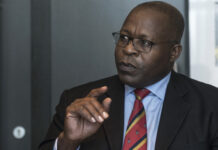
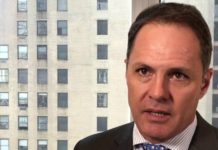
According to chief financial officer Andre Van Deventer the key factor in deciding to finally declare the 2025 dividend was the realisation by management that, “the impact of all this on the business was controllable.”
“Even though the situation is still uncertain we think it’s controllable and we are more comfortable where we are today. The core of the business is doing fine with headline earnings up 17% and margins pretty much the same as last year,” he commented.
Effectively, it seems Master Drilling management has adapted to a “new normal” of global business uncertainty although Pretorius reckons there are still three areas in particular that have to be watched carefully.
These are the volumes of mineral concentrates being shipped to China to be converted into final metal output, the volatility in currencies especially for companies based in South Africa and the inflation threat.
Van Deventer reckons holding back on the annual dividend has overall not harmed investor perceptions of the company.
He commented: “We don’t look at the share price. We believe it is way undervalued and has been for the last decade. We do what we need to do for the business and the share price is not important to us.”
Arguably the most telling number in the interim results statement is the huge jump in Master Drilling’s declared sales pipeline to $1bn from $515m the previous year.
That speaks volumes for the state of the global mining industry and Master Drilling’s ability to benefit from this.
“The mining industry is doing well. If we get the work that we should and we execute as we should then we should do very well,” comments Van Deventer.
Pretorius reckons the two sectors of the mining industry that Master Drilling is particularly excited about are copper and gold and he highlighted in particular the opportunities being presented for mechanisation in dealing with the increasing volumes of material on the giant South American copper mines.
“The copper grade on those operations is probably half today what it was in the early 90s which means a huge amount of waste mining. I also believe the fundamentals of the gold industry are much better today than they were ten to twenty years ago,” he says.
Turning to geographic business localities Pretorius cited Saudi Arabia as a key region for future mining business “once the uncertainty settles down in that part of the world”.
Conditions in the South African mining sector have also improved markedly judging by the revenue breakdown which shows a rise in revenue to 30% of Master Drilling’s total of $155.8m for the six months to June compared with 23% of the total of $133.2m for the six months to June 2025.
Pretorius attributes the rise to increasing business from the platinum group metals industry which he says will be the main driver going forward.