


A largely unknown mining junior listed on the London Stock Exchange – Neo Energy Metals, whose current share price is less than 1 pence – is on the point of finalising a deal with Sibanye-Stillwater to reopen the former Beisa uranium mine.
Beisa was developed by the former Gencor in the late 1970s and it started production in 1982 as South Africa’s first primary uranium mine with gold as a by-product. But it was shut down in 1984 because of a slump in the uranium market. Operations continued focused on mining gold only. Beisa – currently known as the Beatrix 4 Shaft Complex – will be called New Beisa and Neo Energy is planning a JSE main board listing for later this year.
While Neo Energy Metals is largely an unknown quantity to South African investors, a number of directors and top management will be familiar.
The CEO is Theo Botoulas, who started his career as a mining engineer on the original Beisa mine, becoming a mine captain there, and whose subsequent career covered uranium, gold, diamonds, base metals and industrial minerals. He was CEO of junior diamond explorer BRC Diamondcore.
The chair is Neal Froneman, who retired last year as CEO of Sibanye-Stillwater. He said at the time he was going to do something totally different to mining including helping bring a Formula One Grand Prix back to South Africa. Clearly, the lure of mining was too great.
John Wallington is another name listed under the firm’s directors who stands out. Wallington spent 27 years at Anglo American, eventually becoming CEO of Anglo Coal, after which he ran the former Coal of Africa (now MC Mining) from 2010 to 2013.
Some $500m was invested historically in Beisa to set up the mine and its surface infrastructure, including a gold processing plant with a milling capacity of 120,000t/month.
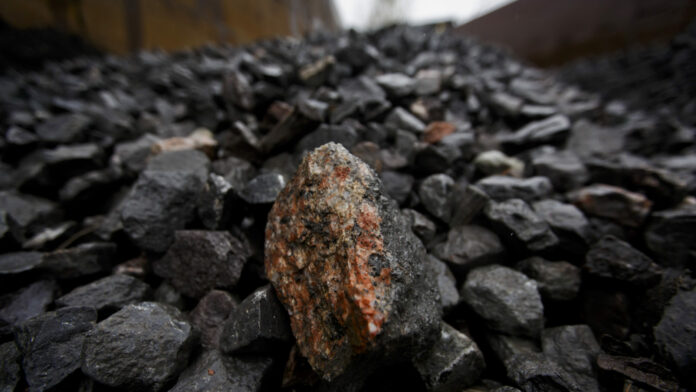
According to Neo Energy, the project has a current measured and indicated resource of 26.8m pounds of uranium grading at 1,100ppm (parts per million) and 1.2m ounces of gold, all in accordance with the South African Mineral Reporting Codes (SAMREC).
The Beisa Reef, which is the main mining target, is accessible from the existing shaft at depths between 300m and 1,000m. Phase One of the project targets a mine life of 17 years, producing about 810,000lb of uranium and 52,000oz of gold annually at an all-in sustaining cost (ASIC) of below US$30/lb of uranium equivalent.
New Beisa is being acquired from Sibanye-Stillwater through a Section 11 transfer of the Beatrix mining right and the existing mining right, power and water usage rights are all in place.
Botoulas said in an interview the acquisition is a 50/50 cash and equity transaction, with Sibanye-Stillwater being paid R250m in cash and keeping a 15% to 18% stake in Neo Energy depending on funding.
He stressed the fact that the uranium resource at the mine has been left largely intact and it is high grade at 1,100ppm. “People elsewhere in the world reckon they have a winner with grades of 350ppm,” he said.
Botoulas also believes that operating in South Africa gives his company an advantage in international uranium compliance and regulation. “We are sitting in a country that has a 70-year history of uranium production,” he said.
Neo Energy has been approached by a number of parties interested in buying the uranium to be produced and also offering funding for the project, says Botoulas. But he adds it’s too early for management to make these decisions.
“We cannot do that yet because we have to get our production profile fixed before we start entering into such agreements. We are currently reworking our numbers and upgrading the reserve and resource statement to the JORC [Joint Ore Reserves Committee] code and we are pushing to get this done by the end of the year.”
He says it’s also too early to commit to a definitive cost of getting the mine back into production: “We have in our heads a figure of around $100m, which is cheap for a project like this because all the mine infrastructure is already there except for a uranium plant.
“We have to rejig the gold plant and then develop and build a new uranium plant. What makes this project is that the two shafts required– vertical and sub-vertical – are already there. If you had to sink those shafts today you are looking at a cost of $300m to $400m for those alone.”