



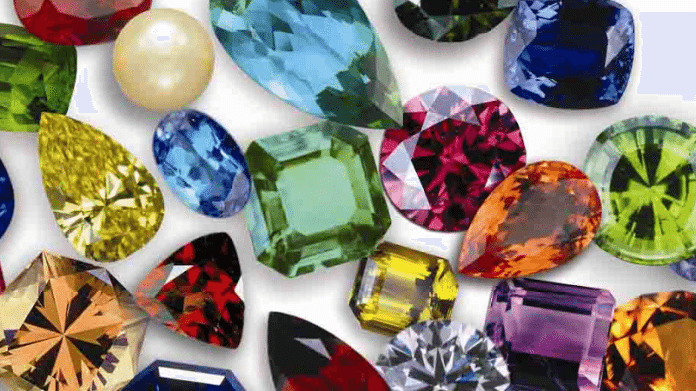
A SHRINKING supply of natural gemstones is pushing collectors and jewellers beyond the traditional favourites that have dominated the market since the Second World War, driving up prices for once-overlooked alternatives, the Financial Times reports.
Mine closures, depleted deposits and mining restrictions are limiting supplies of several stones, while shifting tastes widen demand for options such as Paraíba tourmalines, spinels, tanzanite and unheated sapphires, said the newspaper.
Fine jewellery expert Joanna Hardy told the FT roughly 50 gemstones are used in jewellery, and that the trade increasingly treated any durable, beautiful and suitably rare stone as “precious” rather than “semi-precious.”
Paraíba tourmaline prices climbed as much as 45% last year, with one stone fetching $311,000 a carat at Christie’s in 2025, This was after Brazil’s Batalha mines closed in a 2016 crackdown on illegal mining.
Spinel prices have risen roughly 15% annually over the past decade. Natural pearls are also scarcer, says Hamilton & Inches CEO Victoria Houghton. This is because environmental change has shrunk mussel populations, lifting interest in naturally pink, silver and lavender tones alongside classic cream pearls.
Diamonds face similar pressure at the top end. Australia’s Argyle mine, once source of about 90% of the world’s pink diamonds, closed in 2020, and the Ellendale mine, a key yellow-diamond source, shut in 2015. Global rough diamond output has fallen from 176.7 million carats in 2005 to 98.8 million in 2025, said the FT citing Kimberley Process figures. This is as lab-grown stones reshape the wider market.