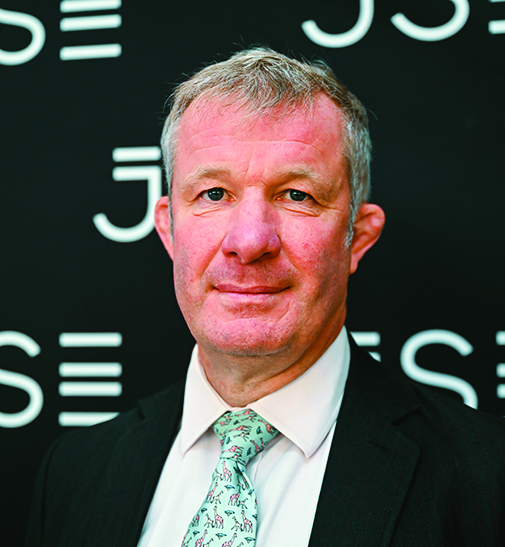

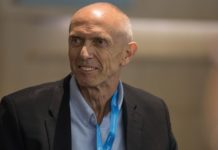



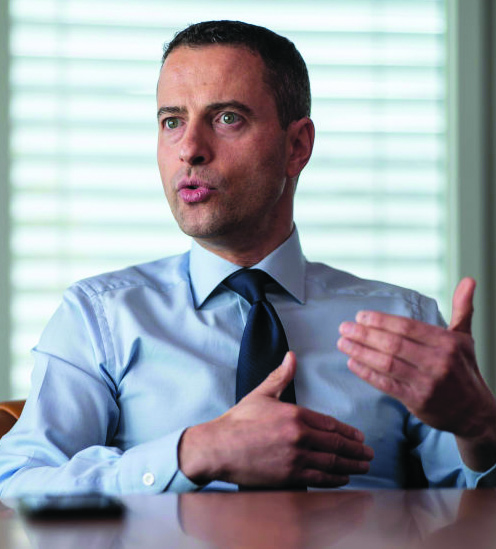

Gary Nagle
CEO: Glencore


‘We are seeing a trend change in the copper market, which has given us comfort to sanction these projects’
IT’S clear Gary Nagle has been angling for a deal for some time, arguing that the ‘big’ mining sector isn’t big enough to attract capital or superior ratings. On January 8, he moved this ambition a critical step forward, with Glencore announcing it was in merger talks with Rio Tinto. The tie-up with Rio, if it happens, would not be a complete surprise.
Twice before the two miners have been linked, the last time in late 2024. This looks more serious, however. At the time of writing, Rio Tinto was to affect the deal with an all-share bid for Glencore. It has until February 5 to make its offer in terms of the LSE’s ‘put up or shut up’ rule. If consummated, the two will form the world’s largest miner, with an enterprise value of more than $260bn. If the merger or some kind of business combination with Rio isn’t consummated, Glencore still looks well placed to capitalise on an expected copper supply deficit. In December, Nagle unveiled $24bn in capital projects to double Glencore’s copper production by 2035.
Elsewhere in the business, Codelco and Glencore agreed to partner on building a smelter in northern Chile. Glencore also acquired the undeveloped Quechua copper project in Peru. Glencore remains heavily exposed to coal, which could be problematic to a merger with Rio, which is avowedly anti-coal. Nagle listened to investors when they rejected Glencore’s plans to hive off the coal assets into a separately listed vehicle – at the time that thermal coal prices were strong. A year later, with coal prices under pressure, investors may have regrets. Nagle remains committed to the fuel – an outlook that may well change in short order.
LIFE OF GARY
Nagle joined Glencore after taking a degree in accounting from Wits University and obtaining his CA. He started his career in the firm’s coal division and has held senior executive positions in Colombia, South Africa and Australia. Twenty-five years of immersion in Glencore culture, which he describes as “unique”, and the fact that he was already known to shareholders, made him a popular choice to succeed the legendary Ivan Glasenberg in 2021. He is said to be more approachable than his predecessor and describes his leadership style as inclusive and open-door.