



RESOURCE nationalism is back in a big way in Africa’s gold sector. The latest company to come under its eye is Gold Fields, where there are concerns about the cost of renewing its mining licence for Tarkwa, a gold mine in Ghana.
In March, Ghana introduced a new sliding-scale gold royalty framework under which it will levy 5%-12% on revenue depending on prevailing gold prices: 5% when gold is trading at $1,900 per ounce, rising to a ceiling of 12% at $4,500/oz.
But the threat to Gold Fields’s business interests in Ghana extends beyond royalties. In 2025, Ghana’s government declined to renew the mining licence for Damang. A compromise was reached instead in terms of which Gold Fields agreed to cede the mine after a year (2026), during which time it would conduct a life-of-mine feasibility study. On April 18, the new owner — former contractor E&P — takes over at Damang.
Gold Fields had originally wanted to close Damang’s open pit and mine out its stockpiles. Why, then, did it agree to the extension when it was not going to be the long-term owner and run a feasibility when it had no capital plans for the operation? Answer: Tarkwa.
Tarkwa is also due a new mining licence, next year. Unlike Damang, it is far more economically valuable to Gold Fields, comprising 17% of current production and up to a fifth of future gold output if planned expansions are realised. “With Damang already excluded from post-FY26 forecasts,” said UBS analysts, “the transfer does not affect near-term production or earnings; the key implication is precedent risk, reinforcing that mining lease renewals in Ghana can no longer be assumed to be automatic or rules-based.”
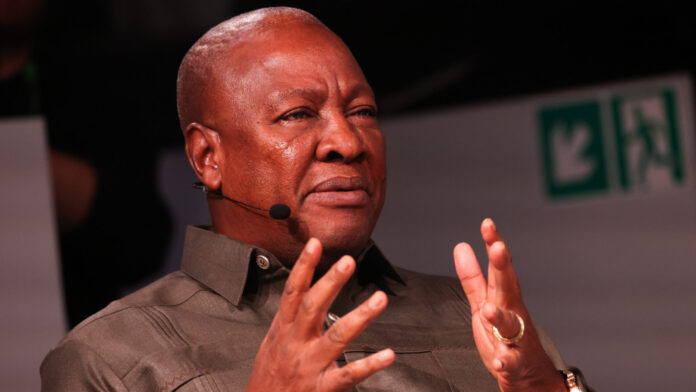
No guarantee of rules-based security of tenure, according to one of Europe’s most prominent banks. It is also worth noting that E&P is owned by Ibrahim Mahama, brother of Ghana’s president, John Dramani Mahama — and which is also the contractor at Tarkwa.
The threat to Tarkwa’s ownership conditions is why Gold Fields has formed a special committee to assess the licence renewal process. Asked to comment on the relationship with Ghana in February, CEO Mike Fraser said the company was being treated as “a guinea pig” — a frank and apt assessment.
There is, though, nothing new in Africa’s recent treatment of its gold miners. West African Resources, a Sydney-listed gold miner, was thrown back on its heels after Burkina Faso said it wanted to acquire a further 35% in Kiaka, the firm’s recently commissioned mine — this after earlier exercising an option to increase its free-carried stake to 15% from 10%. Burkina Faso can acquire more shares in its miners under its new 2024 Mining Code, but the overtures for a bigger stake in Kiaka don’t appear to acknowledge West African’s stability clauses.
A year earlier, Mali enacted a new Mining Code and recovered $1.2bn in arrears following a stringently applied audit. But gold production fell 19% in 2025 amid a dispute with Barrick Mining that resulted in the temporary suspension of mining at Loulo-Gounkoto. Mali lost millions in taxes and royalties although Barrick lost plenty too: $430m in fees and $1.9bn in estimated revenue, according to Metals Focus.
Ghana, too, is also looking at phasing out long-term stability agreements by 2027 — a significant concern for Gold Fields at Tarkwa. Said UBS of the mine: “A 2027 reset is therefore likely to revisit both tenure and fiscal terms, increasing risks around a higher government stake, tighter local participation requirements, and greater state influence.”
“With Damang now a clear precedent, renewal outcomes appear increasingly binary,” it added.
Then there’s Newmont, the world’s largest gold miner.
It recently completed the $900m expansion of Ahafo North in Ghana shortly before its investment stability agreement expired in December. Ahafo is now exposed to the new royalty regime, a 3% Growth and Sustainability Levy, a higher corporate income tax rate, and withholding tax on repatriated profits.
Ghana has faced major economic pressure — in December 2022 it suspended most debt payments and embarked on a restructuring involving a $3bn IMF bailout, restricting its market access until last month when it launched a local-currency bond.
But ‘jam-today’ policy will only will inhibit the mining sector’s long-term potential, said Metals Focus. “We expect a more cautious approach to capital investment, with a potential review of greenfield projects and a prioritisation of staged, brownfield expansions,” it said. Beyond that, investors will think twice before committing to new projects.