



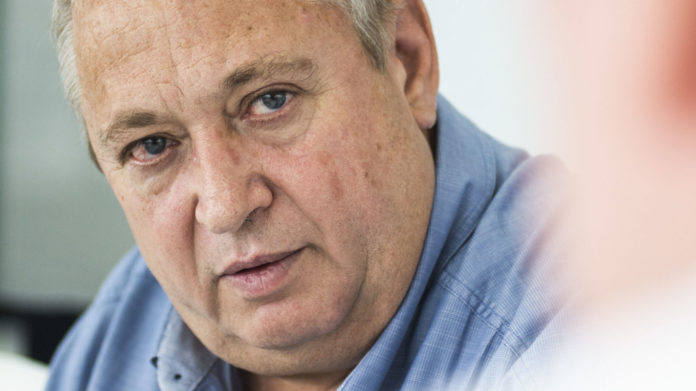
PUTTING people on special leave is no way to root out crime and corruption, says Neal Froneman, the no-nonsense hard man of South African mining and chair of Business Against Crime (BAC).
“It doesn’t send the right message. It could be argued that due process is being followed, but it would send a much better message if those who are meant to protect us and enforce the law and don’t do that were charged with treason.”
Whether it’s illegal mining or crime and corruption in the country generally, it’s reached a tipping point, he says, and ruthless action to re-establish the rule of law is an existential necessity.
Until then, companies such as Sibanye-Stillwater, which he built into a global diversified mining giant before retiring as CEO in September 2025, can spend millions of rand, as it did under his leadership, implementing cutting-edge hi-tech anti-crime programmes while illegal mining continues to spiral out of control.
“No matter what they do, unless there is rule of law, and corruption within the police is rooted out, they’re fighting a losing battle, and there can be no sustainable mining industry in this country,” he says.
Meanwhile, by incurring enormous costs doing what government should be doing, mining companies become completely uncompetitive relative to their international competition. And this applies to the whole of business, he says, not just mining.
“Whether it’s crime and corruption, or defunct municipalities, or fixing roads because the government doesn’t, you incur costs which make South African products ultimately uncompetitive. The flip side, of course, is that nobody wants to invest here. That’s why we see such low fixed investment in the country.
“As for mining, we have almost the lowest investment in exploration, because at this point mining in South Africa looks to international investors like a crime-ridden industry.”
According to a recent report by the Minerals Council South Africa (MCSA) highlighting the organised crime onslaught on mining, this is exactly what it is.
“The money mines are having to spend on security is not being spent on uplifting communities, so the knock-on effects of organised crime syndicates in mining are horrendous,” says Froneman.
Winds of change
The government can and “absolutely must”, he says, send a clear message to both the country and investors by urgently implementing the recommendations of the Madlanga commission, which has laid bare in horrifying detail how deeply rooted crime and corruption are within the police.
There’s also “an urgent need for the National Prosecuting Authority (NPA) to be fully independent and for the head of the NPA to be the accounting officer. We need to get back to the model of the Scorpions (the elite anti-corruption unit disbanded in January 2009 following an ANC resolution in 2007). They were successful because they were independent. The NPA is still dependent on being financed by government. They don’t control their budget, so they’re not in control of their own destiny.”
While the extent of corruption in the police cannot be exaggerated, he says that from his vantage point as chair of BAC, he sees signs of hope. A year ago he was struggling to see the necessary political will from government to root it out, but now he is seeing “winds of change”.
“For the first time in a long time, we’re seeing policemen being arrested based on what’s coming out of the Madlanga commission. There are decisions being made by judges and magistrates on people like Julius Malema. These are indicators that there is a change occurring.”
As for mining, we have almost the lowest investment in exploration, because at this point mining in South Africa looks to international investors like a crime-ridden industry
It’s happening far too slowly, he concedes, but it is happening. “The NPA is not yet independent, but it has moved from being completely dependent on government to being now partially dependent.”
Those people associated with corruption have a limited future in politics and in our country — Neal Froneman
As the chair of BAC he is closer to the president and government leadership than most, which is why he may seem more patient than most, he says.
“What has recently become apparent is that post-loadshedding and the partial improvement of logistics, crime and corruption have become centre stage. And that if you look towards the 2029 national elections, this is going to make or break the two big political parties. Those that have good strategies against crime and corruption are going to benefit. Those that drag their feet or do nothing about them are going to suffer the consequences.
“It’s become a civil society issue, not a political issue. And I think that has been recognised in the past six months. That’s why I say the political will is changing.”
The spectre of a deeply compromised deputy president, Paul Mashatile, hanging over the country’s future doesn’t alter this, he says. “Those people associated with corruption have a limited future in politics and in our country.”
How can Froneman — the take-no-prisoners hard man of South African mining who in 2002 saw through corporate crook Brett Kebble, the then seemingly untouchable CEO of JCI, and told him to his face in front of a fawning board, “Brett, you need to step down” — make such a naive statement?
“Because civil society is not going to vote for people who are corrupt. If, as I think, crime and corruption are now the biggest issues in South Africa, then I believe civil society is not going to tolerate what’s happened in the past and will vote for parties that are perceived as less corrupt or have good strategies. That is very clear to me.”
He thinks this is reflected in the arrests that have come out of the Madlanga commission. “That is something we haven’t seen for a long, long time.”
No matter what they do, unless there is rule of law, and corruption within the police is rooted out, they’re fighting a losing battle, and there can be no sustainable mining industry in this country
He sees the onslaught on mines by organised crime syndicates flagged in the recent MCSA report as “an existential threat” to the country’s mining industry. It’s why he asked the military to intervene 10 years ago, he says. “I’ve been saying for 10 years we need much stronger intervention.” He concedes that deploying the military has done little to stop illegal mining.
“I don’t think the military is the be-all and end-all of this issue. What I was asking for was action many, many years ago before it became the existential threat it absolutely is today, where security guards are being eliminated just because they’ve arrested illegal miners or provided information.”
Companies that operate internationally cannot defend fatalities like that, he says. “Companies have worked very hard to eliminate mining accident fatalities and still have challenges. But when you start having your personnel [threatened] by assassinations, as at Sibanye, it becomes a very, very difficult environment in which to operate.”
Sibanye and other companies are coming under heavy pressure from international shareholders because of this, he says.
So a corrupt and dysfunctional police force is “absolutely an existential threat” to the mining industry, and the government must be in no doubt about that, he says.
“These investors have been making it clear for some time that merely by association with this kind of situation their copybooks get blotted, and that they have safer environments to invest in around the world where they don’t have to defend human rights abuses such as assassinations.”
By 2023 illegal mining was costing the industry R7bn annually. Froneman estimates that the cost to the country is more than R20bn a year.
The question is, should he as chair of BAC be spelling out to President Cyril Ramaphosa the dire urgency of the situation as bluntly as he spelt out to Kebble the situation JCI was in under his leadership?
“I do that; I just do it in private.”
Upping the game
BAC was formed 30 years ago, since when, of course, crime has exploded. He concedes that BAC’s impact on the current situation may appear less than spectacular.
“When (KZN police commissioner Lt-Gen Nhlanhla) Mkhwanazi made his allegations last year, we realised straight away that the landscape had changed, and we needed as BAC to up our game,” says Froneman.
It appointed former NPA deputy Anton du Plessis as CEO. “He has exactly the right background to understand the challenges within government, the international aspects of organised crime, and what strategies are required to re-establish the rule of law and deal with the illicit economy.”
In short, “to make BAC more current and appropriate for where we are now”. And readier to tell the president he can’t keep on the payroll a police minister and national police commissioner suspected of colluding with criminals.
“If I were president, I would not tolerate this,” says Froneman.
This article first appeared in the Financial Mail, a property of the Financial Mail Group.