





TO paraphrase Warren Buffett, superior long-term wealth is often built by owning the goose that lays the golden eggs, rather than the golden egg itself.
Pan African Resources has been a golden goose for Allan Gray clients, delivering returns far in excess of the market since its listing. Over the past three years, Pan African shares have increased in value from 368 South African cents in March 2023 to R31.50 by end-March 2026 — a ninefold return, including dividends reinvested. That is equivalent to a compounded return of 108% per year over the past three years.
While higher gold prices have provided a tailwind for all gold miners, Pan African has been the top performer within the group, far exceeding the total returns of its locally listed gold mining peers. Since listing on the JSE in 2007, Pan African has delivered a total return of about 50-fold (including reinvested dividends), or a compounded return of 23% a year over 19 years. This is significantly higher than the market’s average return of 11% a year over the same period.
How has it done this? Turns out the secret sauce of the business is turning waste into gold.
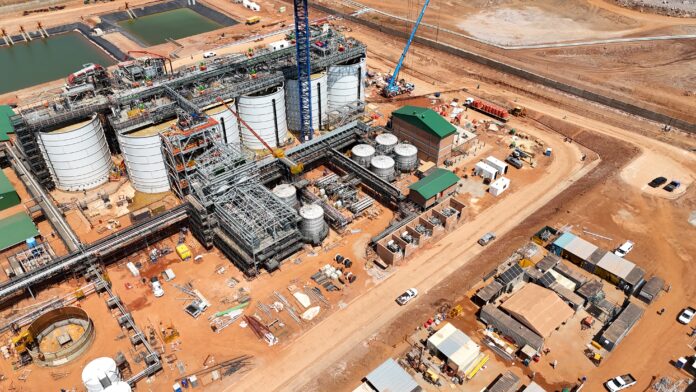
Pan African listed on the JSE after acquiring a gold mining complex in Barberton, where it started reprocessing gold tailings dumps as part of the Barberton Tailings project in 2013. Tailings dumps typically refer to waste stockpiles generated by historical gold processing. These often contain significant amounts of low-grade gold, due partly to the inefficient historical recovery methods. Advances in technology, combined with in-house technical expertise, allowed Pan African to extract this gold at favourable economics.
A key advantage of the tailings strategy was its largely mechanised nature, which allowed for a lower-cost production profile relative to that of most other conventional mining methods. An additional benefit of the strategy was its positive impact on society: reprocessing historical waste sites enabled land rehabilitation, improving the environment for future generations.
Pan African replicated its tailings strategy with a series of strategic acquisitions between 2013 and 2025, delivering many golden eggs in the process. After its acquisition of Evander Mines, the tailings have produced around 50,000 ounces of gold per year since 2018. Similarly, in 2023, after acquiring the historical Mogale tailings dumps, Pan African produced about 50,000 oz of gold over the trailing 12 months reported at this site. In 2025 Pan African acquired the historical Tennant Creek mining complex (TCMG) in Australia and is once more deploying a similar strategy.
As a result, the increase in gold produced by Pan African from tailings has been so significant that it now exceeds the amount of gold produced from underground mines. Given that production from tailings is lower in cost, it generates a higher profit per ounce of gold and improves Pan African’s overall profitability.
Including the production from TCMG (guided to be around 50,000 oz), Pan African is expected to further increase its gold production from tailings and other surface sources over the next year.
Our long-term investment philosophy and continuous assessment of bottom-up company fundamentals have led us to maintain exposure to Pan African since 2009. While we don’t pay much attention to the short-term fluctuations of the gold price, we do continue to watch Pan African’s journey into its new Australian territory with great enthusiasm, and we expect the group to continue delivering more golden eggs in the future.
Andrew Boulton is an investment analyst at Allan Gray.
A version of this article first appeared in the Financial Mail.