




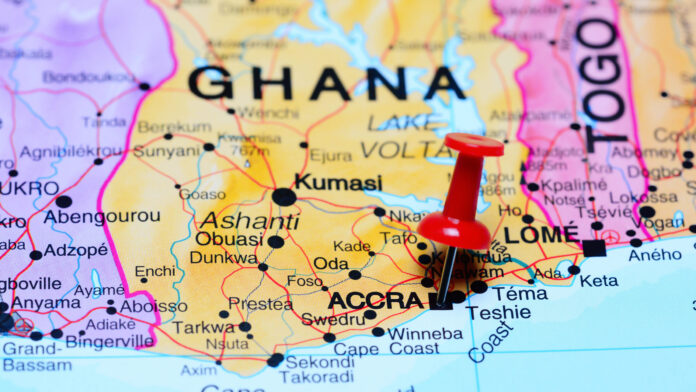
GHANA intends to abolish long-term mining investment stability agreements and double royalties under sweeping reforms aimed at capturing greater benefits from surging bullion prices, said Reuters in an exclusive report this week.
The changes will be enshrined in law as part of a broad overhaul balancing investor confidence with the government’s push for higher returns from mining, Isaac Tandoh, acting CEO of the Minerals Commission told the newswire.
Newmont, AngloGold Ashanti and Gold Fields currently operate under stability agreements that typically lock tax and royalty terms for five to 15 years in exchange for investments of $300m to $500m.
Ghana pioneered such agreements in the early 2000s, unlocking billions of dollars in foreign investment that helped it overtake South Africa as Africa’s top gold producer, said Reuters.
Newmont’s Ahafo pact, for example, set a 32% corporate tax rate and sliding royalties of three to five percent, with duty and VAT relief on qualifying inputs.
However, Newmont’s agreement, which expired in December, will not be renewed, whilst arrangements held by AngloGold Ashanti and Gold Fields will be phased out in 2027, Tandoh said.
A draft bill proposes royalties starting at nine percent and rising to 12% if gold hits $4,500 per ounce, roughly double current rates. Gold is currently trading at around $4,603/oz. Authorities were “listening” to concerns from smaller projects and would aim for a formula preserving investment whilst lifting revenue when prices are high, he added.
Reuters said Newmont, AngloGold Ashanti and Gold Fields declined to comment. Ghana’s Chamber of Mines also declined to comment.