


AUSTRALIA and Canada have signed a series of agreements on critical minerals as part of efforts among the West to reduce their dependence on Chinese supply chains.
The agreement includes Australia’s entry into the G7 minerals security alliance, said Reuters on Thursday.
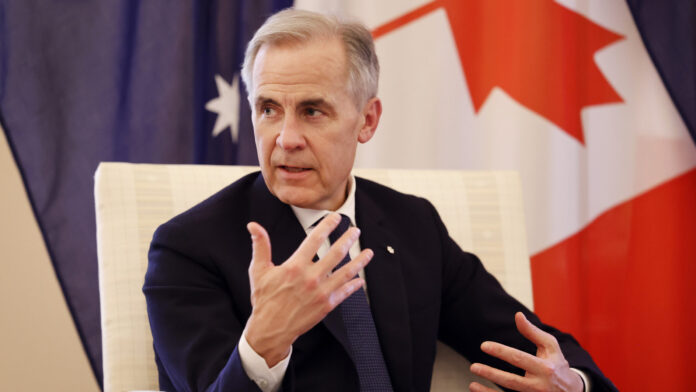
Canadian Prime Minister Mark Carney announced the agreements in a speech to Australia’s parliament on Thursday, the final day of a three-day visit. “We signed a series of new agreements on critical minerals, including Australia joining the G7 minerals alliance — the largest grouping of trusted democratic mineral reserves in the world,” he said.
The two countries together produce around a third of global lithium and uranium and more than 40% of global iron ore, said Reuters. Western governments have been seeking to diversify supply chains away from China, which dominates production and processing of minerals essential to semiconductors, defence applications and the energy transition.
Canada’s Energy and Mining Minister Tim Hodgson said earlier this week that the most effective approach to addressing concentrated mineral supply was through a production alliance or buyers’ club rather than a price floor mechanism. Australia has already allocated funds to build a critical minerals stockpile, beginning with antimony and gallium.
The minerals agreements form part of a broader effort by Carney to strengthen ties between the two countries, which his office has characterised as like-minded middle powers. The two governments are also expected to deepen cooperation across defence and maritime security, trade and artificial intelligence.
Carney’s visit to Australia is part of a wider Asia-Pacific trip that also includes stops in Japan and India, said Reuters.