



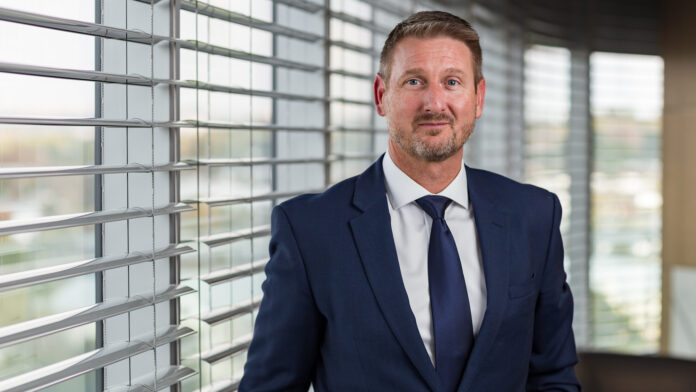
NEXTSOURCE CEO Hanré Rossouw said his company wouldn’t jump “head first” into building its proposed battery anode factory in Abu Dhabi given geopolitical tensions in the Middle East – but he also urged a sense of perspective.
“It is mostly business-as-usual, schools are open and people are visiting the restaurants,” he said when asked about the safety of locally employed staff in Abu Dhabi. “We continue to advance our project and there’s support from partners, including a binding offtake.”
Abu Dhabi and Dubai have been attacked by Iran in the wake of the US and Israel war since February. A ceasefire has been in effect since April 7 but it is fragile. Pakistan has led a new round of face-to-face mediation.
According to a report by Axios, US President Donald Trump is meeting with national security advisers to finalise immediate military strike options if Pakistan’s last-ditch diplomatic efforts crumble before the weekend.
Against this background, the Toronto-listed miner announced plans last week to build the first phase of a Battery Anode Factory in the Emirate following successful completion of their front-end engineering design (FEED). At the time, Rossouw said some work streams had been delayed owing to the war.
In an interview with Miningmx, he said the factory should be viewed as “more an installation than a construction project given the use of an existing building”. However, EPC contracts are due to be awarded with work set to begin on the factory in the third quarter, based on current timelines.
There is also the challenge of raising funds. All in all, the battery anode factory is scoped at $150m in capex of which nearly half has been obtained.
A key component of this is the finalisation of a $30m equity-backed deal with Japan’s JOGMEC and Hanwa groups, familiar to South Africans as the two firms are shareholders of Platinum Group Metals’ Waterberg Joint Venture in Limpopo province. The partners will take a 15% project level stake in the factory.
Separately, NextSource also raised C$25m after offering 58.8 million shares in a private placement to investors earlier this year. Vision Blue Resources, NextSource’s anchor investor, subscribed for about 47% of the total issue, effectively following its rights. Vision Blue Resources founder, Sir Mick Davis, is chair of NextSource.
The balance of the funds for the battery anode factory, however, will be secured through a combination of debt, potentially via a syndicate of lenders, including some South African banks, and equity – though the exact balance is yet to be decided.
Rossouw also said there is some government interest in funding the factory given that the mineral is a critical metal, the acquisition of which forms the centrepiece of the Western administrations’ foreign affairs and investment strategies. Graphite typically comprises about 90% to 95% of a lithium-ion battery anode by weight. Unfortunately for the West, China controls 65% of primary mining output and 90% of processing capacity.
Meanwhile, NextSource has secured feedstock from its Molo mine in Madagascar where there is a two phase project plan being finalised to expand to operations to a 150,000 tons graphite per year operation. However, given recent political instability in Madagascar, NextSource has sought to derisk its feedstock supply, agreeing with Australian-listedcompany, Syrah Resources, for between 34,000 to 68,000 tons of graphite from its Balama mine in Mozambique, over a seven-year period.
NextSource can’t afford to run short of graphite concentrate supply, should there be problems at Molo. That’s because it is planning to provide Mitsubishi with 9,000 tons a year of active anode material from its Abu Dhabi facility, when built, with first production from next year. This is in terms of a binding offtake agreement agreed in March which could be added to if negotiations with another Japanese buyer are concluded.