



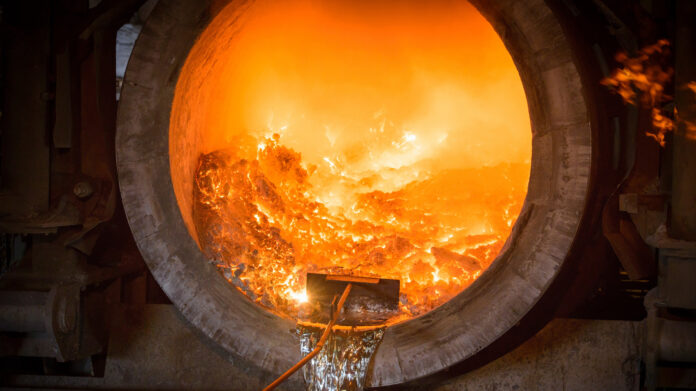
ESKOM will invite the attention of its mining clients in yet stronger terms if it agrees to cut its tariff for Transalloys, the manganese smelting business currently heading for closure.
According to a report by News24 this week, the power utility is considering a tariff rebate that will enable Transalloys, owned by Russia’s Renova, to continue operating beyond the month. Six hundred jobs are reportedly on the line, with 7,000 livelihoods affected indirectly, the publication said.
A rebate for Transalloys might well test the patience of the mining industry, especially the apparently piecemeal approach of the utility to grant largesse instead of embracing reform.
In May, the Minerals Council South Africa supported a reduced power tariff to the country’s ferrochrome smelters, owned by the Merafe Glencore JV and Samancor (South32 and Anglo American), because that industry was a “burning platform”.
The 62 cents per kilowatt-hour agreement has saved thousands of jobs, say the companies. While South African ferrochrome is by no means sustainable in the long term, the agreement with Eskom at least provides the industry with breathing space to attract investment. That’s tremendous news.
There are, however, other energy-intensive users in the mining sector, such as the platinum group metal miners that refine (beneficiate) metal within South Africa.
Valterra Platinum, which expects to produce three to 3.4 million ounces of refined PGMs this year, is one. “I recognise what needed to be done in the ferroalloy industry,” said Craig Miller, the company’s CEO. “But two years ago I needed to reduce my headcount by 3,500 jobs because costs had increased so significantly,” he said in an interview.
“Prices were incredibly low, and we needed to take costs out of the business in order to sustain the long term. Where was our special tariff?”
The council said previously that Nersa-approved electricity tariff hikes imply a cumulative increase of about 25% over the next three financial years. It moved Valterra chairman Norman Mbazima to comment in the firm’s 2025 annual report: “The absence of meaningful structural reform continues to weigh on the local mining industry, with persistent cost pressures eroding South Africa’s competitive edge.”
“Mining input costs such as labour compensation and administrative prices (particularly electricity) have consistently outpaced consumer inflation, undermining the sector’s competitiveness,” he said.
“Compared to average inflation of just above 3%, January data from the council shows power costs surged nearly 16% year-on-year, while water cost increases were almost 12%.” This makes the Government’s push for increased beneficiation a faint hope.
And if the revised Industrial Development Strategy — approved by Cabinet in June, and which recommends a tax on chrome ore exports — comes into effect, existing “beneficiation” will also be imperilled. Miller said the group’s Amandelbult mine, in Limpopo province, would run into serious difficulties were chrome ore exports levied.
“What I don’t think is appropriate is taxing specific products, because you then create demand destruction — either through supply getting cheaper elsewhere globally, or, from my perspective, a reduction in the chrome by-product reduces the profitability of a labour-intensive operation,” he said.
“Amandelbult, for example, employs 10,000 people. So if you reduce the chrome revenue — which is a material component of its revenue base — you place that asset under threat.”
“There’s not a bad idea this government doesn’t like,” said Donald MacKay, an economist at XA Global Trade Advisors, who believes the chrome tax could invite a trade war with China.
Said Miller: “I think you need to look at it more holistically and understand what are the driving factors around creating cheaper, more reliable energy in order to sustain industrial production and capacity in the country.”