





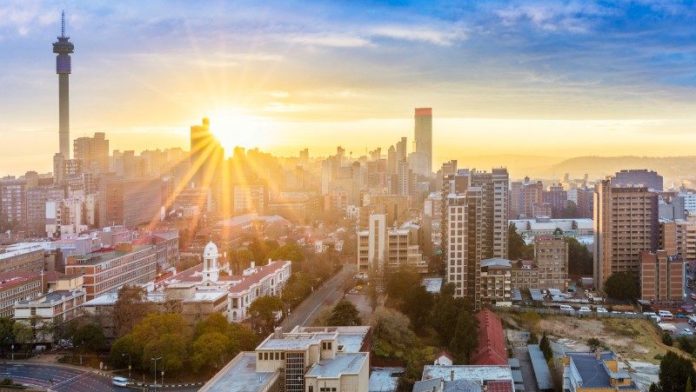
THE last time gold was as valuable, prospectors, gamblers, bounders and other rakes were united in scouring the globe – from California to Johannesburg – with their pickaxes and pans in search of a few grains of gold.
It’s not as though we don’t have the same today: arguably South Africa’s zama zamas capture the same endeavour, while modern-day magnates are raking in cash. Gold Fields doubled its profit in 2025; AngloGold Ashanti’s free cash flow tripled to $2.9bn in the same period.
But there’s a key difference: gold is valuable because it is expensive. At over $4,000 an ounce, mines that were once dead and buried are being revived. “Even the gravel under the tar roads may just contain enough gold to be mined profitably,” says Bernard Swanepoel, a self-described mining optimist and former CEO of Harmony Gold.
Back then, gold was abundant in South Africa, the magnitude of the Witwatersrand basin overwhelming. During its heyday, in the 1970s, the country was producing 1,000 tons of gold annually. But 140 years after the gold rush birthed Johannesburg, industry analysts are looking at the exhausted reef with resignation, and scepticism about its potential.
At the height of South African gold mining, the sector employed nearly one million people and supplied 80% of the world’s gold. In 2026, the country isn’t even in the top five gold-producing companies worldwide, and it employs closer to 100,000 people.
Swanepoel says that a few decades ago, “in order to justify the investment and carry the costs, you built an underground city. And the design criterion was around 250,000 ounces.” Even a 500,000oz mine was not entirely uncommon. Today, new junior miners are overjoyed to get 70,000-80,000oz out of a project.
But with the skyrocketing gold price, and the emergence of some new miners on the scene, could we see a reversal of gold output in terms of production in South Africa? “Highly, highly unlikely,” is Swanepoel’s view.
There are several reasons for this, besides the fact that the Witwatersrand has been mined for more than a century. Today, many areas alongside gold reefs – previously mined or not – have been “significantly encroached on by towns and squatter camps, and that makes it difficult to [have] a mine in a built-up area,” he says.
Sean Meadon of Gold Ore, which is developing the Benoni South Gold project, acknowledges this problem. Speaking at the Junior Mining Indaba conference, he said there was a major illegal mining problem throughout the Witwatersrand. In the area just 2km south of their mining exploration, “there’s about 3,000 illegal zama zamas, and we’ve already got a couple moving into this area here,” Meadon said. Simply put: “It is a train smash.”
Many mines have been plagued by this problem. “The reopening of Blyvoor looked like a war zone,” Swanepoel says. To keep out zama zamas, Aurous Resources built a massively high wall and employed tons of security, almost formulating a private army. It did not seem to help much though, as the mine was blockaded and shut down by illegal miners several times after its reopening.
On top of that issue, Gold Ore is trying to mine an area that is split up by main roads and highways, making the process even more taxing. There’s absolutely no chance of blasting in this area, Meadon says, which means mining capabilities are limited.
The mining sector is also burdened by high input costs alongside a strengthening rand. “We sell in dollars, and a strengthening rand is the same as a cost increase,” says Swanepoel. Even while the gold price is sky high, mining is a costly task to undertake, and one that might not show revenue – never mind profits – for years to come.
There’s a lot of things that investors outside of South Africa see as risks. The one thing they want is policy certainty – Rudi Deysel, Wits Gold
Bringing in foreign investment is also a trickier task than it was several decades ago. “South Africa is not really the flavour of the rest of the world,” is how Rudi Deysel, CEO of West Wits Mining, puts it. “There’s a lot of things that investors outside of South Africa see as risks.” The issue of loadshedding was for many years a large risk factor for investors, for example.
“The one thing that investors want is policy certainty, and that is one of the things we struggle to give [them],” Deysel says. The Minerals Council South Africa has for years warned that constantly changing regulations and strict compliance mandates create an unfriendly investment climate. “In other parts of the world by now, lots of people would have listed new exploration companies and raised money,” Swanepoel says. But with exhausted reefs, overcrowded areas, plus security and financing issues, gold mining is looking harder than ever.
Life after death
Gold miners are nothing if not resourceful – and where there is gold, enterprise follows. Whether there is genuine, sizeable opportunity, or whether miners are puffing on the embers of the country’s old great mines is the question.
Miners understand that the massive reefs are unable to support economic, large-scale production. But the country is laden with shuttered mines that still have significant remnant gold in them, leading to a rise in so-called secondary reef mining.
Large-scale miners such as Sibanye-Stillwater recognise this; the company is actively mining secondary reefs at its Kloof and Driefontein gold operations near Carletonville. This strategy extends the life of these mature mines as its primary reefs become depleted.
“This is a mature gold field; it’s expected that you will find a lot of the work is in orebody maximisation rather than finding new bodies,” says Billy Mawasha, CEO of Bokamoso Gold of the Witwatersrand Basin.
Bokamoso Gold is a private equity fund hoping to buy unloved gold mines, the assets no one wants. As a result, Mawasha firmly believes secondary reef mining is the future. “It’s your best economic return. You already own the asset; you’vealready sunk of infrastructure costs,” he explains. “And no one knows for how long this price will be elevated, and putting together a new mine from scratch takes 15 years.”
The reopening of Blyvoor looked like a war zone – Bernard Swanepoel
Swanepoel says this is the most attractive, and safest, option. “In mining, I would argue the single biggest risk is that the orebody doesn’t exist. Here is a geological address where you can probably tell anyone the reef exists. It’s proven; we know it’s there.”
A proven reef, already sunk infrastructure, reduced time to cash flow, and a fantastic gold price seem to be reason enough to jump headfirst into secondary mining. But many of the businesses in the field have yet to produce material results.
Bokamoso Gold has yet to secure a mine, which Mashawa puts down to the spike in gold price. Swanepoel, who is chair of Bokamoso Gold, agrees. “Why is it difficult for people to sell? Because the mine that gave them grey hair, that kept them awake at night, suddenly prints cash.”
Mawasha says the company has “commitments to the funds that [they] wanted” and is therefore waiting for a firm offer. So at least, despite the lack of tangible opportunity, there seems to be confidence enough in the project to finance it.
Gold Ore and another new entrant to the gold industry, Lexington Gold, say turning ambition into action is the hardest step of all, despite the mineral potential. Gold Ore has a “major underground deposit of Main Reef and Main Reef Leader”, Meadon says. His expectation is that the firm’s Turnbridge project, at 240m deep, will produce 80,000oz/year, with a life of eight years. Gold One also has New Kleinfontein, an open-cast project. “In total, we’re targeting round about a million ounces coming out of this area,” Meadon says.
But no mining has actually commenced yet, and the project is still burdened by zama zama-related issues, as well as the fact that the mine is in such an urban area. The truth is the market is wary. “This is one of the maddest, craziest stories I’m aware of” said Swanepoel at the Junior Mining Indaba of some of the gold hopefuls.
Lexington Gold has a gallery of projects, but its flagship is its Jelani project, which it shares with Harmony Gold. Up to six million ounces of gold can be extracted, CEO Bernard Olivier says. The Bothaville project in the Free State is another. Olivier says Lexington Gold is “targeting relatively shallow gold”. It has a mining access depth of 280m. “So let it not be said that the only gold left in South Africa is at extremely deep levels.” He expects to see 1.7 million ounces out of Bothaville.
Olivier praises the Witwatersrand gold field, saying “there’s still 1.2 billion ounces estimated to be left [in the Witwatersrand]. So, this truly makes for an attractive destination to come and explore in.”
‘Let it not be said that the only gold left in South Africa is at extremely deep levels’ – Bernard Olivier, Lexington Gold
However, South Africa is also saddled with a declining production history, and a lack of confidence in the opportunities available. “We don’t have a problem that there isn’t gold left in South Africa, we’ve got a problem that we don’t have explorers and investors anymore.”
Lexington itself has also not started mining, as its projects are all still in the exploratory and regulatory stages.
As such, it is difficult to tell from any of these stories whether the gold will actually materialise, breaking down the myth of the unending supply of the Witwatersrand basin.
And there are, of course, a few too many failed projects to be comfortable. The reopening of Blyvoor gold mine by Aurous Resources was seen as a huge comeback for the historic mine, and a major opportunity for the company. And while the company did produce a couple thousand ounces of gold, the project went quiet after it fell foul of exchange control regulations. Consequently, the South African Reserve Bank blocked a proposed $50m deal to merge with New York-listed shell company Rigel Resource Acquisition Group.
There was also the disaster of Vantage Goldfields’ Lily and Barbrook Gold Mines, which have been in the attempted revival process for a decade, with no results. Creditors recently rejected a R286m offer from Lions Bay Resources for access to Barbrook’s tailings, deeming it insufficient to restore operations.
Breaking new ground
But some of the new miners on the fray aren’t picking over old resources – they are actively mining. West Wits Mining dug the first new mine in the country in 15 years when it opened Qala Shallows last year. The Sydney-listed miner expects around 70,000oz/year, with a life of mine of 17 years. The company calculates a post-tax net present value of $500m, assuming a 7% discount.
The company discovered a whole block of the Kimberley reef that was intact, despite it being surrounded by old operational infrastructure. Alongside this, it received about 100 years of backdated historical drilling data of the area with the lease, which affirmed its claim of extensive resources still in the area.
Unlike other gold mining aspirants, West Wits has broken ground. “We started mining and extracted the first gold ore at the end of October,” Deysel told the Financial Mail. “All that ore has been transported already to our toll treater, who is processing it for us. We had our first gold pour in March this year.”
You will never find a mine mining 500,000 oz in South Africa anymore, and even 250,000 oz is huge. But can we have a portfolio of say three, four shafts that do 50,000 oz? Then the company still produces 200,000 oz. Now that is decent – Bernard Swanepoel
He puts the company’s speed down to “quick access through old workings”, alongside the work it has done, to allow it to “start extracting ore very quickly”.
The ASX-listed miner recently completed a new breakthrough on its project, enabling it to mine deeper. This gives it access to historically developed stoping areas on the reef. The company estimates that using historical workings could save a year in pre-production work compared with developing new stope access from scratch.
So despite it being a new mine, Qala Shallows has the advantage of pre-existing infrastructure, a major benefit to secondary reef mining. Deysel is confident about the strategy, which also involves remining low-grade mine dumps in the mine’s boundaries. “At these gold prices, lower grades become feasible. So, there’s an opportunity to create some revenue,” he says. “And the other thing, it’s cleaning up Joburg, because [they] are getting rid of all these dumps as well as the health risks around that.”
Deysel concedes that for all the benefits, mining of this ilk is no easy task. “The first step is always the most difficult one. You’ll find that guys are jumping out of the blocks, very motivated, and they start with exploration, but it’s very difficult to raise funds.”
It also depends what the funds are for. A curiosity of mining is that exploration is easier to fund within certain limits than construction phase, where the capital requirement is higher, and riskier. Few junior miners manage it.
So far, West Wits looks like a major success, though it’s worth remembering that as founding CEO of Harmony Gold, Swanepoel comes from an era when junior mining had more scale than today. “70,000 ounces by any metric is small,” he says of West Wits.
“You will never find a mine mining 500,000oz in South Africa anymore, and even 250,000oz is huge. But can we have a portfolio of say three, four shafts that do 50,000oz? Then the company still produces 200,000oz. Now that is decent.”
This article first appeared in Miningmx’s The Mining Yearbook 2026.