
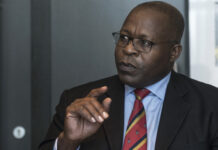
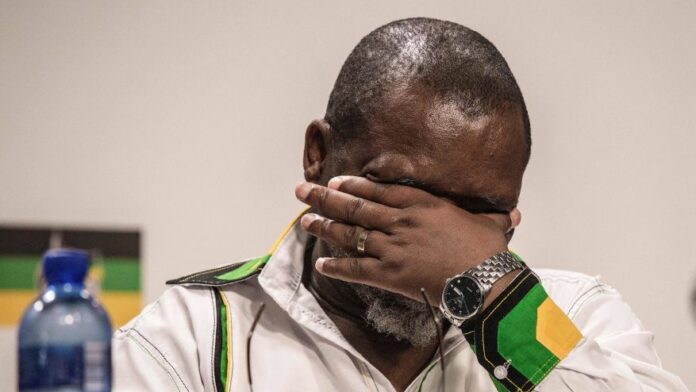
SOUTH Africa cannot build a downstream metals industry until the problem of high electricity prices is resolved, mines minister Gwede Mantashe said in an address to Parliament on Tuesday.
In an article by Business Day, Mantashe acknowledged that rising power tariffs were placing severe operational pressure on mining companies, particularly in the ferroalloy sector. Mantashe was speaking during the presentation of his department’s budget presentation to the National Assembly.
Despite this implementation of the critical minerals and metals strategy was advancing, Mantashe was quoted as saying. The Council for Geoscience expanded its national onshore mapping coverage from below 5% in 2019 to a cumulative 20% in the 2025/26 financial year, he said.
The Junior Mining Exploration Fund, jointly capitalised at R400m by the department and the Industrial Development Corporation, had also backed 13 projects to date, he said. Anglo American became the first major company to contribute to the fund, pledging R600m and lifting the total to R1bn, said Mantashe.
In another example of advance, the Public Investment Corporation had separately made R1.35bn available for exploration as a continuation vehicle for projects emerging from the fund, Mantashe added.
But James Lorimer, spokesman for mining in the Democratic Alliance – a member of South Africa’s Government of National Unity – remarked that South Africa’s share of global mineral exploration spending had dropped from 5% two decades ago to less than 1%.
Citing Bureau for Economic Research findings, Lorimer argued the deterioration was rooted in policy and regulatory failure rather than geological depletion.
Persistent uncertainty over BEE ownership targets, successive revisions to the Mining Charter and anxiety over the Mineral Resources Development Bill had deterred investment, compounded by fears of expropriation without compensation, Lorimer said.
The Fraser Institute, a Canadian organisation, now ranks South Africa in the bottom 10 globally for mining investment desirability. “When 30% of any project has to be handed over to BEE owners before it even begins, that amounts to a tax on capital,” Lorimer said. “We can either have a growing industry or we can continue with BEE.”
Mantashe strongly defended BEE, reaffirming positions stated by President Cyril Ramaphosa in the National Assembly last week, said Business Day. The Solidarity Research Institute this week released a report attributing the contraction of the mining industry directly to poor policy, including transformation requirements.