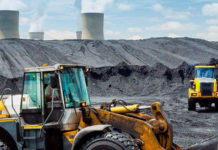


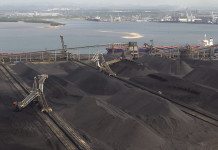


AFRIMAT is one of those companies that is surviving despite the chaos of industrial policy. But how long can these companies remain afloat?
Afrimat’s recently published full-year results look, at first blush, like the numbers of a company finding its feet again after a tough few years. Top line through R10bn. Headline earnings per share up 32.5%. Cash generated from operations recovering to R831m. The dividend maintained.
The market, which marked the share up more than 5% on results day, appears willing to believe the worst may be passing. But CEO Andries van Heerden was notably careful not to dress the year up as a clean turnaround. Asked if Afrimat had turned the corner, he replied: “It’s a very difficult question to answer.” His framing was more nuanced: “It’s not so much about a recovery as a reaction to some shocks to the South African economy.”
Read the numbers properly, listen carefully to Van Heerden, and Afrimat becomes a case study in South Africa’s industrial policy confusion.
This is a company with a strong aggregates business — which was its core more than a decade ago — a bruised cement tail, volatile iron ore earnings, an anthracite mine held hostage by ferrochrome economics and industrial minerals dragged lower by the closure or curtailment of downstream customers. In other words, it’s a business whose income statement now maps the fractures in South Africa’s industrial base.
The ferrochrome crisis is a case in point. The state has a habit of treating producer distress as temporary noise until the section 189 notices arrive, at which point the policy response becomes hurried and subsidy-led. By then, the real problem of the cost base that made production uncompetitive in the first place has already done the damage.
Ferrochrome exports fell from nearly one million tons in the final quarter of 2024 to just 270,000t a year later. Since 2016, Eskom’s average standard tariff has risen from roughly 93c/kWh to about 222c/kWh, an increase of nearly 140% in nominal terms and about 40%–50% after inflation.
Afrimat’s Nkomati anthracite business is what that looks like when it hits the accounts. The mine recorded no local sales for six months after South African ferrochrome smelters shut down. It swung to a R160.5m operating loss, including a R118.2m impairment. Export sales helped, but not enough, and certainly not profitably enough, to replace domestic demand.
“It’s not a sustainable situation if we don’t have the domestic sales,” was Van Heerden’s blunt diagnosis. Asked if this had become an industrial policy issue, he didn’t hesitate: “Oh, yes.” Ferrochrome producers are no longer internationally competitive because of electricity tariffs, and the upstream and downstream consequences are wider than the headline jobs at the smelters. Machinery suppliers, logistics providers, energy suppliers and miners all get pulled into the blast radius.
Glencore and Samancor recently received a lifeline from the National Electricity Regulator of South Africa (Nersa) after it agreed to lower the tariff further to 62c/kWh, while extending flexibility for take-or-pay obligations.
But the policy muddle is painfully obvious. Politicians bleat about beneficiation and localisation as means to support jobs. Nersa also wants Eskom to recover its costs. The Treasury wants to avoid open-ended bailouts. Nersa wants consumers to absorb rising tariffs and energy-intensive manufacturers to survive in globally traded commodity markets. These objectives collide in ways that only serve to deliver the exact opposite outcomes of all these objectives. Let’s call it Luthuli’s Law.
A tariff subsidy may keep furnaces warm for a while, but the question that remains unanswered is how South Africa shifts some of the value embedded in chrome-mining rents into the energy-intensive manufacturing step, so it captures more of the value chain rather than exporting the raw material and watching the industrial jobs migrate with it.
Van Heerden said the fall in Afrimat’s industrial minerals profit (down 65.6%, with margins dropping from 20.5% to 8.5%) was “purely” because major downstream customers in ferrochrome and steel were hit. “It’s the deindustrialisation that eat that business,” he said. The grammar may have been radio-spontaneous, but this is what industrial decline looks like in the wild.
Luthuli’s law
The cement story adds another layer. Afrimat bought Lafarge primarily for aggregates and fly ash, not cement. Van Heerden said the cement business carried a value of “one rand” in the acquisition motivation. Yet cement is now the noisy part of the portfolio, with R1.56bn of revenue but a R185m operating loss after R271.6m spent on repairs and maintenance.
Again, Van Heerden pointed to policy failure. More than 10% of cement used locally is imported at low cost, he said, while poor-quality blending undermines the market. “The authorities are, to put it bluntly, just not doing their job to protect the consumer against this bad quality.”
The department of trade, industry & competition sits uneasily at the centre of this mess. It should be the country’s flyhalf, directing industrial policy through beneficiation, localisation, trade remedies, sector master plans and manufacturing competitiveness, but it doesn’t control the levers elsewhere in the pack that now determine whether those ambitions survive.
Nersa determines electricity relief. Eskom’s balance sheet shapes the tariff envelope. Transnet determines whether minerals can move. The International Trade Administration Commission and standards bodies decide whether imports and inferior products are properly policed. The Treasury watches the subsidy bill. Consequently, we have a policy machine in which every actor owns a piece of the problem, but no-one fully owns the industrial outcome.
Thankfully for shareholders, Afrimat’s core remains healthy. Aggregates is the “real star”, Van Heerden said, with quarry margins at about 17% and a target of returning to more than 20%.
The investment case for Afrimat is that beneath the cement dust and ferrochrome wreckage sits a good operator.
Still, the lesson from these results is bigger than Afrimat, which may recover. Its results are a warning that in South Africa, even good operators are being forced to strategise around Luthuli’s Law.
This article first appeared in the Financial Mail.